ULI103U Introduction to International Relations 2019-2020 Final Soruları
20 soru · Final · 2019-2020
ULI103U Introduction to International Relations dersinin 2019-2020 final sınavı 20 sorudan oluşur; ders AÖF Siyaset Bilimi ve Kamu Yönetimi (İngilizce) bölümünde okutulur. Sorular aşağıda sırasıyla yer alır. Doğru cevaplar ve sonucun, testi çözdüğünde görünür.
Önizleme · 20 soru. Cevaplamak ve sonucunu görmek için sınavı başlat.
Sorular
20 soru
Soru 1
Soru 2
Soru 3
Soru 4
Soru 5
Soru 6
Soru 7
Soru 8
Soru 9
Soru 10
Soru 11
Soru 12
Soru 13
Soru 14
Soru 15
Soru 16
Soru 17
Soru 18
Soru 19
Soru 20
Sınav modunda süre tutulur, doğru cevaplar ve sonucun sınav bitince görünür.
Dersin üniteleri
Ünite özetleri ve konu anlatımları
- 1. Ünite: The Study Of International Relations
- 2. Ünite: The Historical Evolution Of The International System
- 3. Ünite: Theories Of International Relations
- 4. Ünite: International Security
- 5. Ünite: International Law
- 6. Ünite: International Organizations
- 7. Ünite: Global Political Economy
- 8. Ünite: Globalization And Global Society
ULI103U Introduction to International Relations ders sayfası: bütün sınavlar ve üniteler
Soruların metni (otomatik okuma)
Görsellerden otomatik okunmuştur; hata içerebilir. Sorular, görsellerdeki hâliyle geçerlidir.
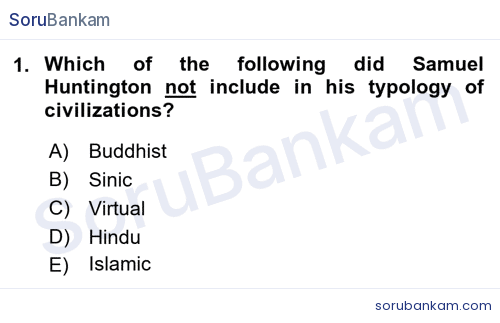
Which of the following did Samuel Huntington not include in his typology of civilizations? A) Buddhist B) Sinic C) Virtual D) Hindu E) Islamic
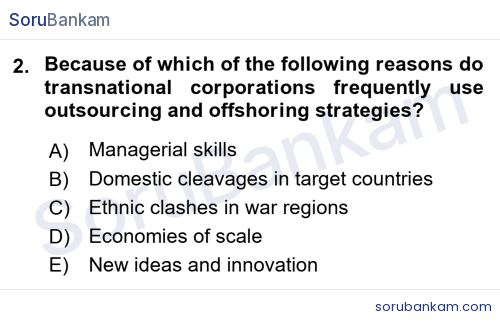
Because of which of the following reasons do transnational corporations frequently use outsourcing and offshoring strategies? A) Managerial skilis B) Domestic cleavages in target countries C) Ethnic clashes in war regions D) Economies of scale E) New ideas and innovation
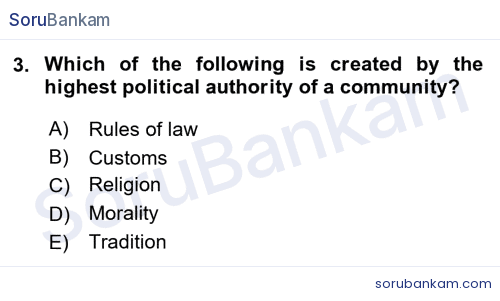
Which of the following is created by the highest political autpority of a community? A) Rules of law B) Customs C) Religion D) Morality E) Tradition
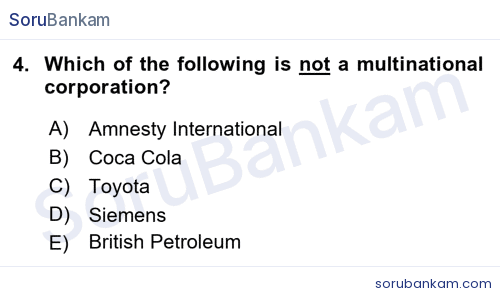
Which of the following is not a multinational corporation? A) Amnesty International B) Coca Cola C) Toyota D) Siemens E) British Petroleum
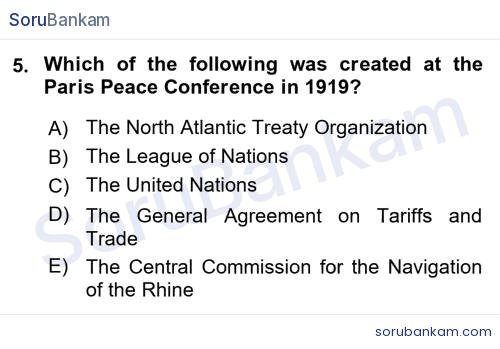
5. Which of the following was created at the Paris Peace Conference in 1919? A) The North Atlantic Treaty Organization B) The League of Nations The United Nations D) The General Agreement on Jariffs and Trade The Central Commission for the Navigation of the Rhine
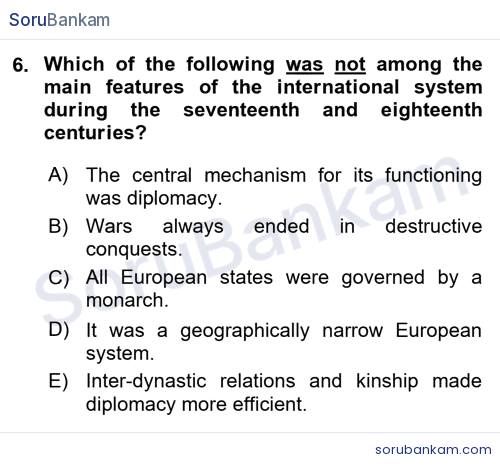
6. Which of the following was not among the main features of the international system during the seventeenth and eighteenth centurles? ** The central mechanism for ifs functioning was diplomacy. B) Wars always ended in destructive conquests. & All European states were governed by a r."" monarch. D) It was a geographically narrow European system. E) Inter-dynastic relations and kinship made diplomacy more efficient.
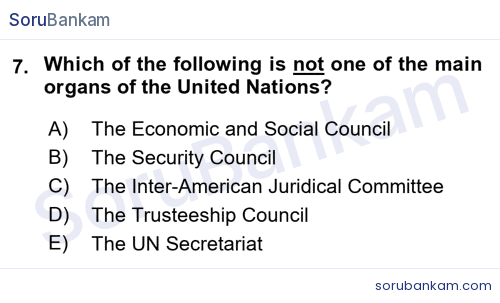
Which of the following is not one of the main organs of the United Nations? A) The Economic and Social Council B) The Security Council C) The Inter-American Juridical Committee: D) The Trusteeship Council E) The UN Secretariat
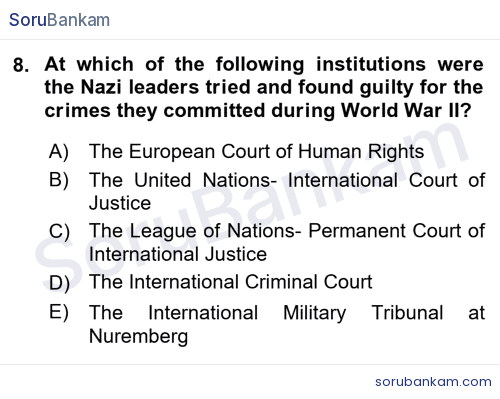
8. At which of the following institutions were the Nazi leaders tried and found guilty for the crimes they committed during World War I!? A) The European Court of Human Rights The United Nations- International Court of Justice C) The League of Nations- Permanent Court of International Justice D) The International Criminal Court E) The International Military Tribunal at Nuremberg
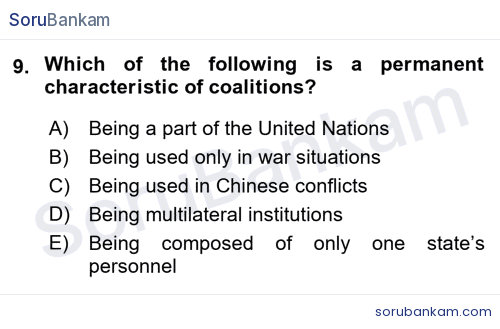
Which of the following is a permanent characteristic of coalitions? A) Being a part of the United Nations B) Being used only in war situations C) Being used in Chinese conflicts D) Being multilateral institutions E) Being composed of only one state's personnel
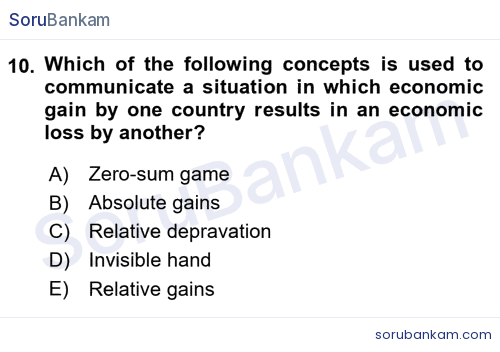
Which of the following concepts is used to communicate a situation in which económic gain by one country results in an economic loss by another? A) Zero-sum game Lor, B) Absolute gains C) Relative depravation D) Invisible hand N" E) ¡niE. Relative gains
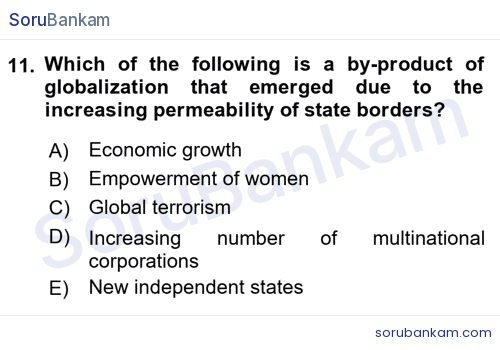
Which of the following is a by-product of globalization that emerged due to the increasing permeability of state borders? A) Economic growth B) Empowerment of women C) Global terrorism D) Increasing number multinational corporations E) New independent states
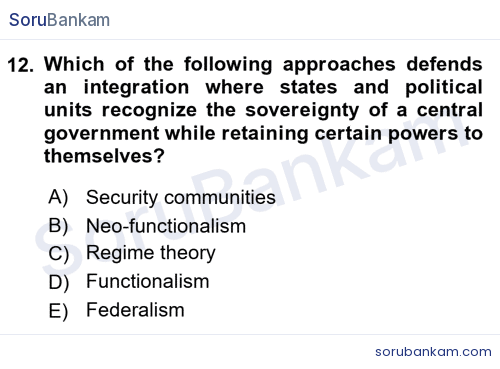
Which of the following approaches defends an integration where states and political units recognize the sovereignty of a central government while retaining certain powers to themselves? A) Security communities B) Neo-functionalism C) Regime theory D) Functionalism E) Federalism
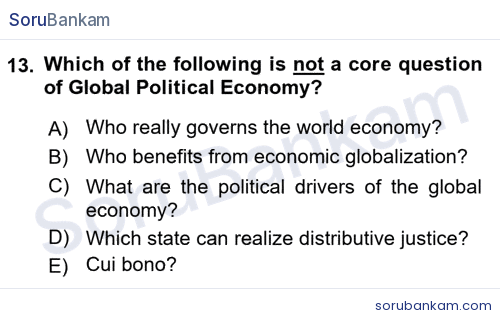
Which of the following is not a core question of Global Political Economy? A) Who really governs the world economy? B) Who benefits from economic globalization? C) What are the political drivers of the global economy? D) Which state can realize distributive justice? E) Cui bono?
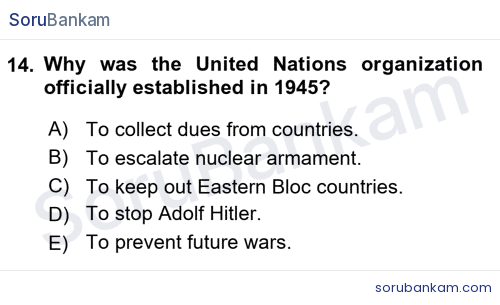
Why was the United Nations organization officially established in 1945? A) To collect dues from countries. B) Tó escalate nuclear armament. C) To keep out Eastern Bloc countries. D) To stop Adolf Hitter. E) To prevent future wars.
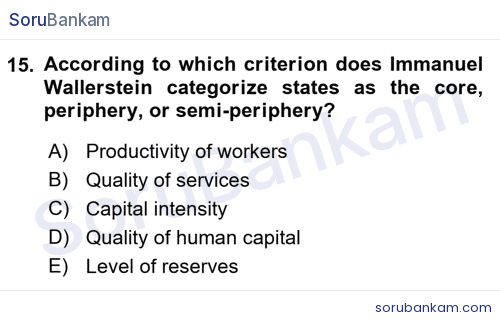
According to which criterion does Immanuel Wallerstein categorize states as the core, periphery, or semi-periphery? A) Productivity of workers B) Quality of services C) Capital intensity D) Quality of human capital E) Level of reserves
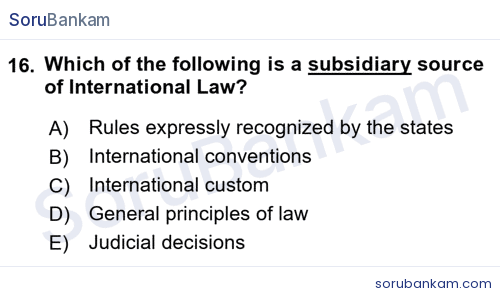
Which of the following is a subsidiary source of International Law? A) l Rules expressly recognized by the states B) International conventions C) International custom D) S General principles of law E) Judicial decisions
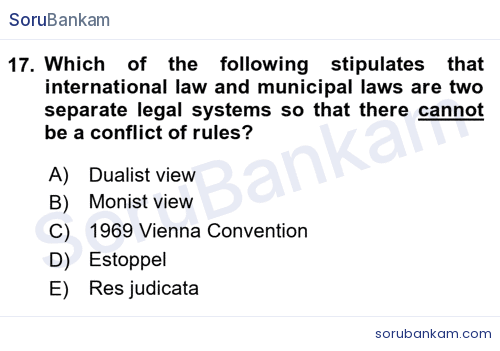
Which of the following stipulates that international law and municipal laws are two separate legal systems so that there cannot be a conflict of rules? A) Dualist view B) Monist view C) 1969 Vienna Convention D) Estoppel E) Res judicata
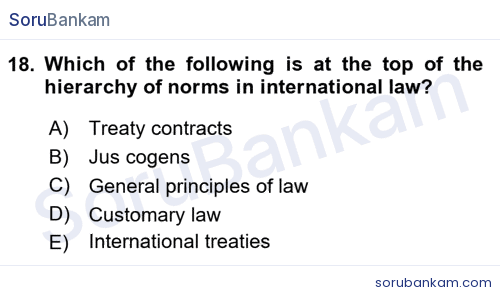
Which of the following is at the top of the hierarchy of norms jn international law?. A) Treaty contracis B) Jus cogens C) General principles of law D) Customary law E) Intemational treaties
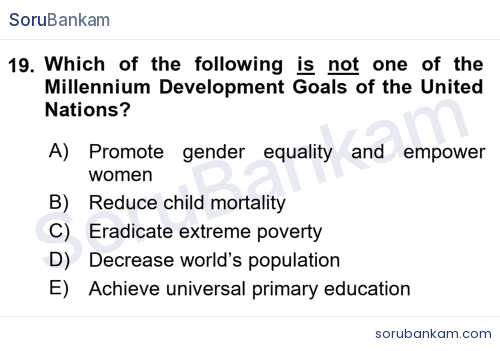
Which of the following is not one of the Millennium Development Goals of the United Nations? A) Promote gender equality and empower women B) Reduce child mortality C) Eradicate extreme poverty D) Decrease world's population E) Achieve universal primary education
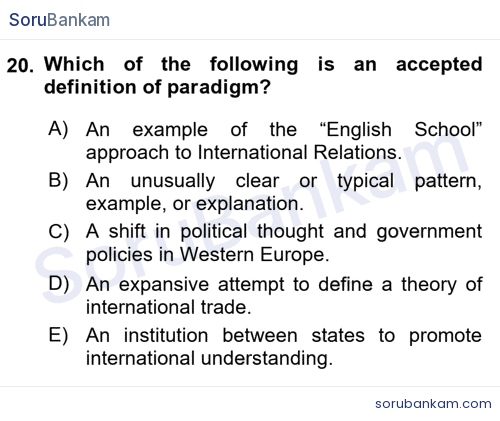
Which of the following is an accepted definition of paradigm? A) An example of the "English School" approach to Interational Relations. B) An unusually clear or typical pattem, example, or explanation. C) A shift in political thought and government policies in Western Europe. D) An expansive attempt to define a theory of international trade. E) An institution between states to promote internațional understanding.