ULI103U Introduction to International Relations 2024-2025 Vize Soruları
20 soru · Vize · 2024-2025
ULI103U Introduction to International Relations dersinin 2024-2025 vize sınavı 20 sorudan oluşur; ders AÖF Siyaset Bilimi ve Kamu Yönetimi (İngilizce) bölümünde okutulur. Sorular aşağıda sırasıyla yer alır. Doğru cevaplar ve sonucun, testi çözdüğünde görünür.
Önizleme · 20 soru. Cevaplamak ve sonucunu görmek için sınavı başlat.
Sorular
20 soru
Soru 1
Soru 2
Soru 3
Soru 4
Soru 5
Soru 6
Soru 7
Soru 8
Soru 9
Soru 10
Soru 11
Soru 12
Soru 13
Soru 14
Soru 15
Soru 16
Soru 17
Soru 18
Soru 19
Soru 20
Sınav modunda süre tutulur, doğru cevaplar ve sonucun sınav bitince görünür.
Dersin üniteleri
Ünite özetleri ve konu anlatımları
- 1. Ünite: The Study Of International Relations
- 2. Ünite: The Historical Evolution Of The International System
- 3. Ünite: Theories Of International Relations
- 4. Ünite: International Security
- 5. Ünite: International Law
- 6. Ünite: International Organizations
- 7. Ünite: Global Political Economy
- 8. Ünite: Globalization And Global Society
ULI103U Introduction to International Relations ders sayfası: bütün sınavlar ve üniteler
Soruların metni (otomatik okuma)
Görsellerden otomatik okunmuştur; hata içerebilir. Sorular, görsellerdeki hâliyle geçerlidir.
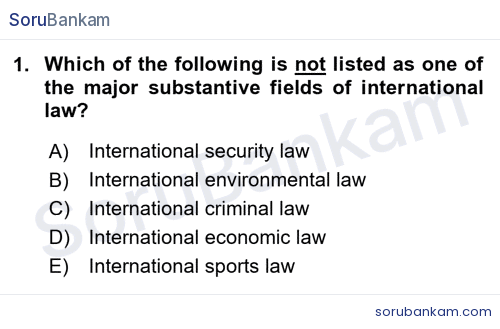
Which of the following is not listed as one of the major substantive flelds of International law? A) International security law B) International environmental law C) International criminal law D) International economic law E) International sports faw
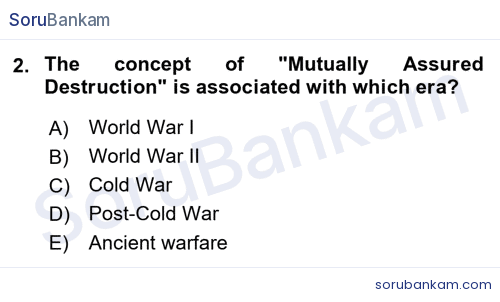
The concept "Mutually Assured Destruction" is associated with which era? A) World War B) World War C) Cold War D) Post-Cold War E) Ancient warfare
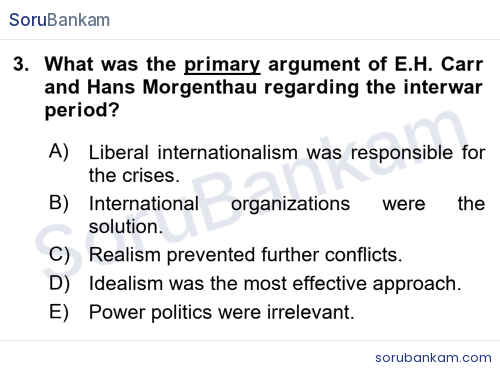
3. What was the primary argument of E.H. Carr and Hans Morgenthau regarding the interwar period? A) Liberal internationalism was responsible for the crises. International organizations werto the solution. C) Realism prevented further conflicts. D) Idealism was the most effective approach.., E) Power politics were irrelevant. r'.l
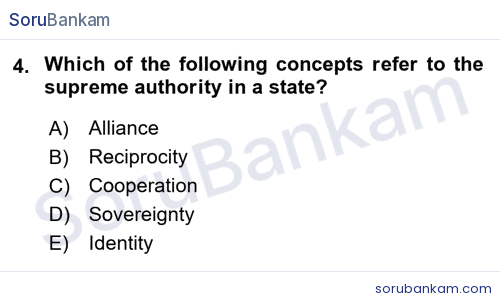
Which of the following concepts refer to the supreme authority in a state? A) Alliance 1. -' N.° B) Reciprocity C) Cooperation D) Sovereignty E) Identity
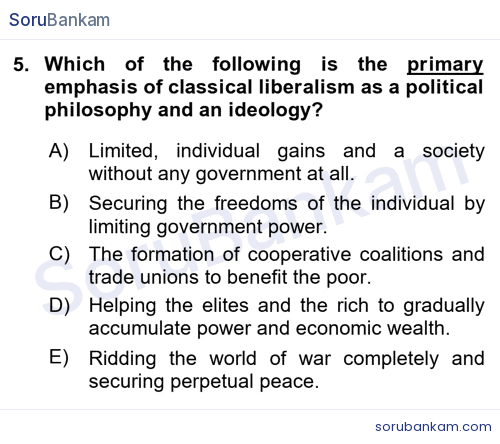
Which of the following is the primary emphasis of classical liberalism as a political philosophy and an ideology? A) Limited, individual gains and a society without any government at all. B) Securing the freedoms of the individual by limiting government power. C) The formation of cooperative coalitions and trade unions to benefit the poor. D) Helping the elites and the rich to gradually accumulate power and economic wealth. E) Ridding the world of war completely and securing perpetual peace.
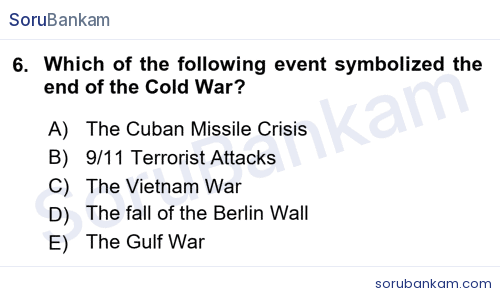
Which of the following event symbolized the end of the Cold War? A) The Cuban Missile Crisis B) 9/11 Terrorist Attacks C) The Vietnam War D) The fall of the Berlin Wall E) The Gulf War
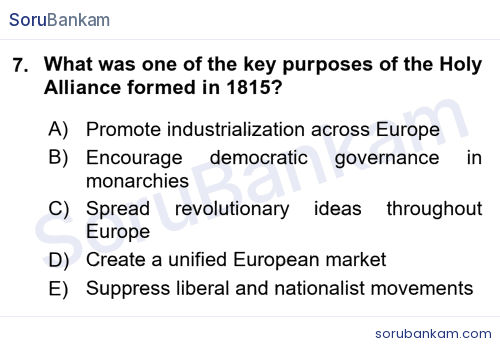
What was one of the key purposes of the Holy Alliance formed in 1815? A) Promote industrialization across Europe B) Encourage democratic governance in monarchies C) Spread revolutionary ideas throughout Europe D) Croate a unified European market E) Ey Suppress liberal and nationalist movements
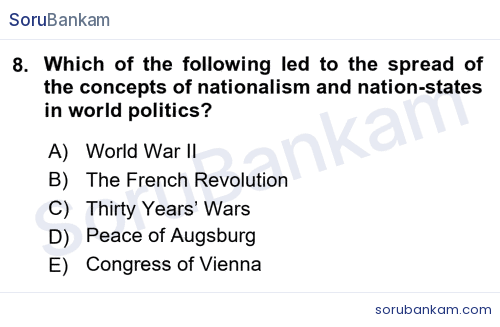
Which of the following led to the spread of the concepts of nationalism and nation-states in world politics? A) Wold War B) IMB) The French Revolution C) Thirty Years' Wars D) Peace of Augsburg E) Congress of Vienna
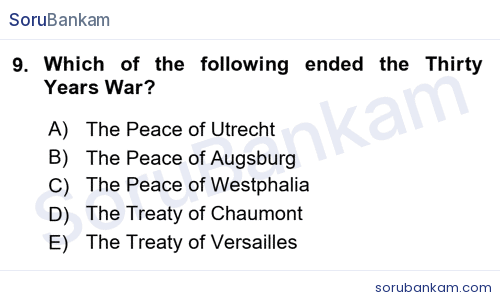
Which of the following ended the Thirty Years War? A) The Peace of Utrecht B) The Peace of Augsburg C) The Peace of Westphalia D) The Treaty of Chaumont E) The Treaty of Versailles
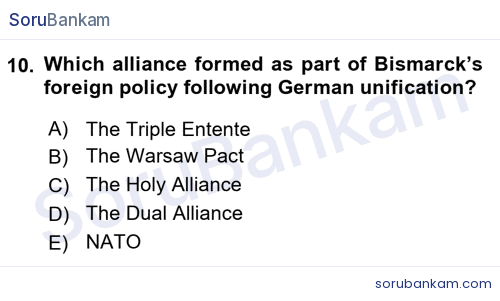
Which alliance formed as part of Bismarck's foreign policy following German unification? A) The Triple Entente B) The Warsaw Pact C) The Holy Alliance D) The Dual Alliance E) NATO
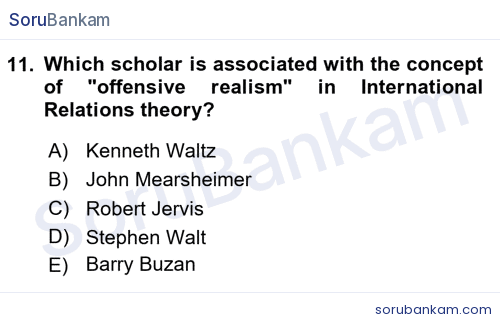
Which scholar is associated with the concept of "offensive realism" in International Relations theory? A) Kenneth Waltz B) John Mearsheimer C) Robert Jervis D) Stephen Walt E) Barry Buzan
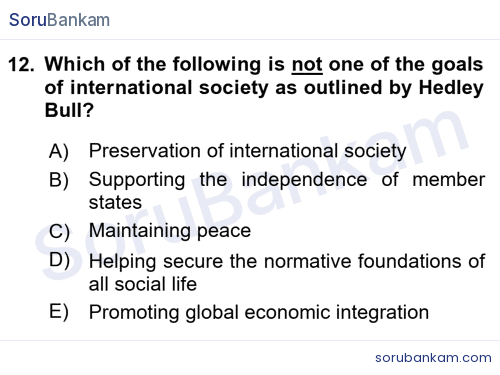
12. Which of the following is not one of the goals of international society as outlined by Hedley Bull? A) Preservation of interational society Supporting the independence of member states C) Maintaining peace D) Helping secure the normative foundations of all social life E) Promoting global economic integration
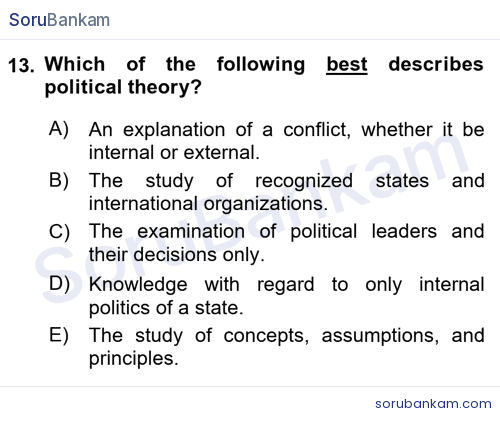
Which of the following best describes political theory? A) An explanation of a conflict, whether it be internal or external. B) The study of recognized states and international organizations. C) The examination of political leaders and their decisions only. D) Knowledge with regard to only intemal politics of a state. E) The study of concepts, assumptions, and principles.
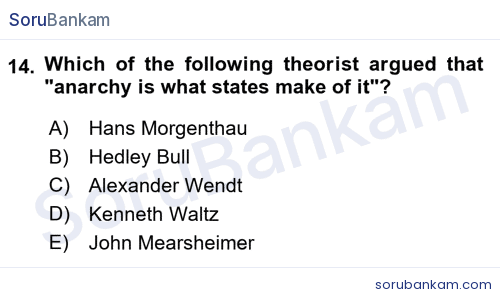
14. Which of the following theorist argued that "anarchy is what states make of it"? Hans Morgenthau Hedley Bull C) Alexander Wendt D) Kenneth Waltz E) John Mearsheimer
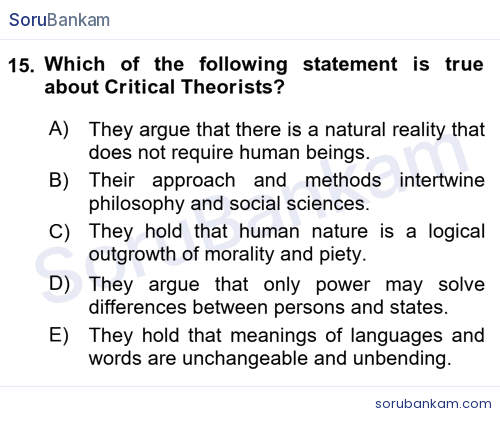
Which of the following statement is true about Critical Theorists? A) They argue that there is a natural reality that doès not require human beings. B) «'ву Their approach and methods intertwine philosophy and social sciences. C) They hold that human nature is a logical outgrowth of morality and piety. D) They argue that only power may solve differences between persons and states. E) They hold that meanings of languages and words are unchangeable and unbending.
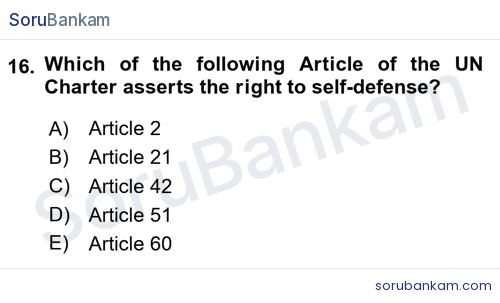
Which of the following Article of the UN Charter asserts the right to self-defense? A) Article B) Article 21 C) Article 42 D) Article 51 E) Article 60
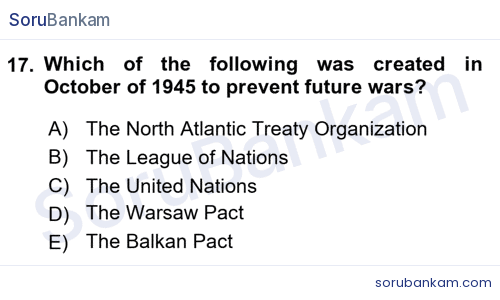
Which of the following was created in October of 1945 to prevent future wars? A) The North Atlantic Treaty Organization B) The League of Nations C) The United Nations D) The Warsaw Pact E) The Balkan Pact
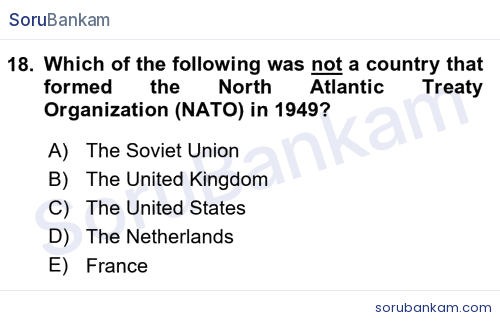
Which of the following was not a country that formed the North Atlantic Treaty Organization (NATO) in 1949? A) Ine Soviet Union B) The United Kingdom C) The United States D) The Netherlands E) Frabee
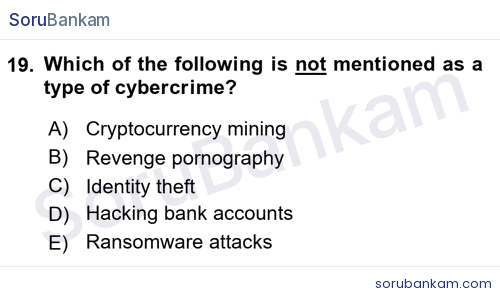
Which of the following is not mentioned as a type of cybercrime? A) Cryptocurrency mining B) Revenge pornography C) Identity theft D) Hacking bank accounts E) Ransomware attacks
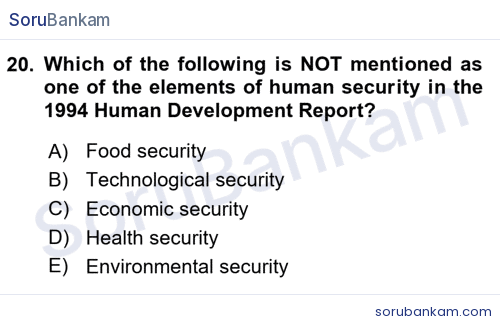
Which of the following is NOT mentioned as one of the elements of human security in the 1994 Human Development Report? A) Food security B) Technological security C) Economic secunty D) Health security E) Environmental security