ULI103U Introduction to International Relations 2018-2019 Vize Soruları
20 soru · Vize · 2018-2019
ULI103U Introduction to International Relations dersinin 2018-2019 vize sınavı 20 sorudan oluşur; ders AÖF Siyaset Bilimi ve Kamu Yönetimi (İngilizce) bölümünde okutulur. Sorular aşağıda sırasıyla yer alır. Doğru cevaplar ve sonucun, testi çözdüğünde görünür.
Önizleme · 20 soru. Cevaplamak ve sonucunu görmek için sınavı başlat.
Sorular
20 soru
Soru 1
Soru 2
Soru 3
Soru 4
Soru 5
Soru 6
Soru 7
Soru 8
Soru 9
Soru 10
Soru 11
Soru 12
Soru 13
Soru 14
Soru 15
Soru 16
Soru 17
Soru 18
Soru 19
Soru 20
Sınav modunda süre tutulur, doğru cevaplar ve sonucun sınav bitince görünür.
Dersin üniteleri
Ünite özetleri ve konu anlatımları
- 1. Ünite: The Study Of International Relations
- 2. Ünite: The Historical Evolution Of The International System
- 3. Ünite: Theories Of International Relations
- 4. Ünite: International Security
- 5. Ünite: International Law
- 6. Ünite: International Organizations
- 7. Ünite: Global Political Economy
- 8. Ünite: Globalization And Global Society
ULI103U Introduction to International Relations ders sayfası: bütün sınavlar ve üniteler
Soruların metni (otomatik okuma)
Görsellerden otomatik okunmuştur; hata içerebilir. Sorular, görsellerdeki hâliyle geçerlidir.
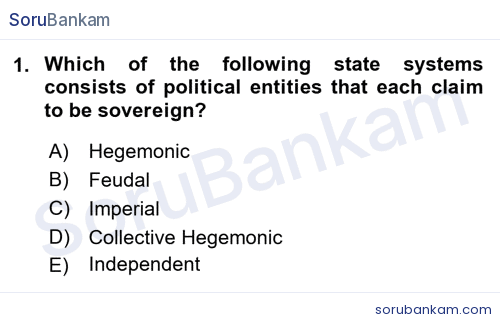
Which of the following state systems consists of political entities that each claim to be sovereign? A) Hegemonic B) Feudal C) Imperial D) Collective Hegemonic E) Independent
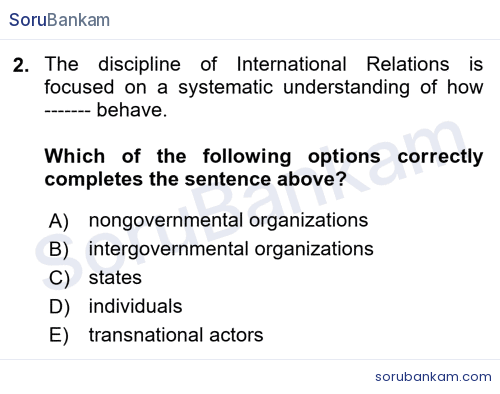
The discipline of Intermational Relations is focused on a systematic understanding of how -- behave. Which of the following options correctly completes the sentence above? A) nongovemmental organizations B) intergovernmental organizations C) states D) individuals E) transnational actors
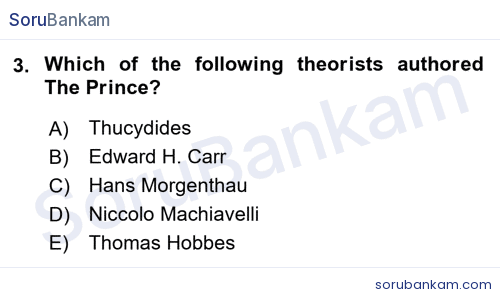
Which of the following theorists authored The Prince? A) Thucydides B) Edward H. Carr C) Hans Morgenthau D) Niccolo Machiavelli . E) Thomas Hobbes
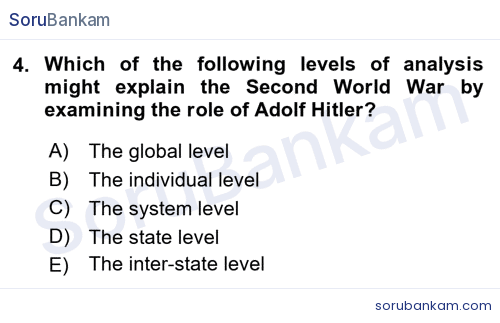
Which of the following levels of analysis might explain the Second World War by examining the role of Adolf Hitler? A) The global level B) The individual level C) The system level D) The state level E) The inter-state level
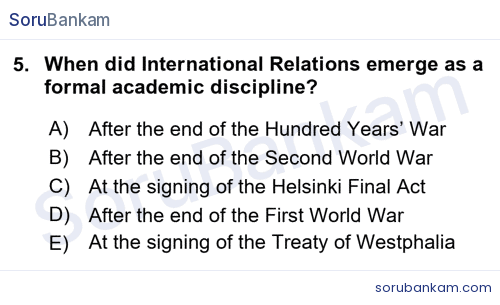
When did International Relations emerge as a formal academic discipline? A) After the end of the Hundred Years' War B) After the end of the Second World War C) At the signing of the Helsinki Final Act D) After the end of the First World War E) At the signing of the Treaty of Westphalia
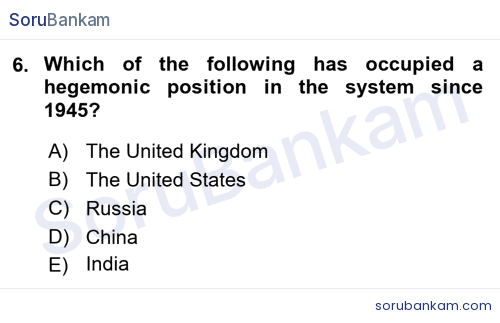
Which of the following has occupied a hegemonic position in the system since 1945? A) The United Kingdom B) The United States C) Russia 2'. D) China E) India.
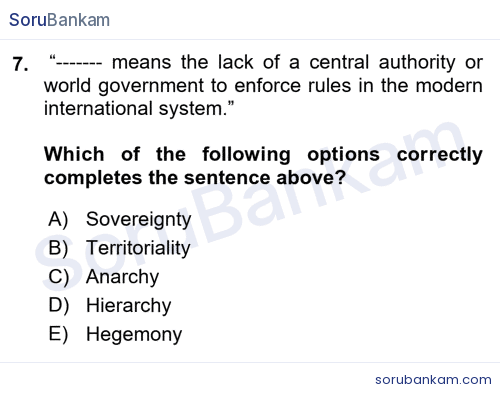
"... means the lack of a central authority or world government to enforce rules in the modern international system.* Which of the following options correctly completes the sentence above? A) Sovereignty B) Territoriality C) Anarchy D) .. D) Hierarchy E) Hegemony
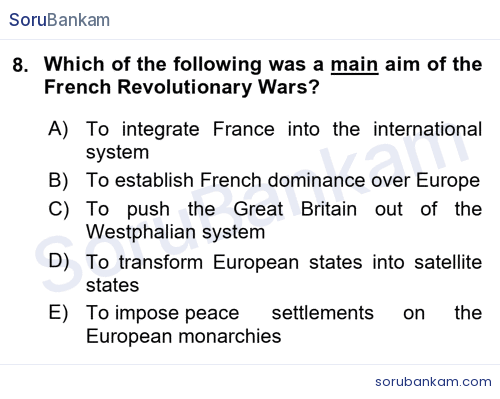
Which of the following was a main aim of the French Revolutionary Wars? A) To integrate France into the international system B) To establish French dominance over Europe C) To push the Great Britain out of the Westphalian system D) To transform European states into satellite states E) To impose peace settlements on the European monarchies
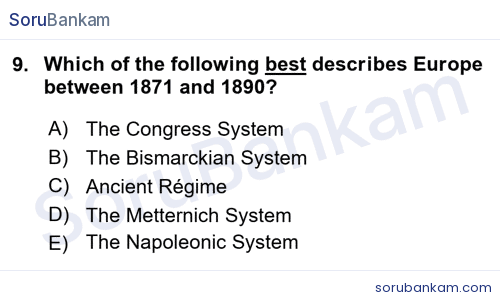
Which of the following best describes Europe between 1871 and 1890? A) The Congress System B) The Bismarckian System C) Ancient Régime D) The Metterich System E) The Napoleonic System
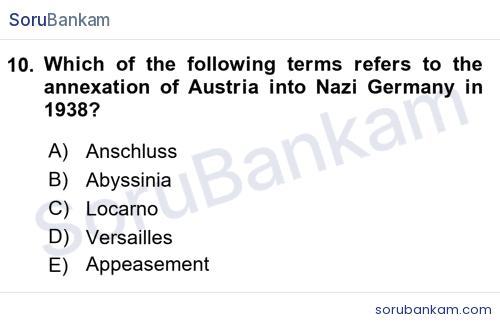
Which of the following terms refers to the annexation of Austria into Nazi Germany in 1938? A) Anschluss B) Abyssinia C) Locarno D) Versailles E) Appeasement
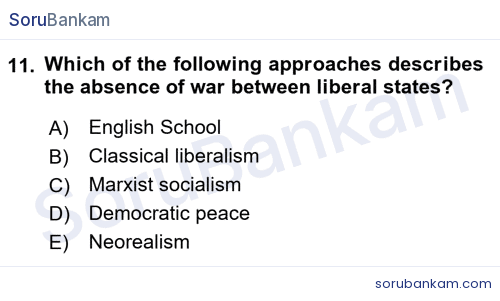
11. Which of the following approaches describes the absence of war between liberal states? A) English School Classical liberalism Marxist socialism D) Democratic peace E) Neorealism
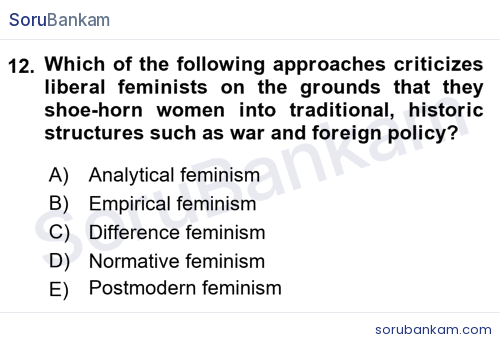
Which of the following approaches criticizes liberal feminists on the grounds that they shoe-horn women into traditional, historic structures such as war and foreign policy? A) Analytical feminism B) Empirical feminișm C) Difference feminism D) Normative feminism E) Postmodern feminism
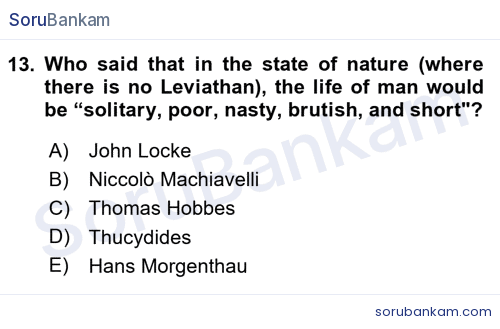
Who said that in the state of nature (where there is no Leviathan), the life of man would be "solitary, poor, nasty, brutish, and short"? A) John Locke B) Niccolò Machiavelli C) Thomas Hobbes D) Thucydides E) Hans Morgenthau
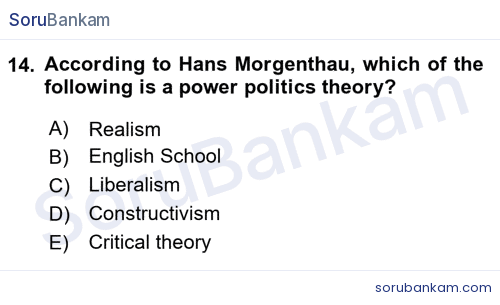
14. According to Hans Morgenthau, which of the! following is a power politics theory? A) Realism English School • C) Liberalism D) Constructivism E) Critical theory
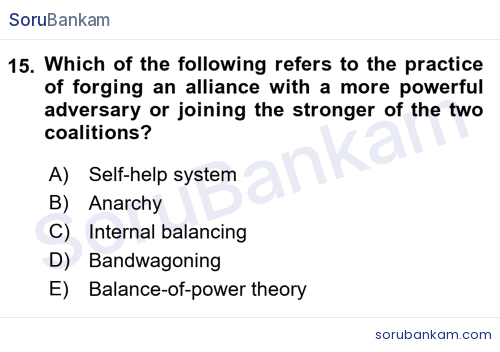
Which of the following refers to the practice of forging an alliance with a more powerful adversary or joining the stronger of the two coalltions? A) Self-help system B) Anarchy C) Internal balancing D) Bandwagoning E) Balance-of-power theory
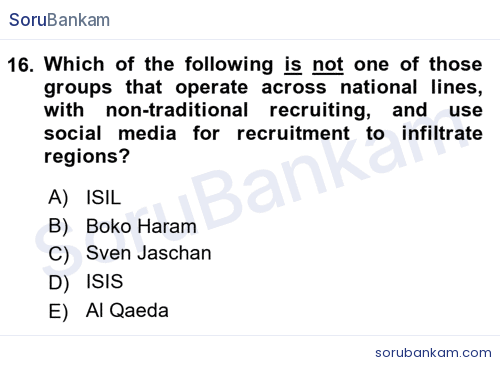
Which of the following is not one of those groups that operate across national lines, with non-traditional recruiting, and use social media for recruitment to infiltrate regions? A) ISIL ›''. B) Boko Haram C) Sven Jaschan D) ISIS E) Ai Qaeda
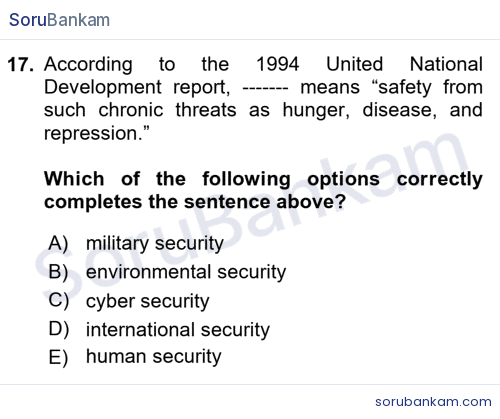
According to the 1994 United National Development report, means "safety from such chronic threats as hunger, disease, and repression." Which of the following options correctly completes the sentence above? A) military security B) . environmental secunty C) • \ C) cyber security D) international security E) human secunty
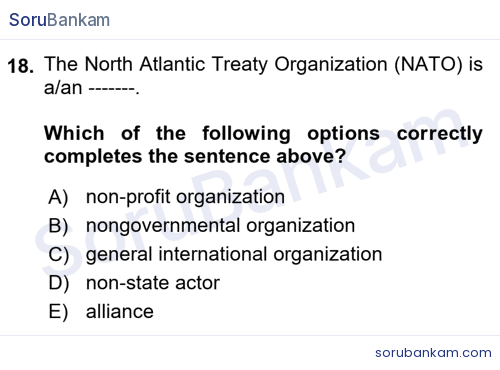
The North Atlantic Treaty Organization (NATO) is a/an Which of, the following options correctly complètes the sentence above? A) non-profit organization B) nongovernmental organization C) general interational organization D) non-state actor E) alliance
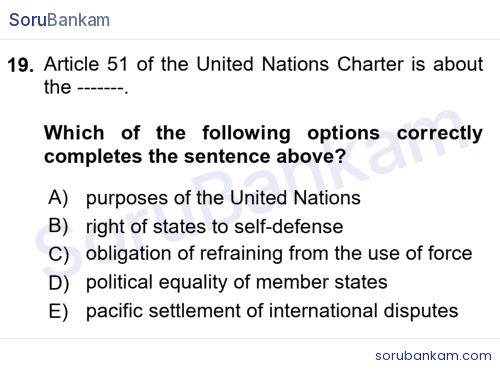
Article 51 of the United Nations Charter is about Which of the following options correctly completes the sentence above? A) purposes of the United Nations B) right of states to self-defense C) obligation of refraining from the use of force D) political equality of member states E) pacific settlement of international disputes
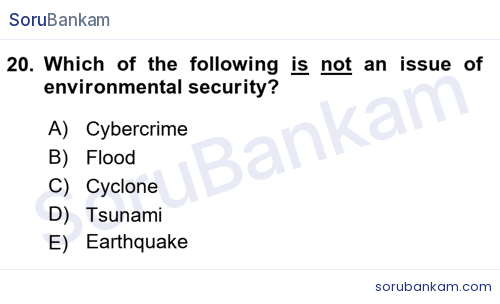
Which of the following is not an issue of environmental security? A) Cybercrime B) Flood C) Cyclone D) Tsunami E) Earthquake