ISL114U Business Management 2018-2019 Yaz Okulu Soruları
20 soru · Yaz okulu · 2018-2019
ISL114U Business Management dersinin 2018-2019 yaz okulu sınavı 20 sorudan oluşur; ders AÖF İşletme (İngilizce) bölümünde okutulur. Sorular aşağıda sırasıyla yer alır. Doğru cevaplar ve sonucun, testi çözdüğünde görünür.
Önizleme · 20 soru. Cevaplamak ve sonucunu görmek için sınavı başlat.
Sorular
20 soru
Soru 1
Soru 2
Soru 3
Soru 4
Soru 5
Soru 6
Soru 7
Soru 8
Soru 9
Soru 10
Soru 11
Soru 12
Soru 13
Soru 14
Soru 15
Soru 16
Soru 17
Soru 18
Soru 19
Soru 20
Sınav modunda süre tutulur, doğru cevaplar ve sonucun sınav bitince görünür.
Dersin üniteleri
Ünite özetleri ve konu anlatımları
- 1. Ünite: Fundamentals Management
- 2. Ünite: The History Of Management Thought
- 3. Ünite: Management Environment
- 4. Ünite: Managerial Planning And Decision Making
- 5. Ünite: The Fundamentals Of Strategic Management
- 6. Ünite: Organizational Design, Teamwork, And Organizational Change
- 7. Ünite: Leadership, Diversity, And Motivation
- 8. Ünite: Managerial Control
ISL114U Business Management ders sayfası: bütün sınavlar ve üniteler
Soruların metni (otomatik okuma)
Görsellerden otomatik okunmuştur; hata içerebilir. Sorular, görsellerdeki hâliyle geçerlidir.
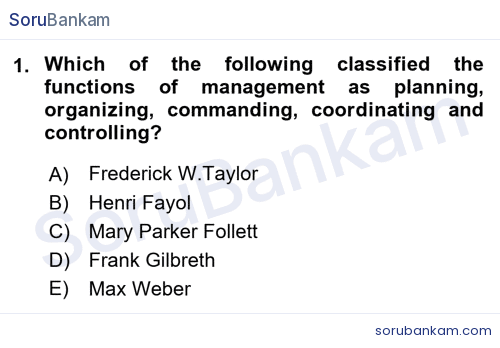
Which of the following classified the functions of management as planning, organizing, commanding, coordinating and controlling? A) Frederick W.Taylor B) Henri Fayol C) Mary Parker Foilett D) Frank Gilbreth E) Max Weber
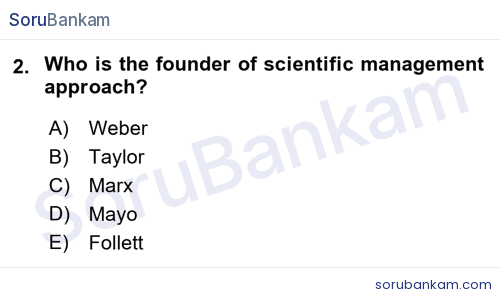
Who is the founder of scientific management approach? A) Weber B) Taylor C) Marx D) Mayo E) Follett
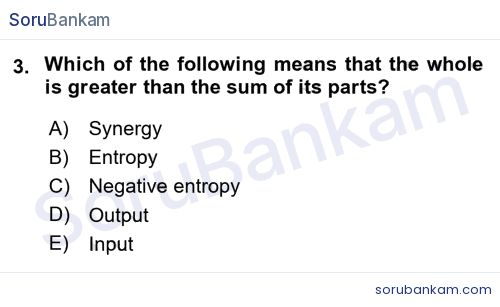
Which of the following means that the whole is greater than the sum of its parts? A) Synergy Entropy C) Negative entropy D) Output
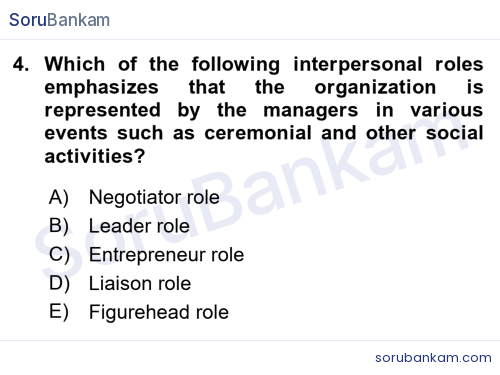
Which of the following interpersonal roles emphasizes that the organization represented by the managers in various events such as ceremonial and other social activities? A) Negotiator role B) Leader role C) Entrepreneur role D) Liaison role E) Figurehead role
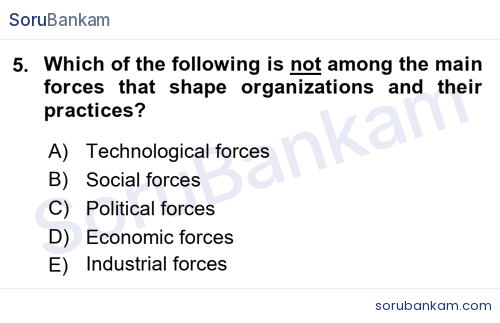
Which of the following is not among the main forces that shape organizations and their practices? A) Technological forces B) Social forces C) Political forces D) Economic forces E) Industrial forces
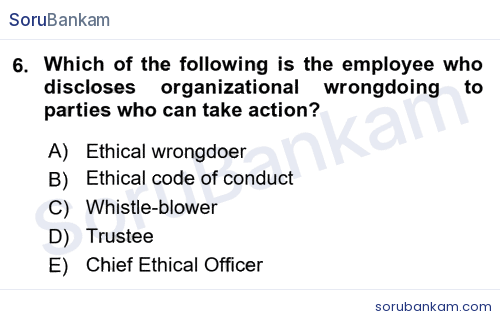
Which of the following is the employee who discloses organizational wrongdoing to parties who can take action? A) Ethical wrongdoer B) BY Ethical code of conduct C) Whistle-blower D) Trustee. E) Chier Ethical Officer»
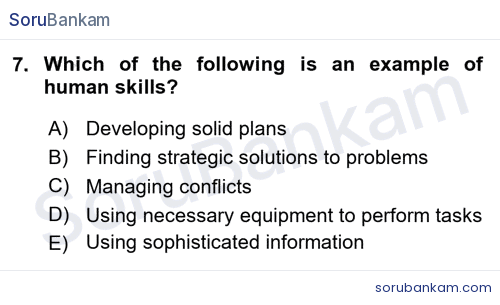
Which of the following is an example of human skills? A) Developing solid plans B) Finding strategic solutions to problems C) Managing conflicts D) Using necessary equipment to perform tasks E) Using sophisticated information
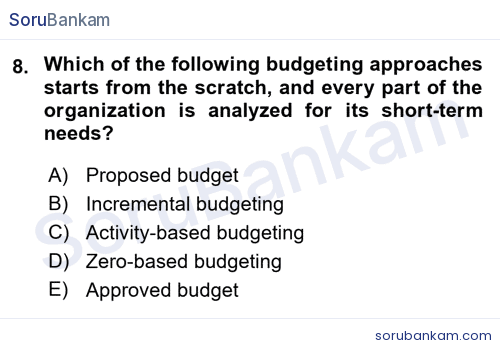
Which of the following budgeting approaches starts from the scratch, and every part of the organization is analyzed for its short-term needs? A) Proposed budget B) Incremental budgeting C) Activity-based budgeting D) Zero-based budgeting E) Approved budget
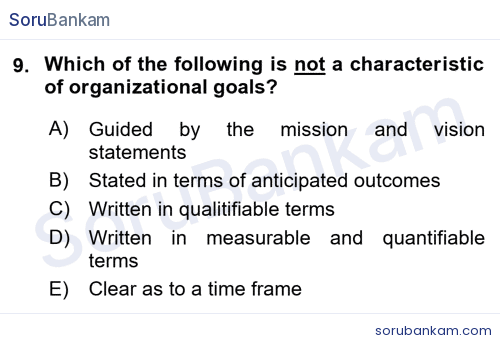
Which of the following is not a characteristic of organizational goals? A) Guided by the mission and vision statements B) Stated in terms of anticipated outcomes. C) Written in qualitifiable terms D) Written in measurable and quantifiable terms E) Clear as to a time frame
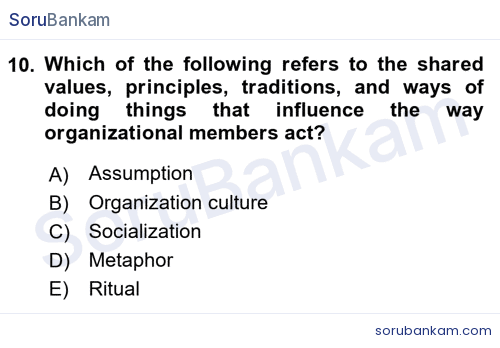
Which of the following refers to the shared values, principles, traditions, and ways of doing things that influence the way organizationat members act? A) Assumption B) Organization culture C) Socialization • D) Metaphor E) Ritual
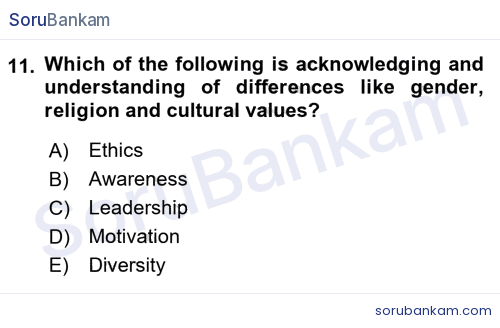
Which of the following is acknowledging and understanding of differences like gonder, religion and culturàl values? A) Ethics B) Awareness C) Leadership D) Motivation E) Diversity
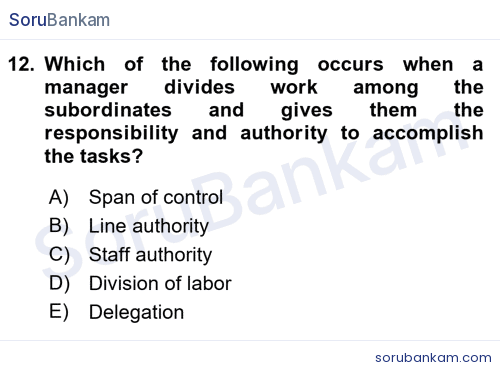
Which of the following occurs when a manager divides work among the subordinates and gives them the responsibility and authority to accomplish the tasks? A) Span of control B) Line authority C) Staff authority D) Division of labor E) Delegation
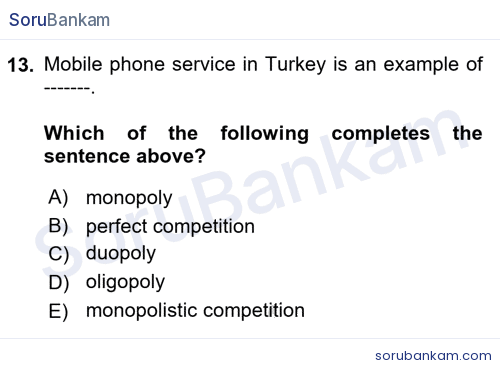
Mobile phone service in Turkey is an example of -----. Which of the following completes the sentence above? A) monopoly B) perfect competition C) duopoly D) oligopoly E) monopolistic competițion
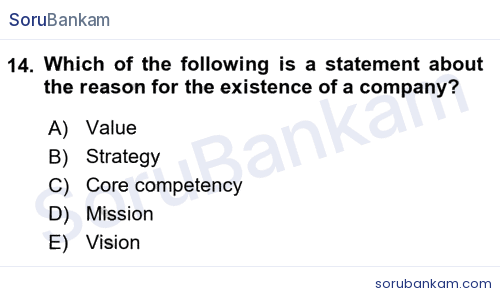
Which of the following is a statement about the reason for the existence of a company? A) Valuey'. B) Strategy C) • C) Core competency D) Mission E) Vision
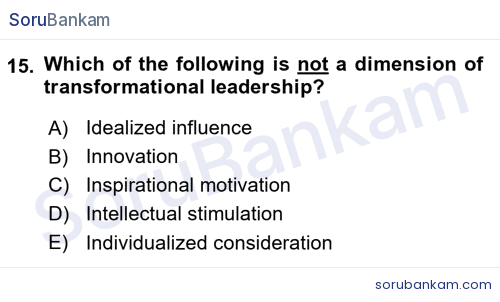
Which of the following is not a dimension of transformational leadership? A) Idealized influence B) Innovation C) Inspirational motivation D) Intellectual stimulation E) Individualized consideration
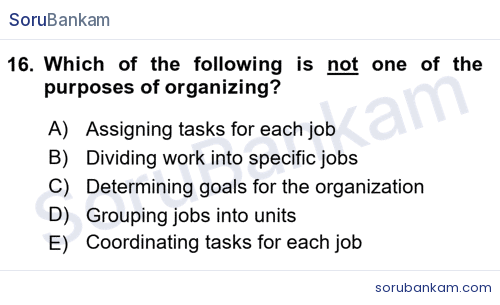
Which of the following is not one of the purposes of organizing? A) Assigning tasks for each job B) Dividing work into specific jobs C) l Determining goals for the organization D) Grouping jobs into units E) Coordinating tasks for each job
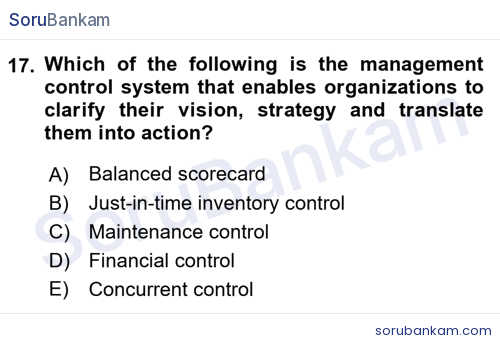
Which of the following is the management control system that enables organizations to clarify their vision, strategy and translate them into action? A) Balanced scorecard B) Just-in-time inventory control C) Maintenance control D) Financial control E) Concurrent control
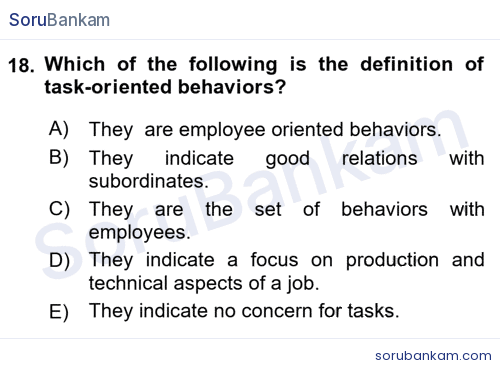
Which of the following is the definition of task-oriented behaviors? A) They are employee oriented behaviors. B) They indicate good relations with subordinates. C) They are the set of behaviors with employees. D) They indicate a focus on production and technical aspects of a job. E) They indicate no concern for tasks.
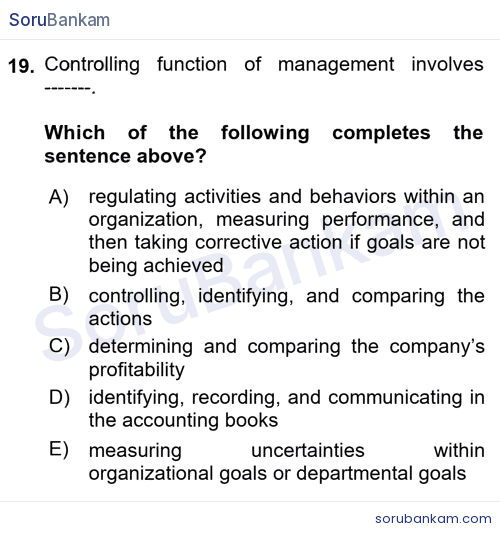
Controlling function of management involves Which of the following completes the sentence above? A) regulating activities and behaviors within an organization, measuring performance, and then taking corrective action if goals are not being achieved B) controlling, identifying, and comparing the actions C) determining and comparing the company's profitability D) identifying, recording, and communicating in the accounting books E) measuring uncertainties within organizational goals or departmental goals
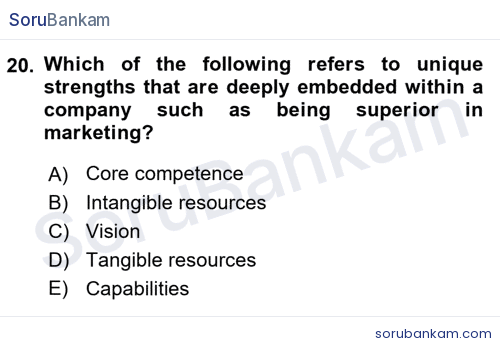
Which of the following refers to unique strengths that are deeply embedded within a company such as being superior in marketing? A) Core competence ('." B) Intangible resources C) Vision D) Tangible resources E) Capabilities