ISL114U Business Management 2020-2021 Yaz Okulu Soruları
20 soru · Yaz okulu · 2020-2021
ISL114U Business Management dersinin 2020-2021 yaz okulu sınavı 20 sorudan oluşur; ders AÖF İşletme (İngilizce) bölümünde okutulur. Sorular aşağıda sırasıyla yer alır. Doğru cevaplar ve sonucun, testi çözdüğünde görünür.
Önizleme · 20 soru. Cevaplamak ve sonucunu görmek için sınavı başlat.
Sorular
20 soru
Soru 1
Soru 2
Soru 3
Soru 4
Soru 5
Soru 6
Soru 7
Soru 8
Soru 9
Soru 10
Soru 11
Soru 12
Soru 13
Soru 14
Soru 15
Soru 16
Soru 17
Soru 18
Soru 19
Soru 20
Sınav modunda süre tutulur, doğru cevaplar ve sonucun sınav bitince görünür.
Dersin üniteleri
Ünite özetleri ve konu anlatımları
- 1. Ünite: Fundamentals Management
- 2. Ünite: The History Of Management Thought
- 3. Ünite: Management Environment
- 4. Ünite: Managerial Planning And Decision Making
- 5. Ünite: The Fundamentals Of Strategic Management
- 6. Ünite: Organizational Design, Teamwork, And Organizational Change
- 7. Ünite: Leadership, Diversity, And Motivation
- 8. Ünite: Managerial Control
ISL114U Business Management ders sayfası: bütün sınavlar ve üniteler
Soruların metni (otomatik okuma)
Görsellerden otomatik okunmuştur; hata içerebilir. Sorular, görsellerdeki hâliyle geçerlidir.
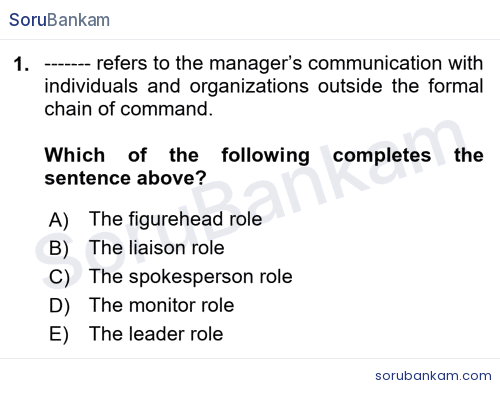
.. refers to the manager's communication with individuals and organizations outside the formal chain of command. Which of the following completes the sentence above? A) The figurehead role B) The liaison role C) The spokesperson role D) The monitor role E) The leader role
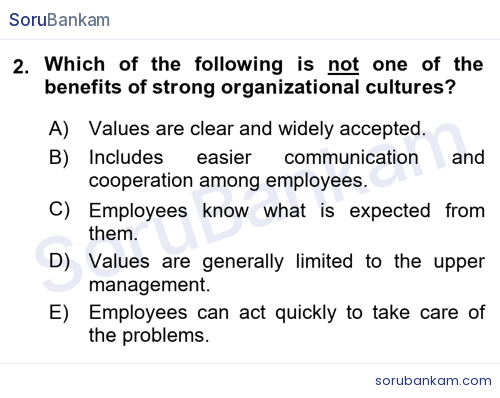
Which of the following is not one of the benefits of strong organizational cultures? A) Values are clear and widely accepted. B) Includes easier communication and cooperation among employees. C) Employees know what is expected from them. D) Values are generally limited to the upper management. E) Employees can act quickly to take care of the problems.
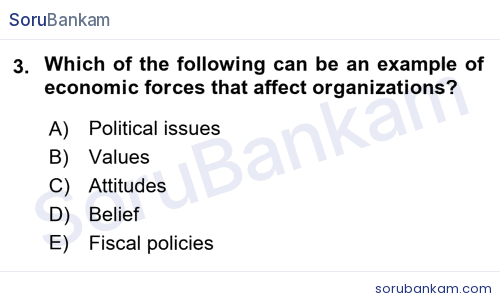
Which of the following can be an example of economic forces that affect organizations? A) Political issues B) Values C) Attitudes D) Belief E) Fiscal policies
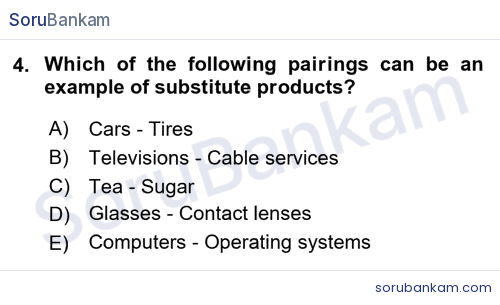
Which of the following pairings can be an example of substitute products? A) Cars - Tires B) Televisions - Cable services C) Tea - Sugar D) Glasses - Contact lenses E) Computers - Operating systems
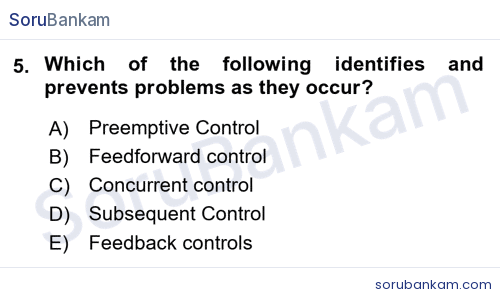
Which of the following identifies and prevents problems as they occur? A) Preemptive Control B) Feedforward control C) Concurrent control D) Subsequent Control E) S Feedback controls
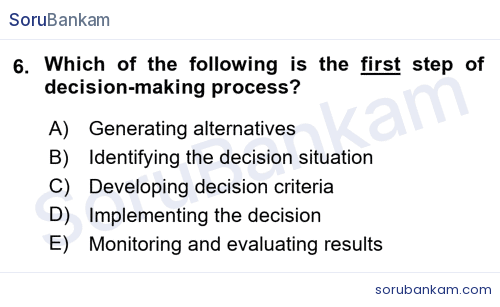
6. Which of the following is the first step of decision-making process? Generating altematives Identifying the decision situation C) Developing decision criteria D) Implementing the decision E) Monitoring and evaluating results
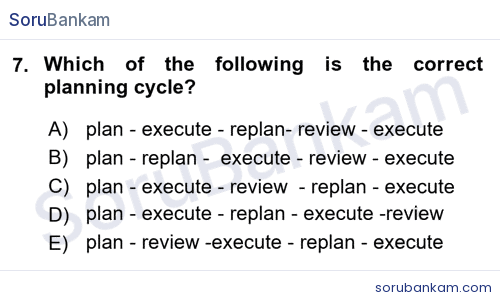
Which of the following is the correct planning cycle? A) plan - execute - replan- review - execute B) plan - replan - execute - review - execute C) plan - execute - review - replan - executel", D) plan - execute - replan - execute-review E) plan - review -execute - replan - execute
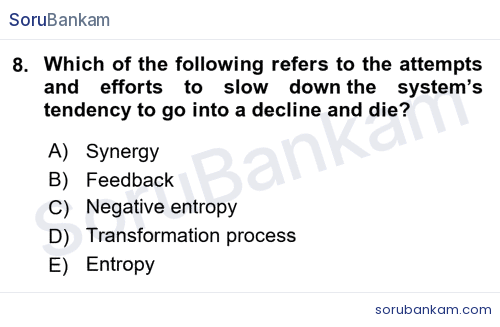
Which of the following refers to the attempts and efforts to slow down the system's tendency to go into à decline and die? A) Synergy B) Feedback C) Negative entropy., D) Transformation process E) Entropy
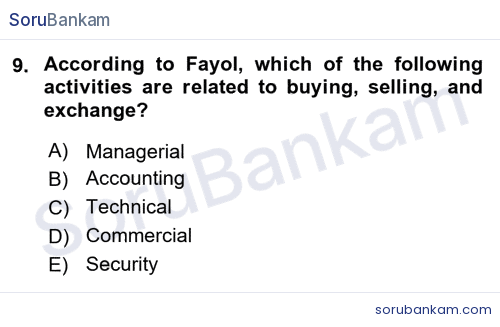
According to Fayol, which of the following activities are related to buying, selling, and exchange? A) Mahagerial B) 'By Accounting C) Technical D) Commercial E) Secúrity
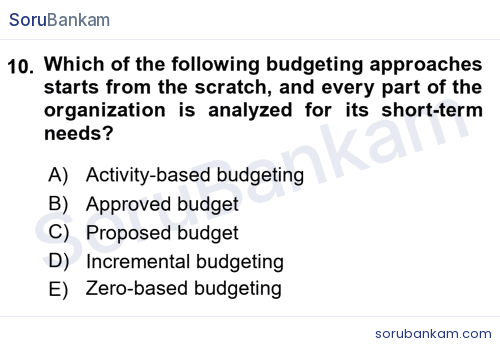
Which of the following budgeting approaches starts from the scratch, and every part of the organization is analyzed for its short-term needs? A) Activity-based budgeting B) Approved budget C) Proposed budget D) Incremental budgeting E) Zero-based budgeting
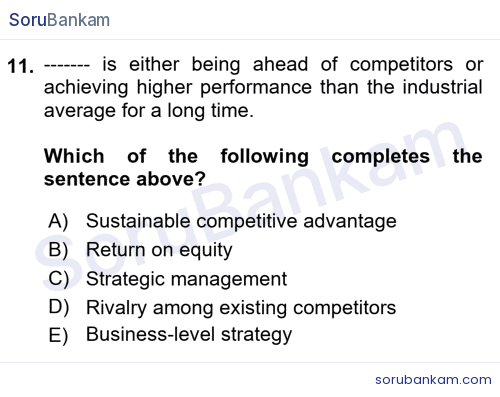
is either being ahead of competitors or achieving higher performance than the industrial average for a long time. Which of the following completes the sentence above? A) Sustainable competitive advantage B) Return on equity C) Strategic management D) Rivalry among existing competitors E) Business-level strategy
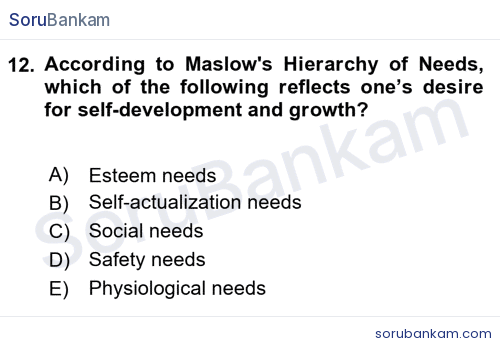
According to Maslow's Hierarchy of Needs, which of the following reflects one's desire for self-development and growth? A) Esteem needs B) Self-actualization needs C) Social needs • D) Safety needs E) Physiological needs
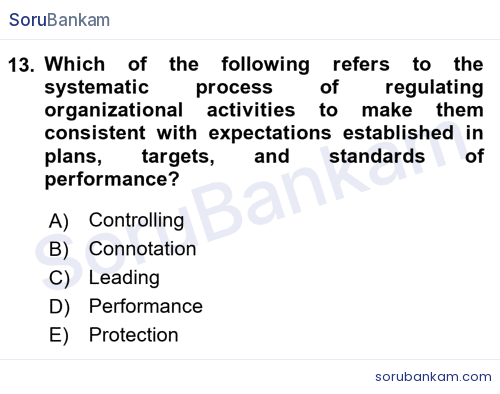
Which of the following refers to the systematic process of regulating organizational activities to make them consistent with expectations established in plans, targets, and standards performance? A) Controlling B) Connotation C) Leading D) Performance E) Protection
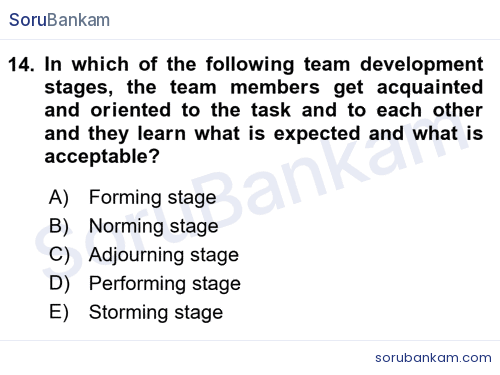
In which of the following team development stages, the team members get acquainted and oriented to the task and to each other and they learn what is expected and what is acceptable? A) Forming stage B) Norming stage C) Adjourning stage D) Performing stage E) Storming stage
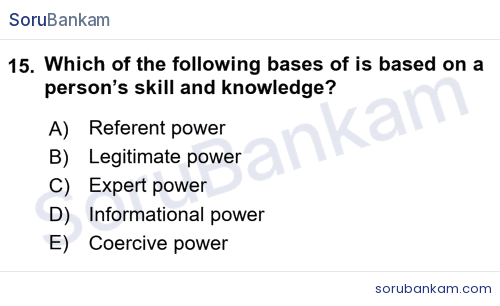
Which of the following bases of is based on a person's skill and knowledge? A) Referent power B) Legitimate power C) Expert power D) Informational power E) Coercive power
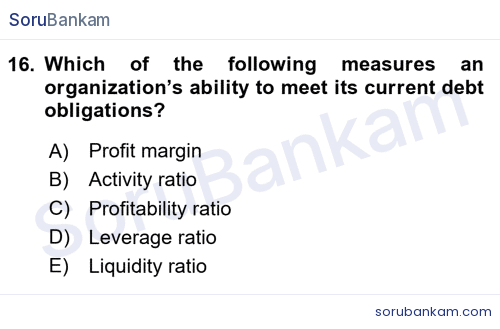
Which of the following measures organization's ability to meet its current debt obligations? A) Profit margin B) Activity ratio C) Profitability ratio D) E Leverage ratio E) S Liquidity ratio
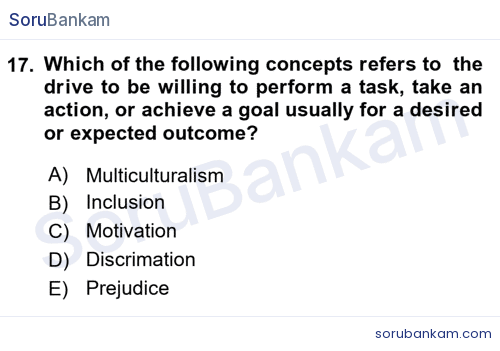
Which of the following concepts refers to the drive to be willing to perform a task, take an action, or achieve a goal usually for a desired or expected outcome? A) Multiculturalism B) Inclusion C) Motivation D) Discrimation E) Prejudice
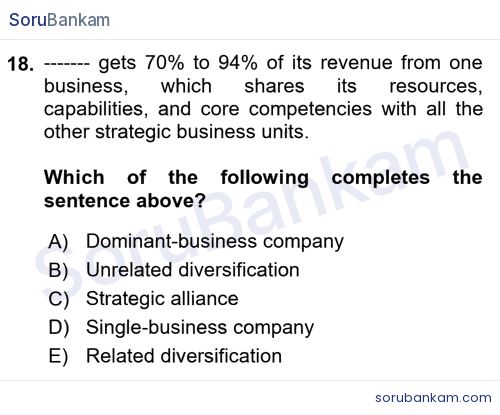
— gets 70% to 94% of its revenue from one business, which shares its resources, capabilities, and core competencies with all the other strategic business units. which of the following completes the • sentence above? A) Dominapt-búsiness company B) Unrelafed diversification C) Cj Strategic alliance D) Single-business company E) Related,diversification
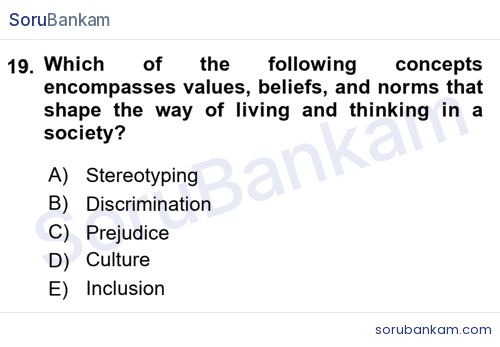
Which the following concepts encompasses values, beliefs, and norms that shape the way of living and thinking in a society? A) Stereotyping B) Discrimination C) Prejudice D) Culture E) Inclusion
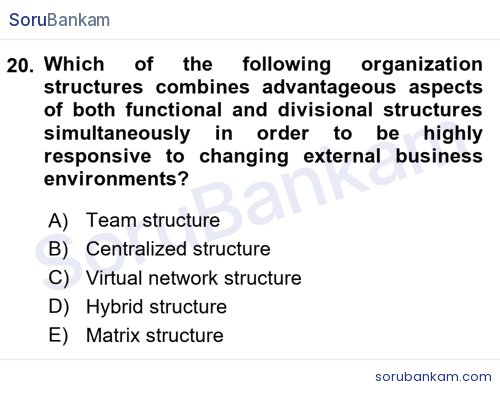
Which of the following organization structures combines advantageous aspects of both functional and divisional structures simultaneously in order to be highly responsive to changing external business environments? A) Team structure B) Centralized structure C) Virtual network structure D) Hybrid structure E) Matrix structure