ISL114U Business Management 2017-2018 Vize Soruları
20 soru · Vize · 2017-2018
ISL114U Business Management dersinin 2017-2018 vize sınavı 20 sorudan oluşur; ders AÖF İşletme (İngilizce) bölümünde okutulur. Sorular aşağıda sırasıyla yer alır. Doğru cevaplar ve sonucun, testi çözdüğünde görünür.
Önizleme · 20 soru. Cevaplamak ve sonucunu görmek için sınavı başlat.
Sorular
20 soru
Soru 1
Soru 2
Soru 3
Soru 4
Soru 5
Soru 6
Soru 7
Soru 8
Soru 9
Soru 10
Soru 11
Soru 12
Soru 13
Soru 14
Soru 15
Soru 16
Soru 17
Soru 18
Soru 19
Soru 20
Sınav modunda süre tutulur, doğru cevaplar ve sonucun sınav bitince görünür.
Dersin üniteleri
Ünite özetleri ve konu anlatımları
- 1. Ünite: Fundamentals Management
- 2. Ünite: The History Of Management Thought
- 3. Ünite: Management Environment
- 4. Ünite: Managerial Planning And Decision Making
- 5. Ünite: The Fundamentals Of Strategic Management
- 6. Ünite: Organizational Design, Teamwork, And Organizational Change
- 7. Ünite: Leadership, Diversity, And Motivation
- 8. Ünite: Managerial Control
ISL114U Business Management ders sayfası: bütün sınavlar ve üniteler
Soruların metni (otomatik okuma)
Görsellerden otomatik okunmuştur; hata içerebilir. Sorular, görsellerdeki hâliyle geçerlidir.
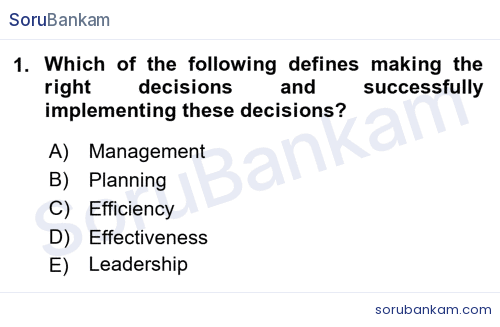
Which of the following defines making the right decisions and successfully implementing these decisions? A) Management B) Planning C) Efficiency D) Effectiveness E) Leadership
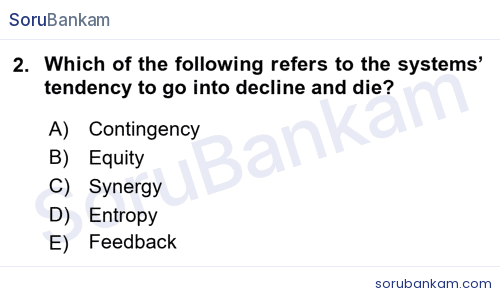
Which of the following refers to the systems* tendency to go Into decline and die? A) Contingency B) Equity C) Synergy D) Entropy E) Feedback
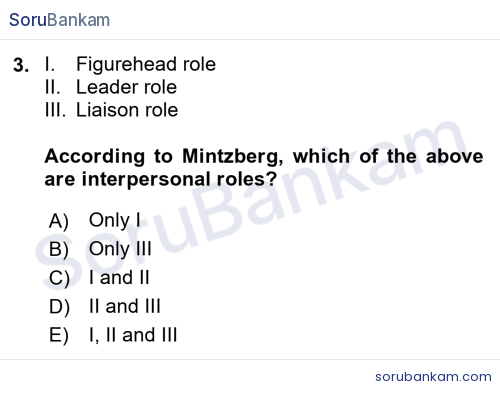
I. Figurehead role II. Leader role III. Liaison role According to Mintzberg, which of the above are interpersonal roles? A) Only B) Only lil C) 1 and D) Il and Ill E) I, Il and Ill
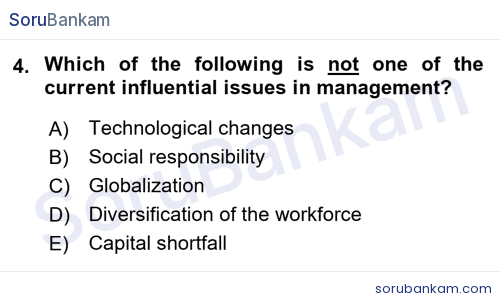
Which of the following is not one of the current influential issues in management? A) Technological changes B) Social responsibility C) Globalization D) Diversification of the workforce E) Capital shortfall
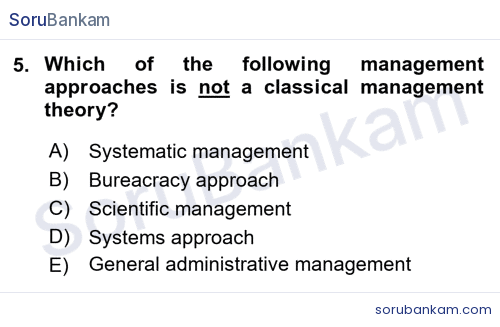
Which of the following management approaches is not a classical management theory? A) Systematic management B) Bureacracy approach C) Scientific management D) Systems approach E) ' General administrative management
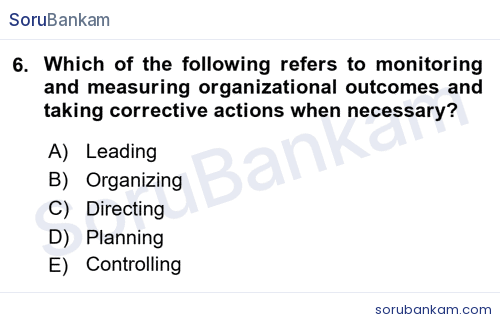
Which of the following refers to monitoring and measuring organizational outcomes and taking corrective actions when necessary? A) Leading B) Organizing C) Directing ""'' D) Planning E) Controlling
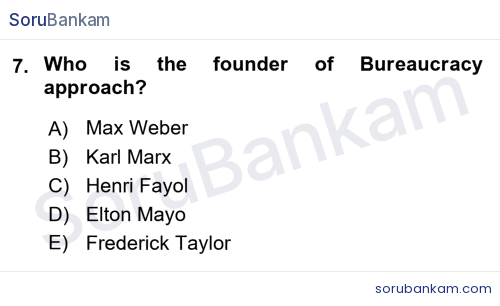
Who is the founder of Bureaucracy approach? A) Max Weber B) Karl Marx C) Henri Fayol D) Elton Mayo E) Frederick Taylor
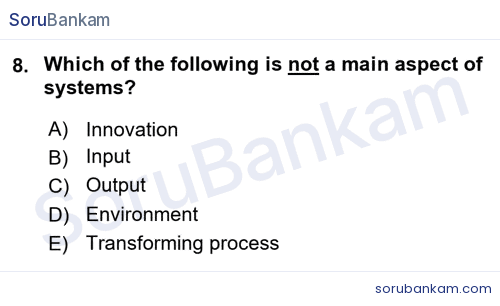
Which of the following is not a main aspect of systems? A) Innoyation B) Input C) Output D) Environment !» E) Transforming process
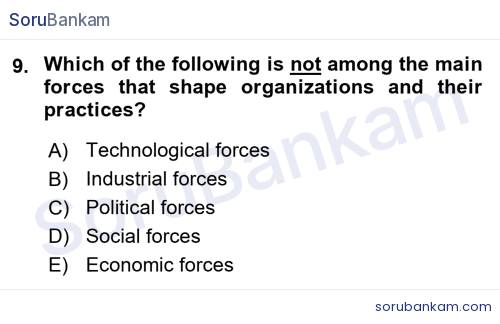
Which of the following is not among the main forces that shape organizations and their practices? A) Technological forces B) " NB) Industrial forces C) Political forces D) Social forces E) Economic forces
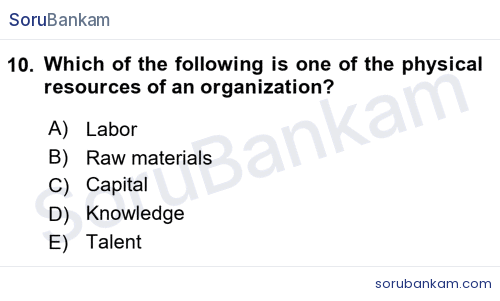
Which of the following is one of the physical. resources of an organization? A) Labor B) Raw materials C) Capital D) Knowledge E) Talent
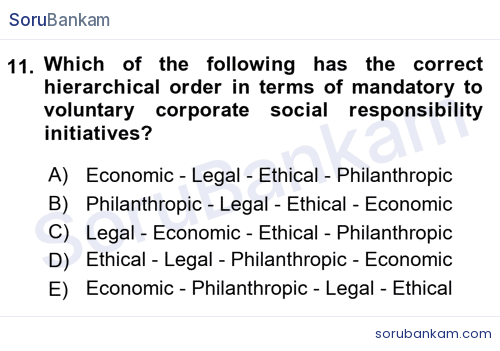
Which of the following has the correct hierarchical order in terms of mandatory to voluntary corporate social responsibility initiatives? A) Economic - Legal - Ethical - Philanthropic B) Philanthropic - Legal - Ethical - Economic C) Legal - Economic - Ethical - Philanthropic D) Ethical - Legal - Philanthropic - Economic E) Economic - Philanthropic - Legal - Ethical
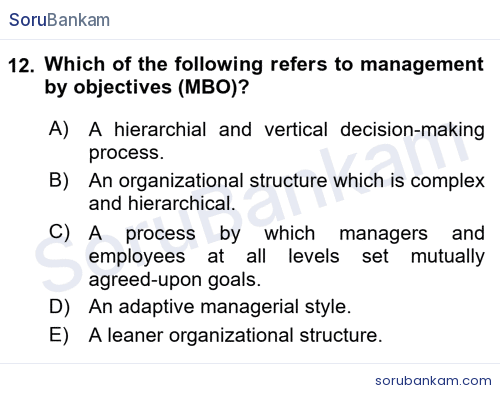
Which of the following refers to management by objectives (MBO)? A) A hierarchial and vertical decision-making process. B) An organizational structure which is complex and hierarchical. C) A process by which managers and employees at all levels set mutually agreed-upon goals. D) An adaptive managerial style. E) A leaner organizational structure.
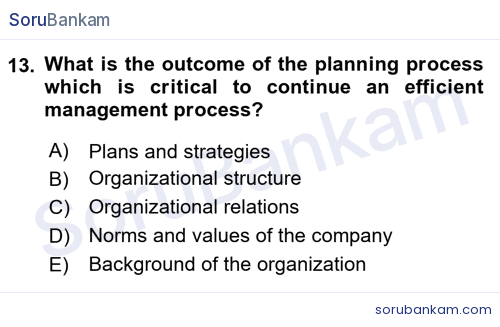
What is the outcome of the planning process which is critical to continue an efficient management process? A) Plans and strategies B) Organizational structure C) Organizational relations D) Norms and values of the company E) Background of the organization
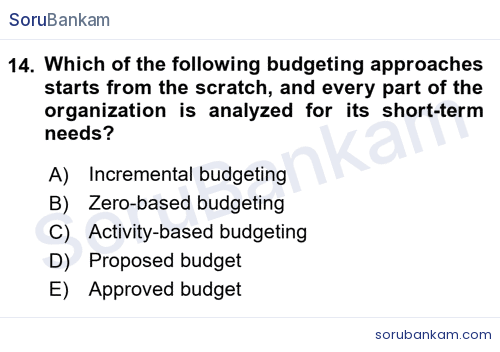
Which of the following budgeting approaches starts from the scratch, and every part of the organization is • analyzed for its short-term needs? A) Incremental budgeting B) Zero-based budgeting C) Activity-based budgeting D) Proposed budget E) Approved budget
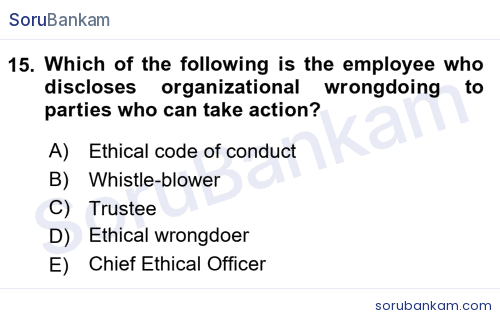
Which of the following is the employee who! discloses organizational wrongdoing parties who can take action? A) Ethical code of conduct B) \B) Whistle-blower C) Trustee D) Ethical wrongdoer E) Chief Ethical Officer '*'''
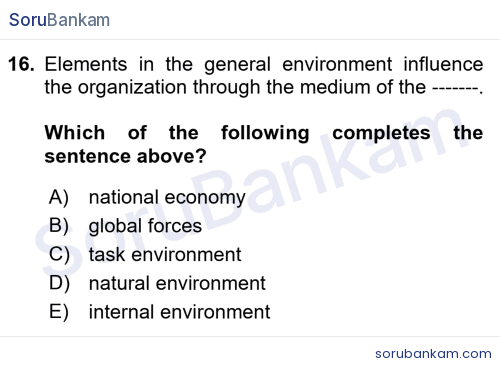
Elements in the general environment influence the organization through the medium of the--. Which of the following completes the sentence above? A) national economy B) global forces . C) task environment D) natural environment E) internal environment
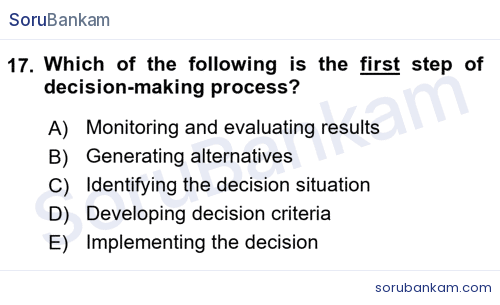
Which of the following is the first step of decision-making process? A) Monitoring and evaluating results B) Generating alteratives C) l Identifying the decision situation D) Developing decision criteria E) Implementing the decision
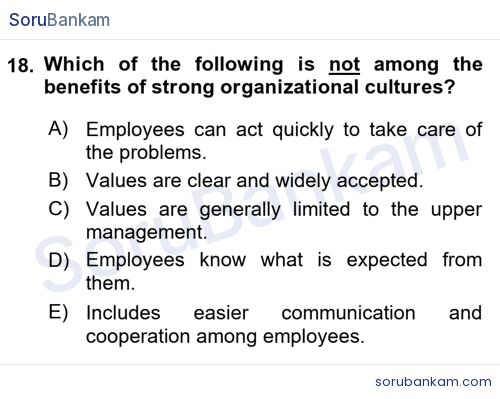
18. Which of the following is not among the benefits of strong organizational cultures? A) Employees can act quickly to take care of the problems. By Values are clear and widely accepted. Values are generally limited to the upper management. D) Employees know what is expected from them. 'E) Includes easier communication and cooperation among employees.
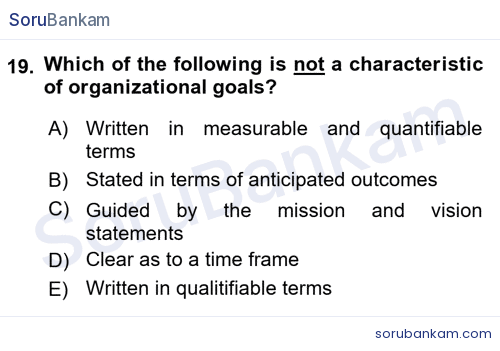
Which of the following is not a characteristic of organizational goals? A) Written in measurable and quantifiable terms B) Stated in terms of anticipated outcomes C) Guided the mission and vision statements D) Clear as to a time frame E) Written in qualitifiable terms
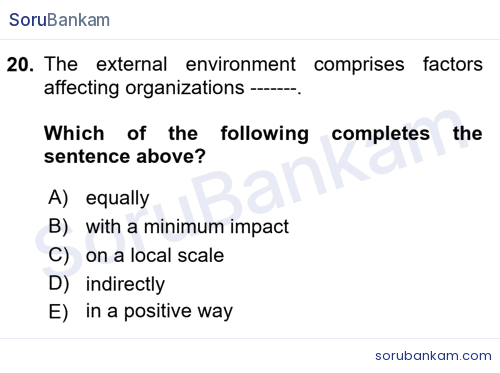
The external environment comprises factors affecting organizations —___ Which of the following completes the sentence above? A) equally B) E with a minimum impact C) on a local scale D) Indirectly E) in a positive way