ISL114U Business Management 2017-2018 Final Soruları
20 soru · Final · 2017-2018
ISL114U Business Management dersinin 2017-2018 final sınavı 20 sorudan oluşur; ders AÖF İşletme (İngilizce) bölümünde okutulur. Sorular aşağıda sırasıyla yer alır. Doğru cevaplar ve sonucun, testi çözdüğünde görünür.
Önizleme · 20 soru. Cevaplamak ve sonucunu görmek için sınavı başlat.
Sorular
20 soru
Soru 1
Soru 2
Soru 3
Soru 4
Soru 5
Soru 6
Soru 7
Soru 8
Soru 9
Soru 10
Soru 11
Soru 12
Soru 13
Soru 14
Soru 15
Soru 16
Soru 17
Soru 18
Soru 19
Soru 20
Sınav modunda süre tutulur, doğru cevaplar ve sonucun sınav bitince görünür.
Dersin üniteleri
Ünite özetleri ve konu anlatımları
- 1. Ünite: Fundamentals Management
- 2. Ünite: The History Of Management Thought
- 3. Ünite: Management Environment
- 4. Ünite: Managerial Planning And Decision Making
- 5. Ünite: The Fundamentals Of Strategic Management
- 6. Ünite: Organizational Design, Teamwork, And Organizational Change
- 7. Ünite: Leadership, Diversity, And Motivation
- 8. Ünite: Managerial Control
ISL114U Business Management ders sayfası: bütün sınavlar ve üniteler
Soruların metni (otomatik okuma)
Görsellerden otomatik okunmuştur; hata içerebilir. Sorular, görsellerdeki hâliyle geçerlidir.
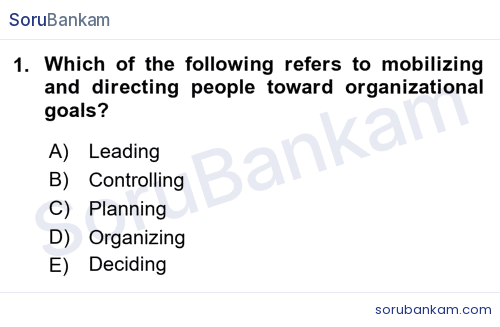
Which of the following refers to mobilizing and directing people toward organizational goals? A) Leading B) Controlling C) Planning D) Organizing E) Deciding
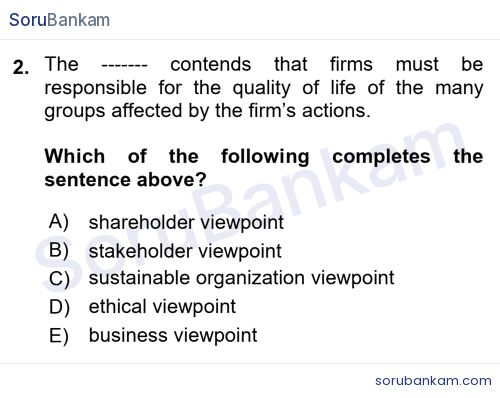
The contends that firms must be responsible for the quality of life of the many groups affected by the firm's actions. Which of the following completes the sentence above? A) shareholder viewpoint B) stakeholder viewpoint C) sustainable organization viewpoint D) ethical viewpoint E) business viewpoint
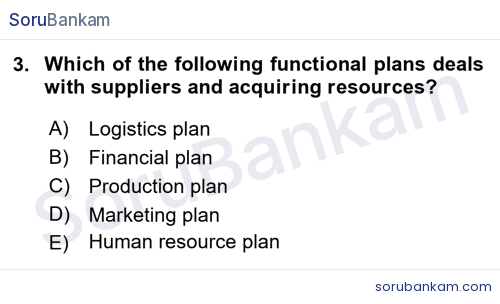
Which of the following functional plans deals with suppliers and acquiring resources? A) Logistics plan B) Financial plan C) Production plan D) Marketing plan E) Human resource plan
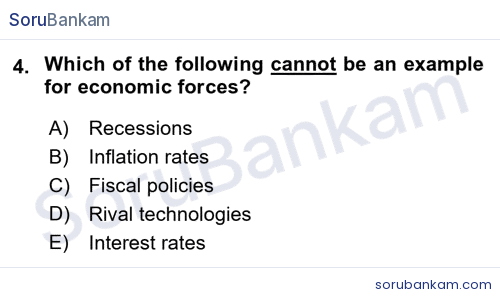
Which of the following cannot be an example. for economic forces? A) Recessions B) Inflation rates C) Fiscal policies D) Rival technologies E) Interest rates
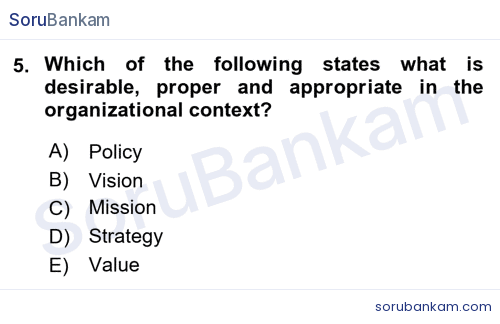
Which of the following states what is desirable, proper and appropriațe in the organizational context? A) Policy B) Vision C) Mission D) Strategy E) Value
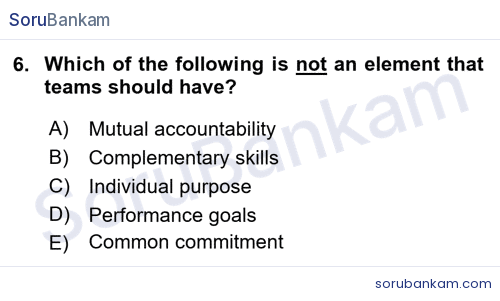
Which of the following is not an element that teams should have? A) Mutual accountability B) Complementary skills C) Individual purpose D) Performance goals E) Common commitment
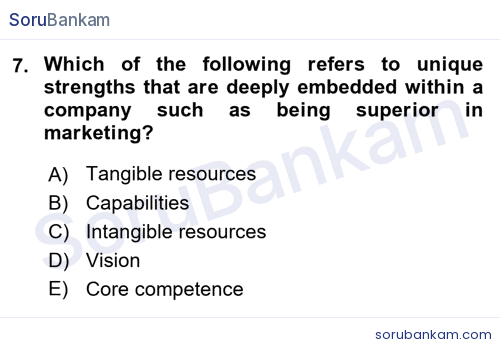
Which of the following refers to unique strengths that are deeply embedded within a company such as being superior in marketing? A) Tangible resources B) Capabilities C) Intangible resources D) Vision E) Core competence
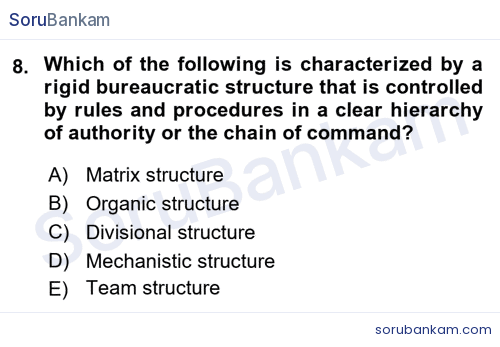
Which of the following is characterized by a rigid bureaucratic structure that is controlled by rules and procedures in a clear hierarchy of authority or the chain of command? A) Matrix structure B) Organic structure C) Divisional structure D) Mechanistic structure E) Team structure
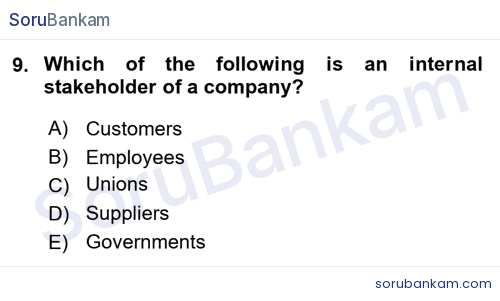
Which of the following is an internal. stakeholder of a company? A) Customers B) Employees C) Unions D) Suppliers E) Govemments
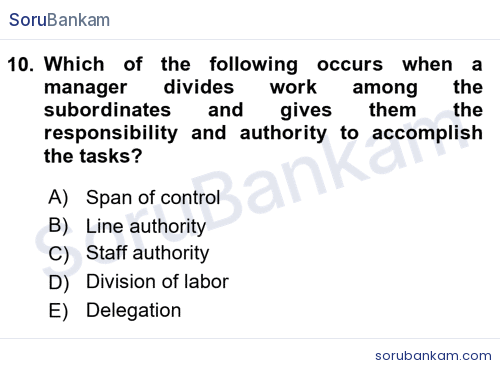
Which of the following occurs when a manager divides work among the subordinates and gives them the responsibility and authority to accomplish the tasks? A) Span of control B) Line authority C) Staff authority D) Division of labor E) Delegation
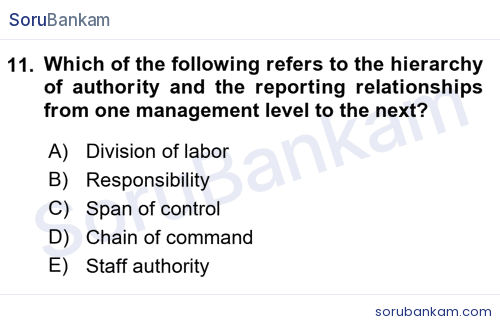
Which of the following refers to the hierarchy of authority and the reporting relationships from one management level to the next? A) Division of labor B) Responsibility C) Span of control D) Chain of command E) Staff authority
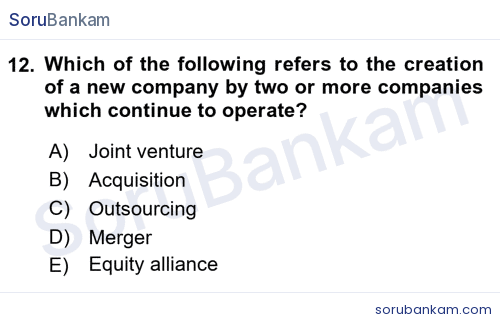
Which of the following refers to the creation of a new company by two or more companies which continue to operate? A) Joint venture B) Acquisition C) Outsourcing D) Merger E) Equity alliance
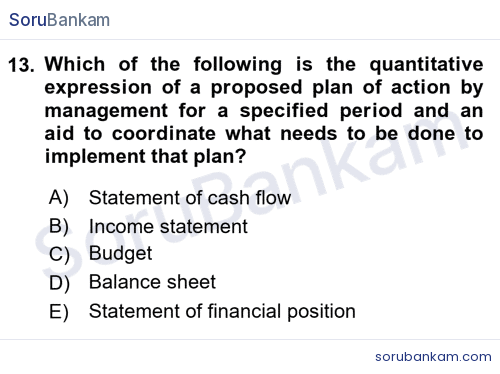
Which of the following is the quantitative expression of a proposed plan of action by management for a specified period and an aid to coordinate what needs to be done to implement that plan? A) Statement of cash flow B) Income statement C) Budget D) Balance sheet E) Statement of financial position
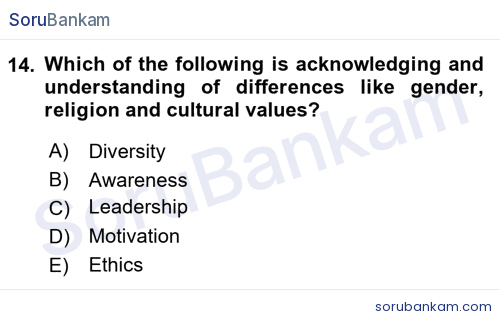
Which of the following is acknowledging and! understanding of differences like gender, religion and cultural values? A) Diversity B) Awareness C) Leadership D) Motivation E) Ethics
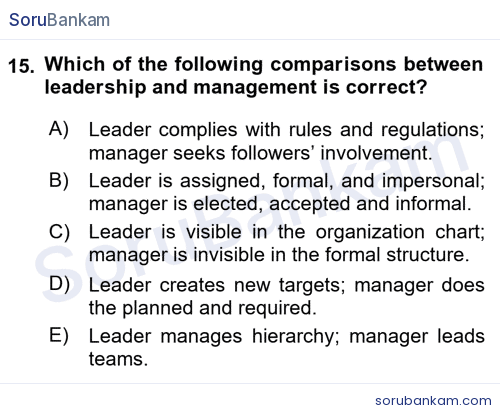
15. Which of the following comparisons between. leadership and management is correct? A) Leader complies with rules and regulations; manager seeks followers' involvement. Leader is assigned, formal, and impersonal; manager is elected, accepted and informal. C) Leader is visible in the organization chart; manager is invisible in the formal structure. D) Leader creates new targets; manager does the planned and required. E) Leader manages hierarchy; manager leads teams.
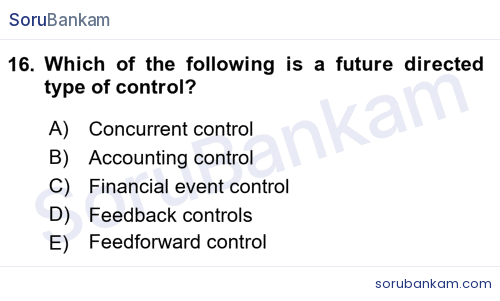
Which of the following is a future directed type of control? A) Concurrent control B) Accounting control C) Financial event control D) Feedback controls E) Feedforward control
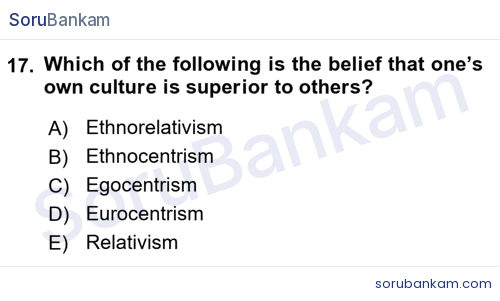
Which of the following is the belief that one's own culture is superior to others? A) Ethnorelativism B) Ethnocentrism C) Egocentrism D) Eurocentrism E) Relativism
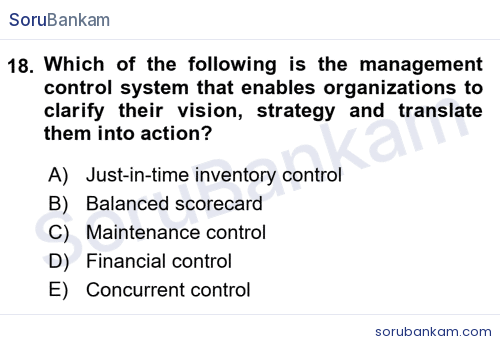
Which of the following is the management control system that enables organizations to clarify their vision, strategy and translate them into action? A) Just-in-time inventory control B) Balanced scorecard C) Maintenance control D) Financial control E) Concurrent control
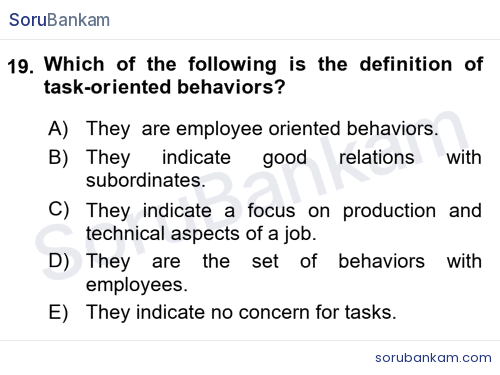
Which of the following is the definition of task-oriented behaviors? A) They are employee oriented behaviors. B) They indicate good relations with subordinates. C) They indicate a focus on production and technical aspects of a job. D) They are the set of behaviors with employees. E) They indicate no concern for tasks.
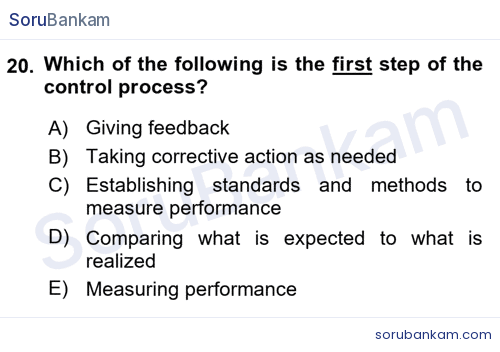
Which of the following is the first step of the control process? A) Giving feedback B) Taking corrective action as needed C) Establishing standards and methods to measure performance D) Comparing what is expected to what is realized E) Measuring performance