ISL114U Business Management 2024-2025 Vize Soruları
20 soru · Vize · 2024-2025
ISL114U Business Management dersinin 2024-2025 vize sınavı 20 sorudan oluşur; ders AÖF İşletme (İngilizce) bölümünde okutulur. Sorular aşağıda sırasıyla yer alır. Doğru cevaplar ve sonucun, testi çözdüğünde görünür.
Önizleme · 20 soru. Cevaplamak ve sonucunu görmek için sınavı başlat.
Sorular
20 soru
Soru 1
Soru 2
Soru 3
Soru 4
Soru 5
Soru 6
Soru 7
Soru 8
Soru 9
Soru 10
Soru 11
Soru 12
Soru 13
Soru 14
Soru 15
Soru 16
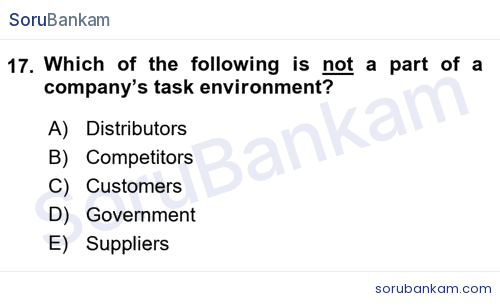
Soru 17
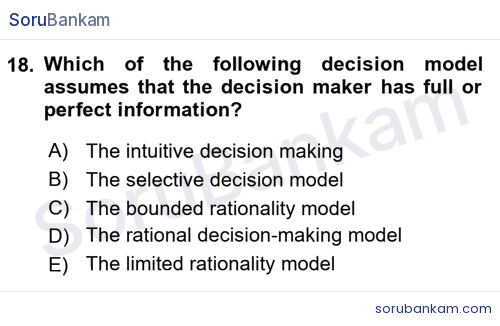
Soru 18
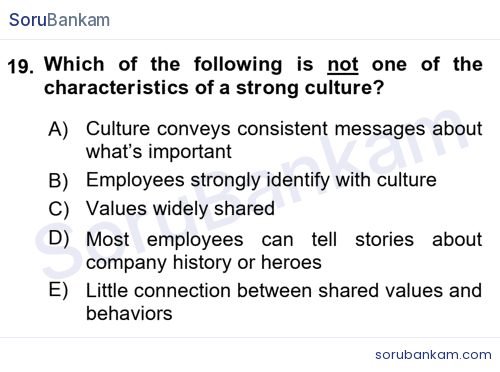
Soru 19
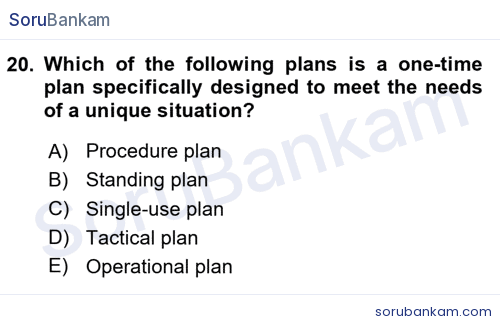
Soru 20
Sınav modunda süre tutulur, doğru cevaplar ve sonucun sınav bitince görünür.
Dersin üniteleri
Ünite özetleri ve konu anlatımları
- 1. Ünite: Fundamentals Management
- 2. Ünite: The History Of Management Thought
- 3. Ünite: Management Environment
- 4. Ünite: Managerial Planning And Decision Making
- 5. Ünite: The Fundamentals Of Strategic Management
- 6. Ünite: Organizational Design, Teamwork, And Organizational Change
- 7. Ünite: Leadership, Diversity, And Motivation
- 8. Ünite: Managerial Control
ISL114U Business Management ders sayfası: bütün sınavlar ve üniteler
Soruların metni (otomatik okuma)
Görsellerden otomatik okunmuştur; hata içerebilir. Sorular, görsellerdeki hâliyle geçerlidir.
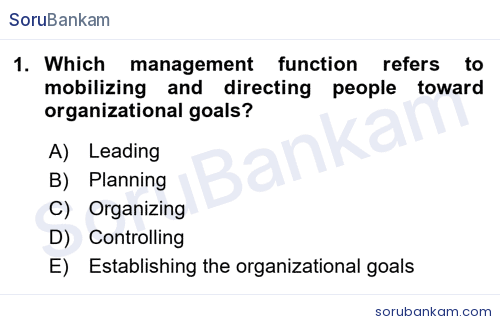
Which management function refers to mobilizing and drecting people toward organizational goals? A) Leading B) Planning C) Organizing D) Controlling E) Establishing the organizational goals
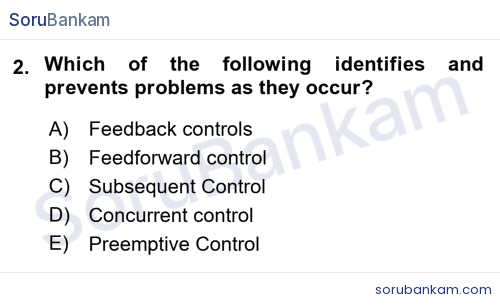
Which of the following identifies and prevents problems as they occur? A) Feedback controls B) Feedforward control C) Subsequent Control D) Concurrent control E) Preemptive Control
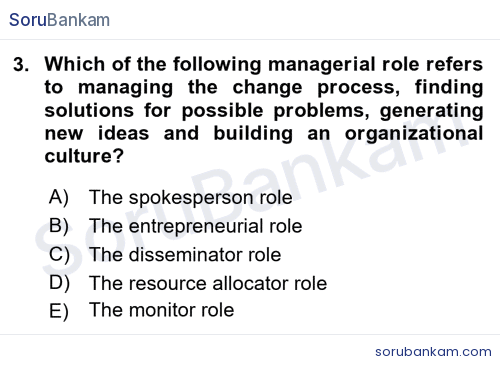
Which of the following managerial role refers to managing the change process, finding solutions for possible problems, generating new ideas and building an organizational culture? A) The spokesperson role B) The entrepreneurial role C) The disseminator role D) The resource allocator role E) The monitor role
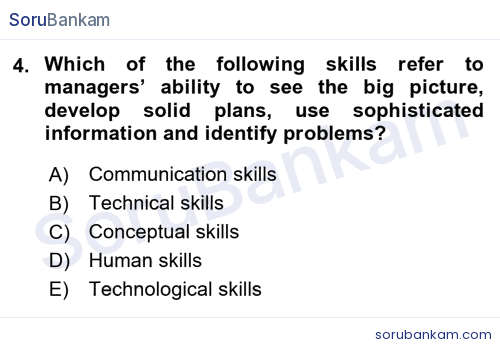
Which of the develop solid plans, use sophisticated information and identify problems? A) Communication skills B) Technical skilis C) Conceptual skills D) Human skills E) Technological skills
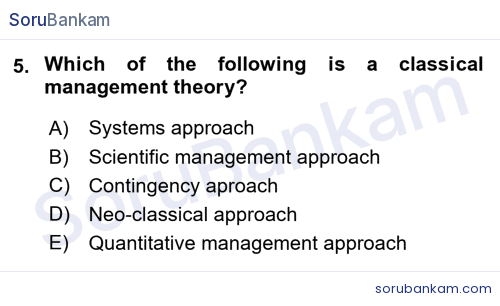
Which of the following is a classical management theory? A) Systems approach B) Scientific management approach C) Contingency aproach D) Neo-classical approach E) Quantitative management approach
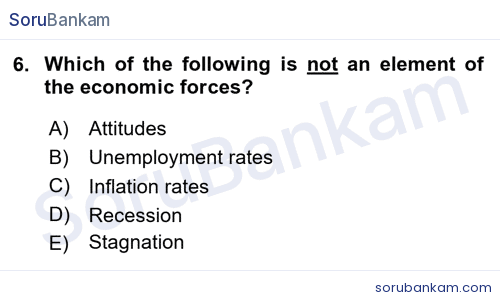
Which of the following is not an element of the economic forces? A) Attitudes B) Unemployment rates C) Inflation rates D) Recession E) Stagnation
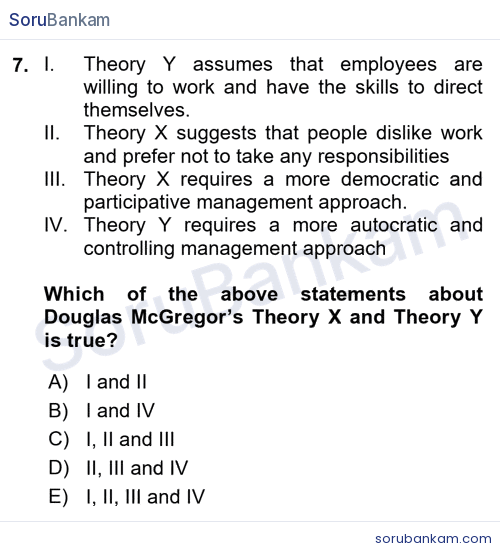
I. Theory y assumes that employees are Willing to work and have the skills to direct themselves. II. Theory X suggests that people dislike work and prefer not to take any responsibilities Ill: Theory X requires a more democratic anti participative management approach, i• IV. Theory Y requires a more autocratic and controlling management approach Which of the above statements about Douglas McGregor's Theory X and Theory Y is true? • yo A) I and B) I and C) 1, Il and Ill D) II, Ill and v. V. E) L/lL, IN and
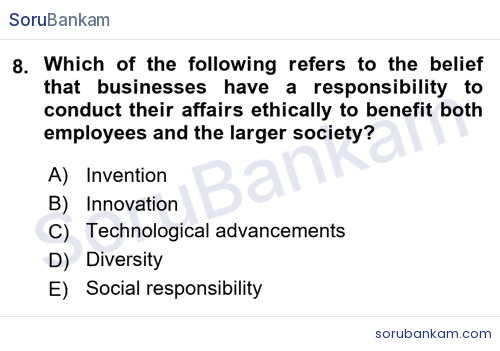
8. Which of the following refers to the belief that businesses have • a responsibility to conduct their affairs ethically to benefit both employees and the larger society? A) • Invention Innovation C) Technological advancements D) Diversity Ey • Social responsibility
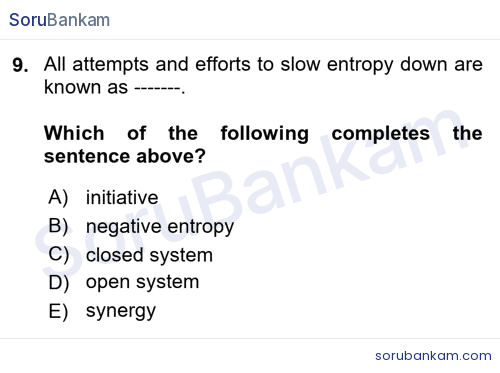
All attempts and efforts to siow entropy down are known as -.--.... Which of the following completes the sentence above? A) initiative B) negative entropy C) closed system D) open system E) synergy
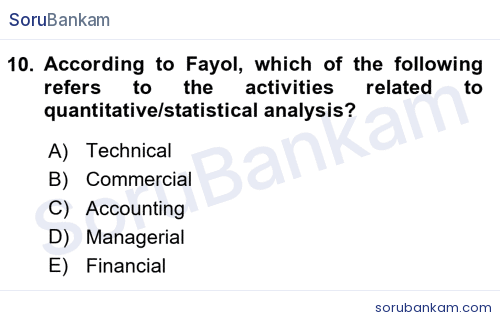
According to Fayol, which of the following refers to the activities related quantitative/statistical analysis? A) Technical B) Commercial C) Accounting D) Managerial E) Financial
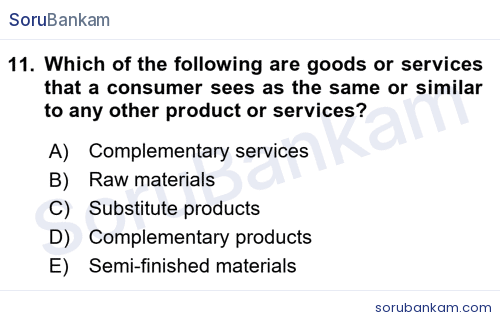
Which of the following are goods or services that a consumer sees as the same or similar to any other product or services? A) Complementary services B) Raw materials C) Substitute products D) Complementary products E) Semi-finished materials
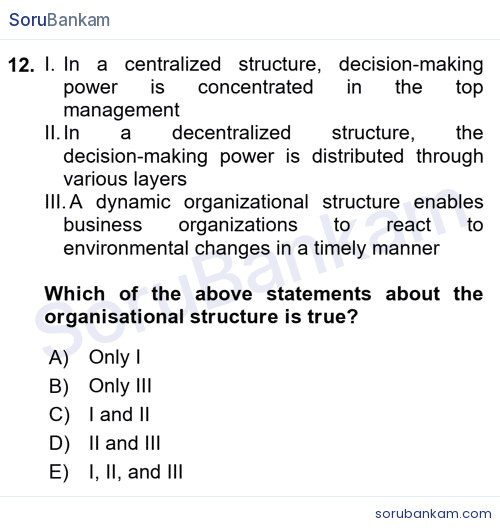
I. In a centralized structure, decision-making power is concentrated in the top management II. In decentralized structure, the decision-making power is distributed through various layers III. A dynamic organizational structure enables business organizations react to environmental changes in a timely manner Which of the above statements about the organisational structure is true? A) Only B) Only Ill C) land I/ D) Il and lil E) I, Il, and Ill
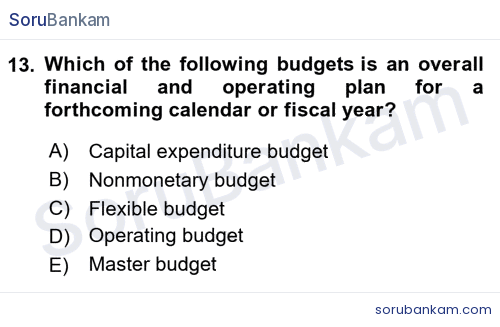
Which of the following budgets is an overall financial and operating plan forthcoming calendar or fiscal years, for A) Capital expenditure budget B) Nonmonetary budget C) Flexible budget , D) Operating budget E) Master budget
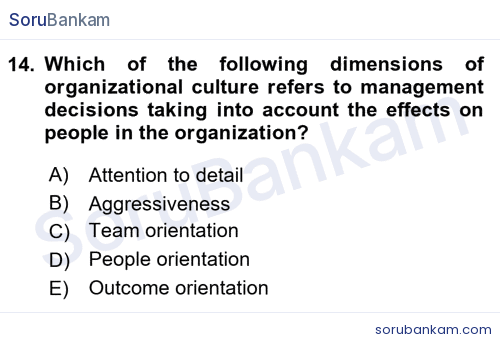
Which of the following dimensions af organizational culture reters to management decisions taking Into account the effects on A) people in the organization? Attention to detail B) Aggressiveness C) Team orientation D) People orientation E) Outcome orientation
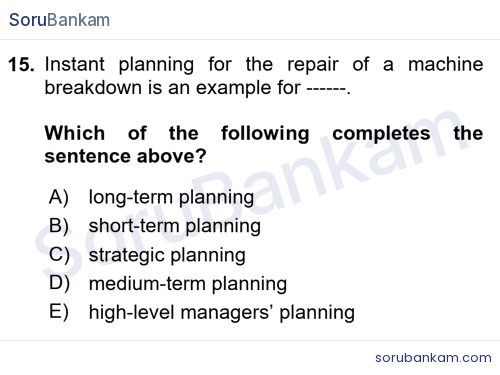
Instant planning for the repair of a machine breakdown is an example for — Which of the following completes the sentence above? A) long-term planning B) short-term planning C) strategic planning D) medium-term planning E) high-level managers' planning
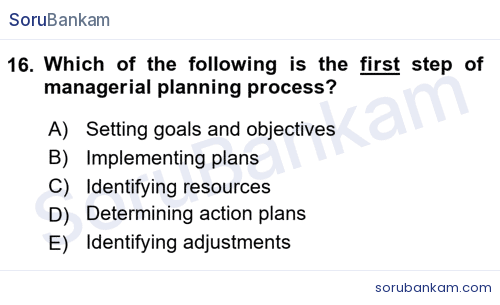
Which of the following is the first step of managerial planning process? A) Setting goals and objectives B) Implementing plans C) Identifying resources D) Determining action plans E) Identifying adjustments
Which of the following is not a part of a company's task enyjronment? A) Distributors B) Competitors C) Customers D) Government E) Suppliers •
Which of the following decision model assumes that the decision maker has full or perfect informațion? A) The intuitive decision making B) The selective decision model C) The bounded rationality model D) The rational decision-making model E) Thé limited rationality model
Which of the following is not one of the characteristics of a strong culture? A) Culture conveys consistent messages about what's important B) Employees strongly identify with culture. C) Values widely shared D) Most employees can tell stories about company history or heroes E) Little connection between shared values and behaviors
Which of the following plans is a one-time plan specifically designed to meet the needs of a unique situation? A) Procedure plan B) Standing plan C) Single-use plan D) Tactical plan E) Operational plan