ISL114U Business Management 2018-2019 Vize Soruları
20 soru · Vize · 2018-2019
ISL114U Business Management dersinin 2018-2019 vize sınavı 20 sorudan oluşur; ders AÖF İşletme (İngilizce) bölümünde okutulur. Sorular aşağıda sırasıyla yer alır. Doğru cevaplar ve sonucun, testi çözdüğünde görünür.
Önizleme · 20 soru. Cevaplamak ve sonucunu görmek için sınavı başlat.
Sorular
20 soru
Soru 1
Soru 2
Soru 3
Soru 4
Soru 5
Soru 6
Soru 7
Soru 8
Soru 9
Soru 10
Soru 11
Soru 12
Soru 13
Soru 14
Soru 15
Soru 16
Soru 17
Soru 18
Soru 19
Soru 20
Sınav modunda süre tutulur, doğru cevaplar ve sonucun sınav bitince görünür.
Dersin üniteleri
Ünite özetleri ve konu anlatımları
- 1. Ünite: Fundamentals Management
- 2. Ünite: The History Of Management Thought
- 3. Ünite: Management Environment
- 4. Ünite: Managerial Planning And Decision Making
- 5. Ünite: The Fundamentals Of Strategic Management
- 6. Ünite: Organizational Design, Teamwork, And Organizational Change
- 7. Ünite: Leadership, Diversity, And Motivation
- 8. Ünite: Managerial Control
ISL114U Business Management ders sayfası: bütün sınavlar ve üniteler
Soruların metni (otomatik okuma)
Görsellerden otomatik okunmuştur; hata içerebilir. Sorular, görsellerdeki hâliyle geçerlidir.
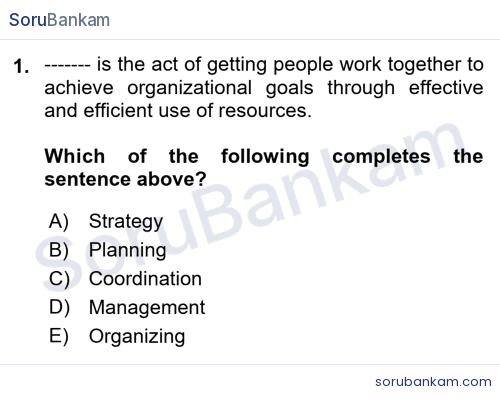
- is the act of getting people work together to achieve organizational goals through effective and efficient use of resources. Which of the following completes the sentence above? A) Strategy B) Planning C) Coordination D) Management E) Organizing
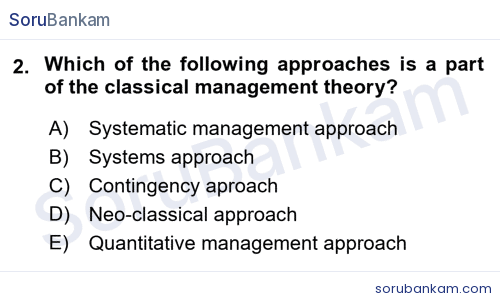
Which of the following approaches is a part of the classical management theory? A) Systematic management approach B) Systems approach C) Contingency aproach D) Neo-classical approach E) Quantitative management approach
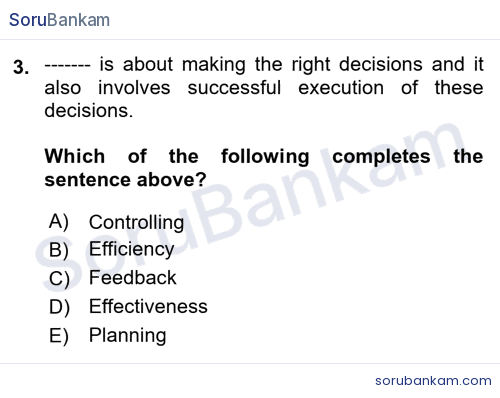
- is about making the right decisions and it also involves successful execution of these decisions. Which of the folløwing completes the sentence above? A) Controlling B) Efficiency C) Feedback D) * D) Effectiveness E) Planning
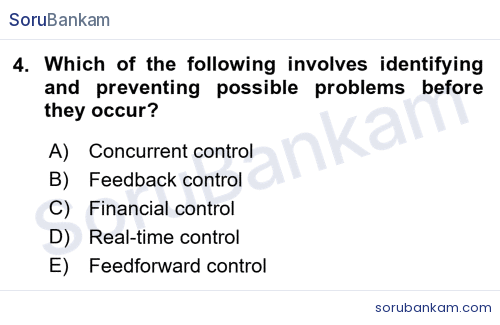
Which of the following involves identifying and preventing possible problems before they occur? A) Concurrent control B) Feedback controi C) Financial control D) Real-time control E) Feedforward control
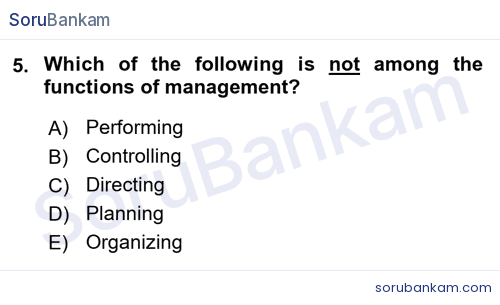
Which of the following is not among the functions of management? A) Performing B) Controlling C) Directing D) Planning 2''. E) Organizing
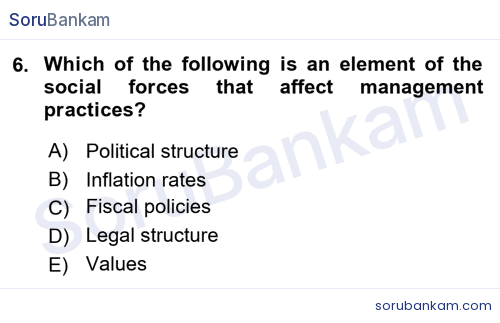
Which of the following is an element of the social forces that affect management practices? A) Political structure B) Inflation rates C) Fiscal policies D) Legal structúre E) Values
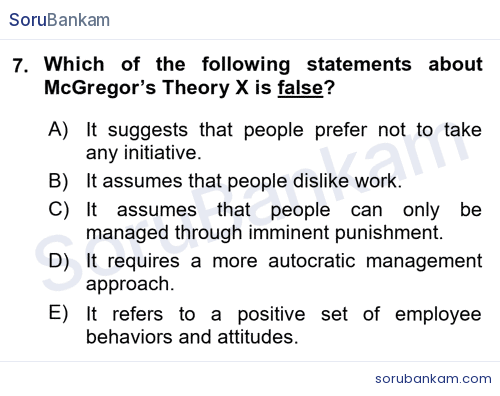
Which of the following statements about McGregor's Theory X Is false? A) It suggests that people prefer not to take any initiative. B) It assumes that people dislike work. C) It assumes that people can only be managed through imminent punishment. D) It requires a more autocratic management approach. E) It refers to a positive set of employee behaviors and attitudes.
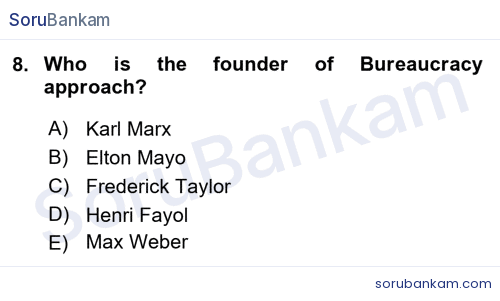
Who is the founder of Bureaucracy approach? A) Karl Marx B) Eiton Mayo C) Frederick Taylor D) Henri Fayol E) Max Weber
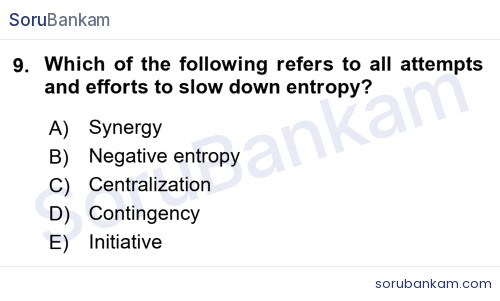
Which of the following refers to all attempts and efforts to slow down entropy? A) Synergy B) Negative entropy C) Centralization D) Contingency E) Initiative
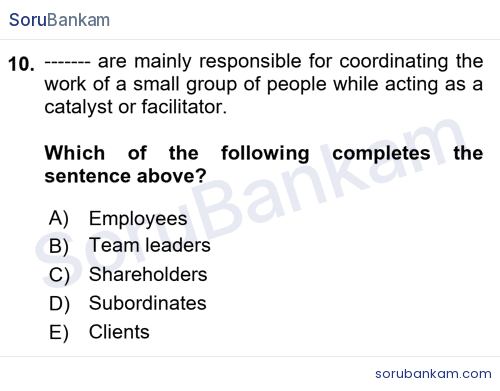
-- are mainly responsible for coordinating the work of a small group of people while acting as a catalyst or facilitator. Which of the following completes the sentence above? A) Employees B) Team leaders C) Shareholders D) Subordinates E) Clients
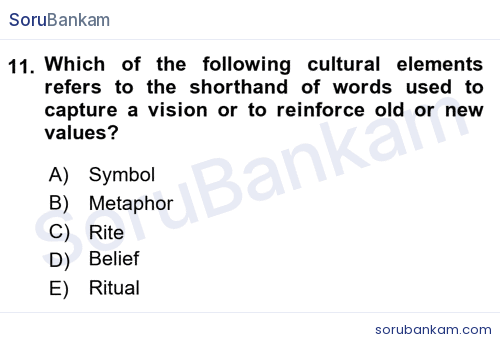
Which of the following cultural elements refers to the shorthand of words used to capture a vision or to reinforce old or new values? A) Symbol B) Metaphor C) Rite D) Belief E) Ritual
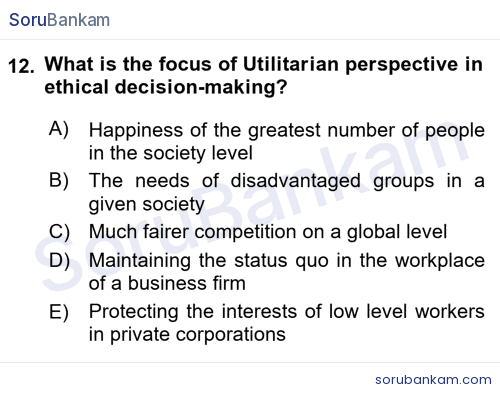
12. What is the focus of Utilitarian perspective in ethical decision-making? A) Happiness of the greatest number of people in the society level The needs of disadvantaged groups in a given society C) Much fairer competition on a global level D) Maintaining the status quo in the workplace of a business firm Protecting the interests of low level workers in private corporations
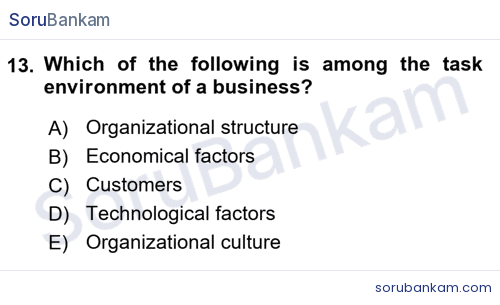
Which of the following is among the task environment of a business? A) Organizational structure B) Economical factors C) Customers D) Technological factors E) Organizational culture
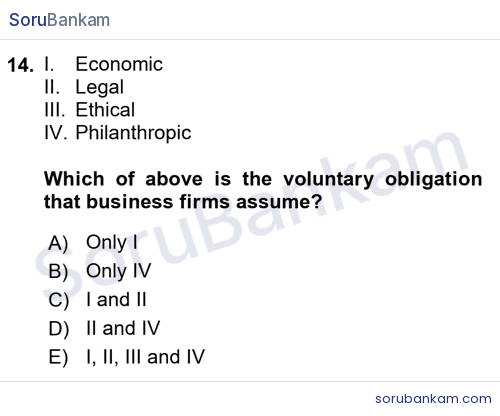
1. Economic II. Legal III. Ethical IV. Philanthrópic Which of above is the voluntary obligation that business firms assume? A) Only B) Only C) • C) I and D) Il and E) I, II, Ill and
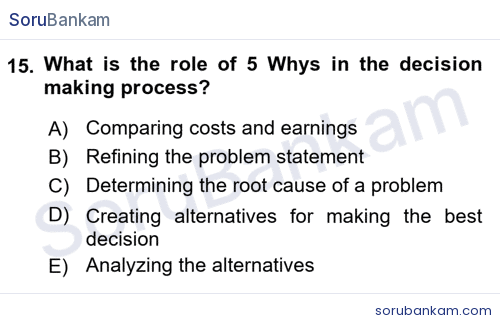
What is the role of 5 Whys in the decision making process? A) Comparing costs and earnings B) Refining the problem statement C) Determining the root cause of a problem D) Creating alternatives for making the best decision E) Analyzing the alternatives
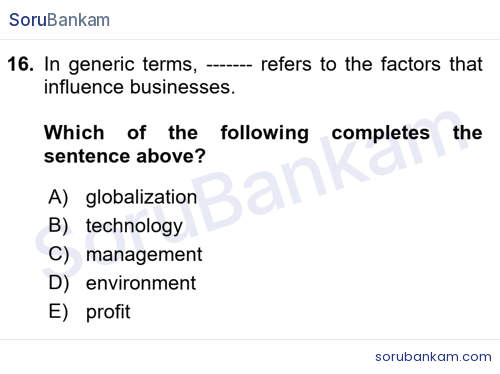
In generic terms, - refers to the factors that influence businesses. Which of the following completes the sentence above? A) globalization B) technology C) management D) environment E) profit
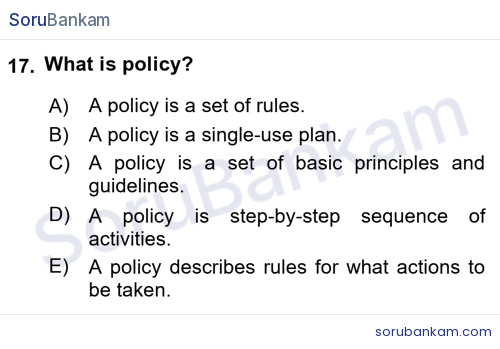
What is policy? A) A policy is a set of rules. B) A policy is a single-use plan. C) A policy is a set of basic principles and guidelines. D) A policy is step-by-step sequence of activities. E) A policy describes rules for what actions to be taken.
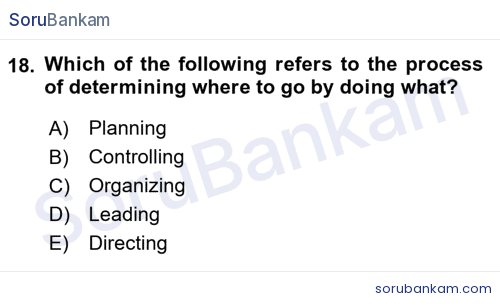
Which of the following refers to the process of determining where to go by doing what? A) Planning B) Controlling C) Organizing - 3" D) Leading • "" E) Directing
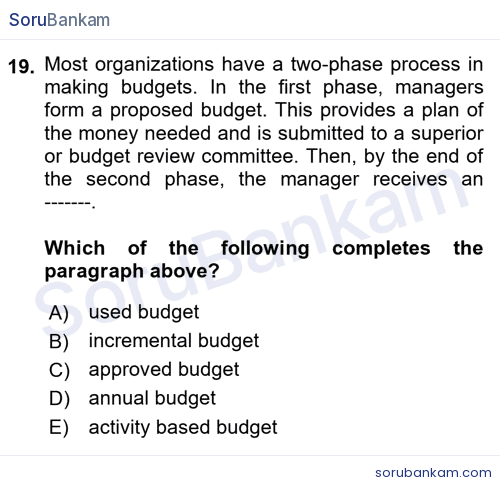
Most organizations have a two-phase process in making budgets. In the first phase, managers form a proposed budget. This provides a plan of the money needed and is submitted to a superior or budget review committee. Then, by the end of the second phase, the manager receives. an Which of the following completes the paragraph above? A) used budget B) incremental budget C) approved budget D) annual budget E) activity based budget
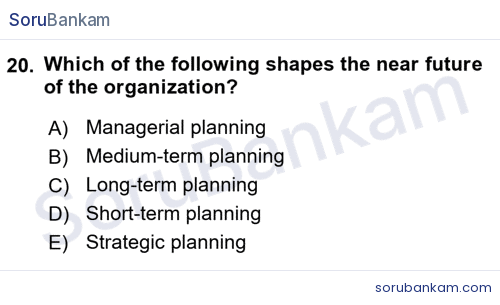
Which of the following shapes the near future of the organization? A) Managerial planning B) Medium-term planning C) Long-term planning D) Short-term planning E) Strategic planning