ISL114U Business Management 2021-2022 Vize Soruları
20 soru · Vize · 2021-2022
ISL114U Business Management dersinin 2021-2022 vize sınavı 20 sorudan oluşur; ders AÖF İşletme (İngilizce) bölümünde okutulur. Sorular aşağıda sırasıyla yer alır. Doğru cevaplar ve sonucun, testi çözdüğünde görünür.
Önizleme · 20 soru. Cevaplamak ve sonucunu görmek için sınavı başlat.
Sorular
20 soru
Soru 1
Soru 2
Soru 3
Soru 4
Soru 5
Soru 6
Soru 7
Soru 8
Soru 9
Soru 10
Soru 11
Soru 12
Soru 13
Soru 14
Soru 15
Soru 16
Soru 17
Soru 18
Soru 19
Soru 20
Sınav modunda süre tutulur, doğru cevaplar ve sonucun sınav bitince görünür.
Dersin üniteleri
Ünite özetleri ve konu anlatımları
- 1. Ünite: Fundamentals Management
- 2. Ünite: The History Of Management Thought
- 3. Ünite: Management Environment
- 4. Ünite: Managerial Planning And Decision Making
- 5. Ünite: The Fundamentals Of Strategic Management
- 6. Ünite: Organizational Design, Teamwork, And Organizational Change
- 7. Ünite: Leadership, Diversity, And Motivation
- 8. Ünite: Managerial Control
ISL114U Business Management ders sayfası: bütün sınavlar ve üniteler
Soruların metni (otomatik okuma)
Görsellerden otomatik okunmuştur; hata içerebilir. Sorular, görsellerdeki hâliyle geçerlidir.
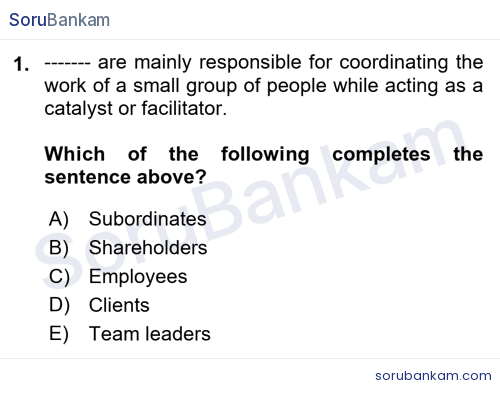
- are mainly responsible for coordinating the work of a small group of people while acting as a catalyst or facilitator. Which of the following completes the sentence above? A) Subordinates B) Shareholders C) Employees D) Clients E) Team leaders
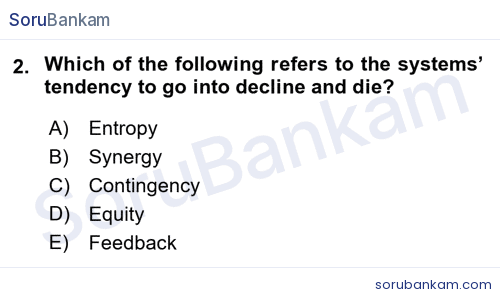
Which of the following refers to the systems tendency to go into decline and die? A) Entropy B) Synergy C) Contingency D) Equity E) Feedback
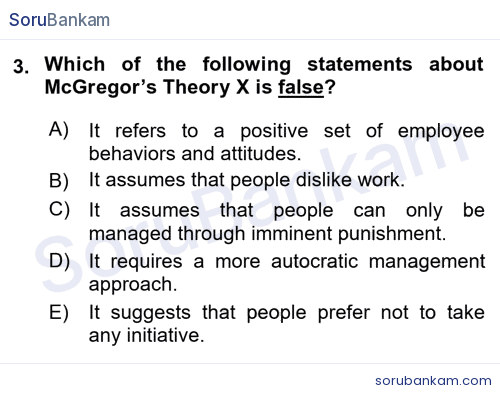
Which of the following statements about McGregor's Theory X is false? A) It refers to a positive set of employee behaviors and attitudes. B) It assumes that people dislike work. C) It assumes that people can •brily be managed through imminent pulishment. D) It requires a more autocratic management approach. E) It suggests that people prefer not to take any initiative. /
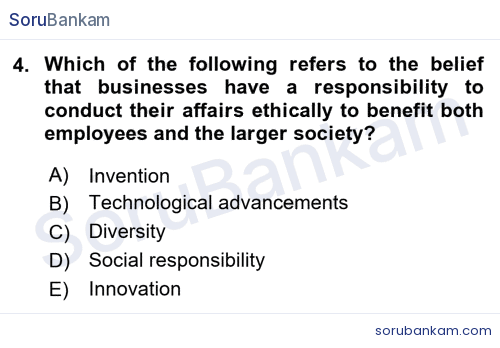
Which of the following refers to the beljef.: that businesses have a responsibility to conduct their affairs ethically to benefit both employees and the larger society? A) ¡'A) • Invention B) Technological advancements C) Diversity D) Social responsibility E) Innovation
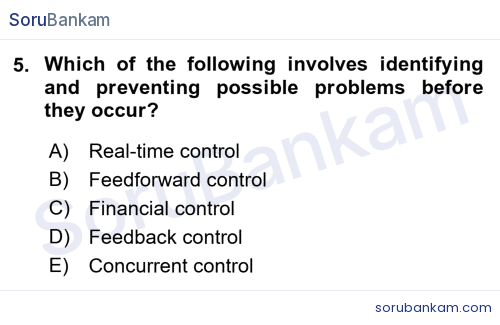
Which of the following involves identifying and preventing possible problems before they occur? A) Real-time control B) Feedforward control C) Financial control D) Feedback. control E) Concurrent control
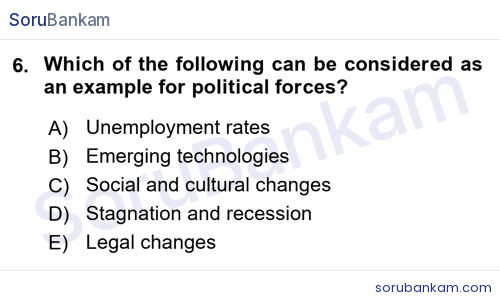
Which of the following can be considered as an example for political forces? A) Unemployment rates B) Emerging technologies C) Social and cultural changes D) Stagnation and recession 3'*. E) Legal changes
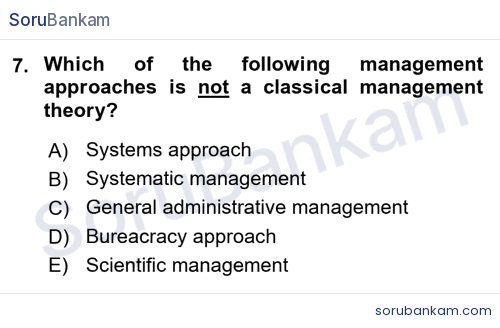
Which of the following management approaches is not a classical management theory? A) Systems approach B) Systematic management C) General administrative management D) Bureacracy approach E) Spientfic management
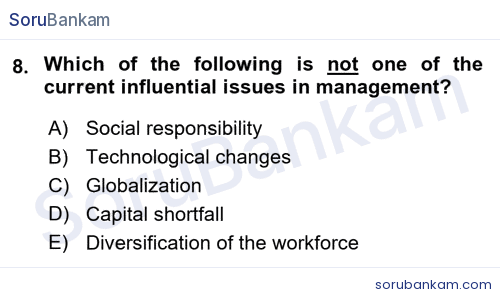
Which of the following is not one of the current influential issues in management? A) Social responsibility B) Techhological changes C) Globalization D) Capital shortfall E) Diversification of the workforce
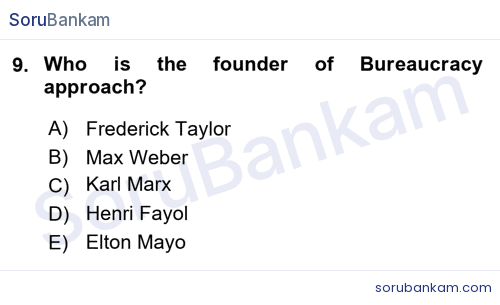
Who is the founder of Bureaucracy approach? A) Frederick Taylor B) Max Weber C) Karl Marx D) Henri Fayol E) Elton Mayo
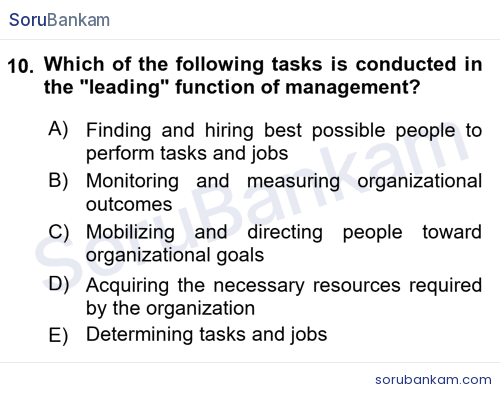
Which of the following tasks is conducted in the "leading" function of management? A) Finding and hiring best possible people to perform tasks and jobs B) Monitoring and measuring organizational outcomes C) Mobilizing and directing people toward organizational goals D) Acquiring the necessary resources required by the organization E) Determining tasks and jobs
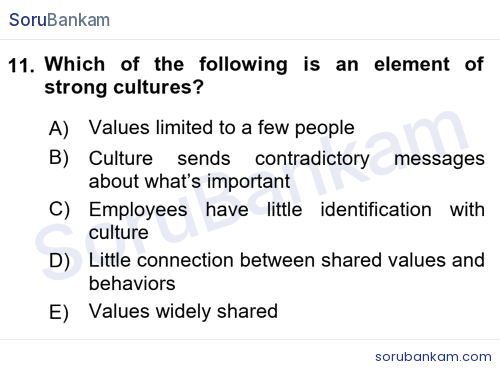
Which of the following is an element of strong cultures? A) Values limited to a few people B) Culture sends contradictory messages about what's important C) Employees have little identification with culture D) Little connection between shared values and behaviors E) Values widely shared
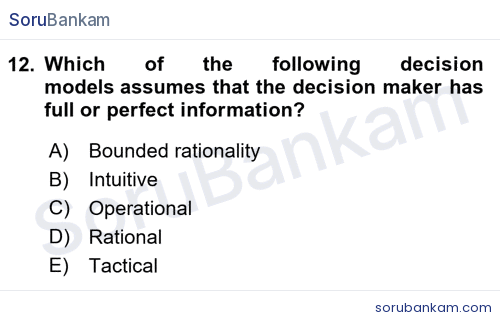
Which the following decision models assumes that the decision maker has full or perfect information? A) Bounded rationality B) Intuitive C) : Operational D) Rational E) Tactical
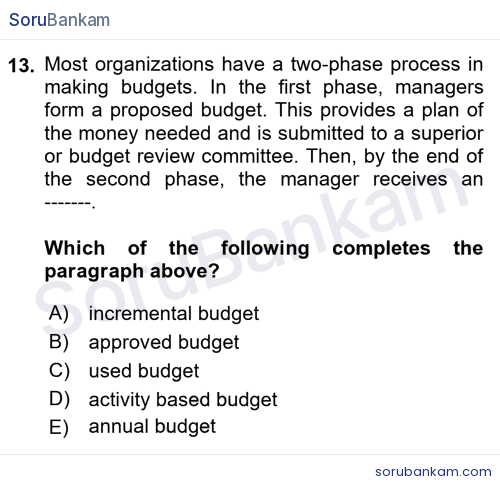
Most organizations have a two-phase process in making budgets. In the first phase, managers form a proposed budget. This provides a plan of the money needed and is submitted to a superior or budget review committee. Then, by the end of the second phase, the manager receives. an Which of the following completes the paragraph above? A) incremental budget B) approved budget' C) used budget D) activity based budget E) annual budget
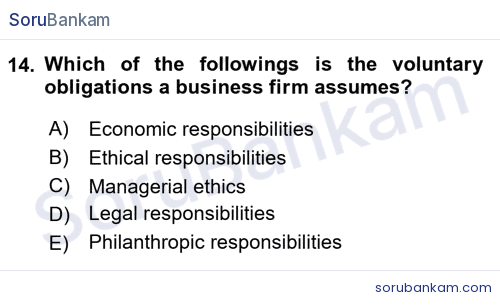
Which of the followings is the voluntary obligations a business firm assumes?, A) Economic responsibilities, 3" B) Ethical responsibilities C) ""C) Managerial ethics D) Legal responsibilities E) S Philanthropic responsibilities
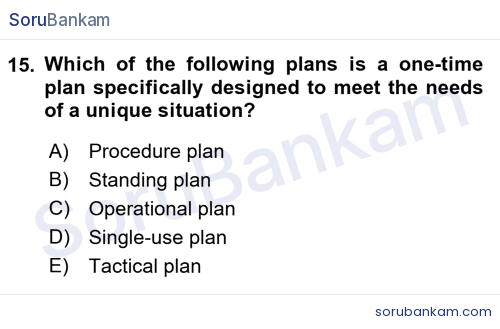
Which of the following plans is a one-time plan specifically designed to meet the needs of a unique situation? A) Procedure plan B) Standing plan C) Operational plan D) Single-use plan E) Tactical plan
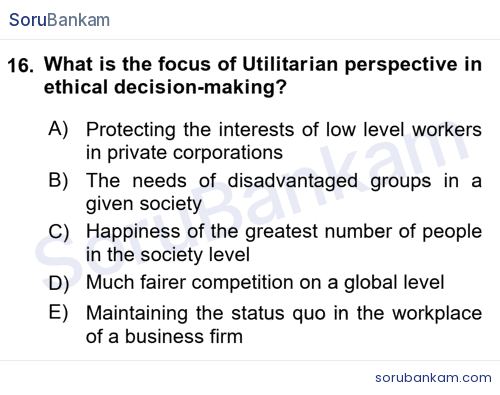
What is the focus of Utilitarian perspective in ethical decision-making? A) Protecting the interests of low level workers in private corporations B) The needs of disadvantaged groups insa given society C) Happiness of the greatest number of people in the society level D) Much fairer competition on a global level E) Maintaining the status quo in the workplace of a business firm
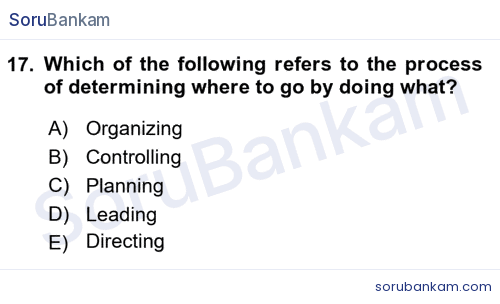
17. Which of the following refers to the process of determining where to go by doing what? A) Organizing By Plantiling Planning D) Leading 73.° E) Directing
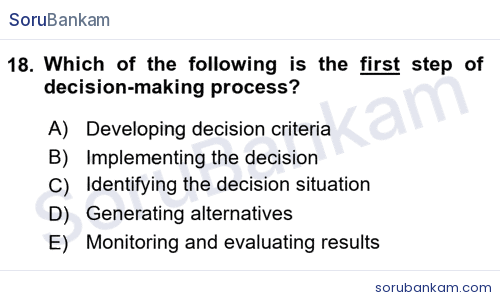
Which of the following is the first step of decision-making process? A) Developing decision criteria B) Implementing the decision C) Identifying the decision situation D) Generating alternatives E) Monitoring and evaluating results
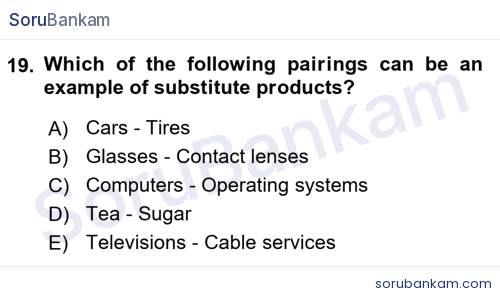
Which of the following pairings can be an example of substitute products? A) Cars - Tires B) Glasses - Contact lenses C) Computers - Operating systems D) Tea - Sugar E) Televisions - Cable services
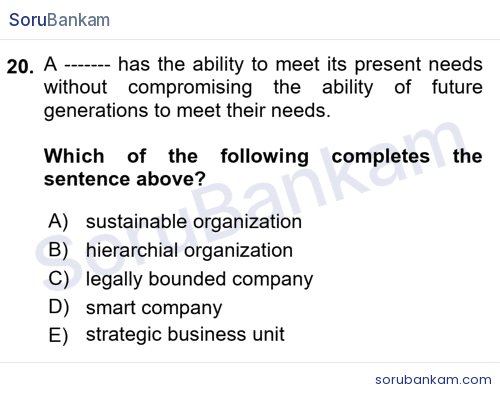
A mus has the ability to meet its present needs without compromising the ability of future generations to meet their needs. Which of the following completes the sentence above? A) sustainable organization B) hierarchiat organization C) legally bounded company D) smart company E) strategic business unit