ULI101U Introduction to World Civilization 2022-2023 Final Soruları
20 soru · Final · 2022-2023
ULI101U Introduction to World Civilization dersinin 2022-2023 final sınavı 20 sorudan oluşur; ders AÖF Siyaset Bilimi ve Kamu Yönetimi (İngilizce) bölümünde okutulur. Sorular aşağıda sırasıyla yer alır. Doğru cevaplar ve sonucun, testi çözdüğünde görünür.
Önizleme · 20 soru. Cevaplamak ve sonucunu görmek için sınavı başlat.
Sorular
20 soru
Soru 1
Soru 2
Soru 3
Soru 4
Soru 5
Soru 6
Soru 7
Soru 8
Soru 9
Soru 10
Soru 11
Soru 12
Soru 13
Soru 14
Soru 15
Soru 16
Soru 17
Soru 18
Soru 19
Soru 20
Sınav modunda süre tutulur, doğru cevaplar ve sonucun sınav bitince görünür.
Dersin üniteleri
Ünite özetleri ve konu anlatımları
- 1. Ünite: The Civilization Approach To Human Development
- 2. Ünite: The Mesopotamian Civilization
- 3. Ünite: The Egyptian Civilization
- 4. Ünite: Anatolian Civilizations
- 5. Ünite: The Hellenic Civilization
- 6. Ünite: The Roman Civilization
- 7. Ünite: The Byzantine Civilization
- 8. Ünite: The Sinic Civilization
ULI101U Introduction to World Civilization ders sayfası: bütün sınavlar ve üniteler
Soruların metni (otomatik okuma)
Görsellerden otomatik okunmuştur; hata içerebilir. Sorular, görsellerdeki hâliyle geçerlidir.
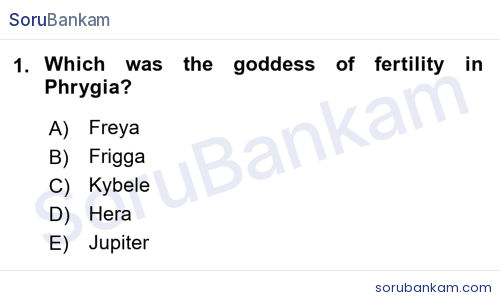
1. Which was the goddess of fertility in Phrygia? A) Freya Frigga Kybele D) Hera E) Jupiter
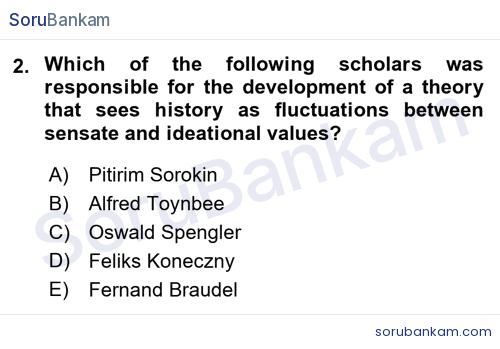
Which of the following scholars was responsible for the development of a theory that sees history as fluctuations between sensate and ideational values? A) Pitirim Sorokin B) Alfred Toynbee C) Oswald Spengler D) Feliks Koneczny E) Fernand Braudel
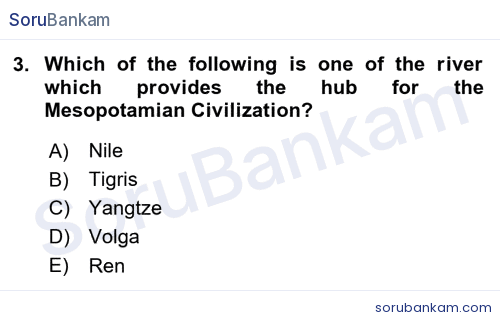
Which of the following is one of the river which provides . the hub for Mesopotamian Civillzation? A) Nile B) Tigris C) Yangtze D) Volga E) Ren
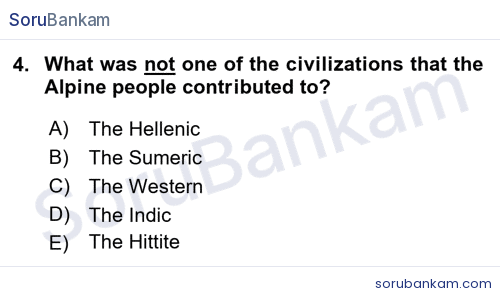
What was not one of the civilizations that the Alpine people contributed to? A) The Hellenic B) The Sumeric C) The Western D) The Indic E) The Hittite
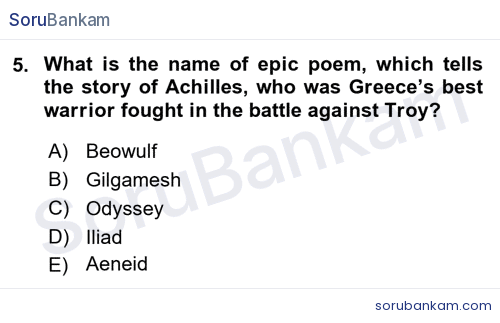
What is the name of epic poem, which tells the story of Achilles, who was Greece's best warrior fought in the battle against Troy? A) Beowulf B) Gilgamesh C) Odyssey D) Iliad E) Aeneid
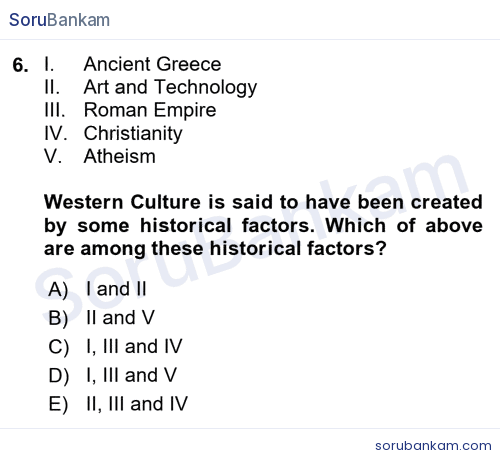
1. Ancient Greece II. Art and Technology Ili. Roman Empire IV. Christianity Atheism 'Western Culture is said to have been created by some historical factors. Which of above A) are among these historical factors? p. A Pandi B) I| and C) I, Ill and D) I, Ill and E) li, Ill and
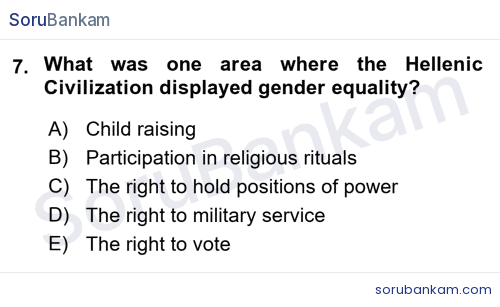
What was one area where the Hellenic Clvillzation displayed gender equality? A) Child raising B) Participation in religlous rituals C) The right to hold positions of power D) The right to military service E) The right to vote
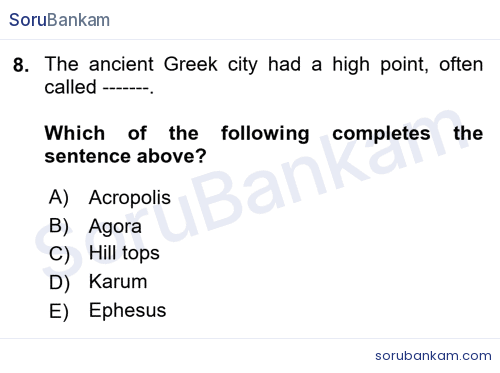
The ancient Greek city had a high point, often called -.....-. Which of the following completes the sentence above? A) Acropolis B) Agora C) Hill tops D) Karum E) Ephesus
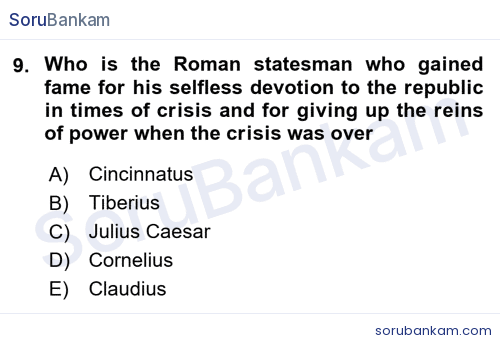
Who is the Roman statesman who gained fame for his selfless devotion to the republic in times of crisis and for giving up the reins of power when the crisis was over A) Cincinnatus B) Tiberus C) Julius Caesar D) Cornelius E) Claudius
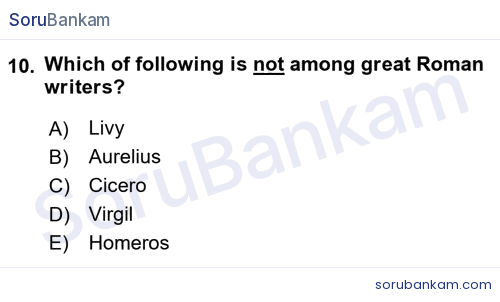
Which of following is not among great Romar writers? A) Livy B) Aurelius C) Cicero D) Virgil E) Homeros
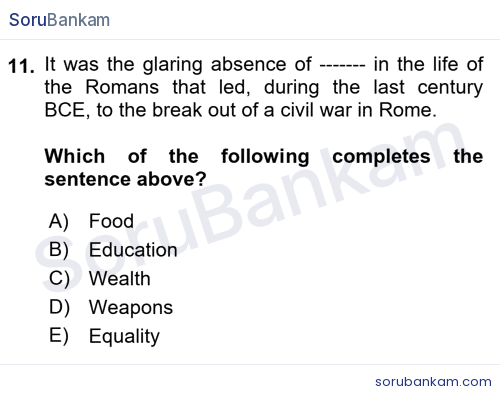
It was the glaring absence of —- in the life of the Romans that led, during the last century BCE, to the break out of a civil war in Rome. Which of the following completes the sentence above? A) Food B) Education C) Wealth D) Weapons E) Equality
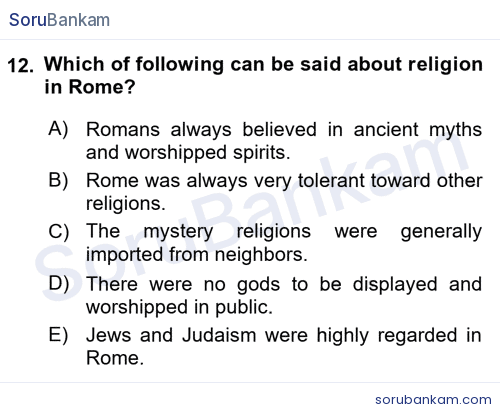
Which of following can be said about religion in Rome? A) Romans always believed in ancient myths and worshipped spirits. B) Rome was always very tolerant toward other religions. C) The mystery religions were generally imported from neighbors. D) There were no gods to be displayed and worshipped in public. E) Jews and Judaism were highly regarded in Rome.
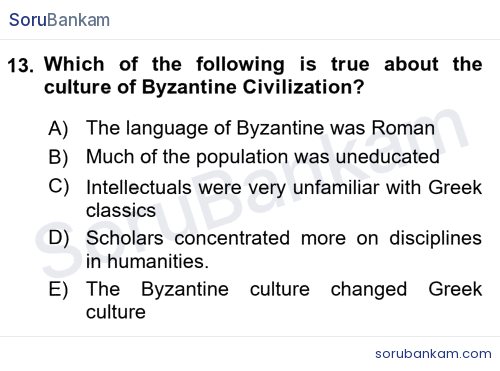
13. Which of the following is true about the culture of Byzanting Civilization? A) The langaage of Byzantine was Roman B) Much of the population was uneducated C) Intellectuals were very unfamiliar with Greek classics D) Scholars concentrated more on disciplines in humanities. The Byzantine culture changed Greek culture
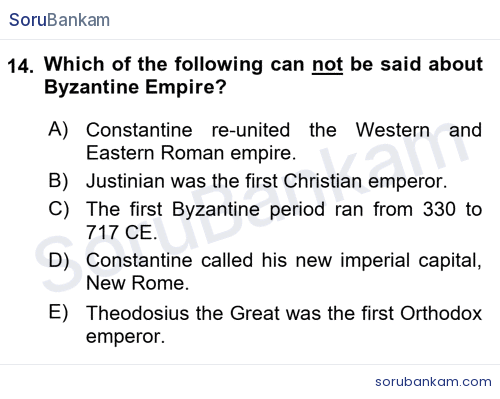
Which of the following can not be said about Byzantine Empire? A) Constantine re-united the Western and Eastern Roman empire: B) Justinian was the first Christian emperor. C) The first Byzantine period ran from 330 to 717 CE. D) Constantine called his new imperial capital, New Rome. E) Theodosius the Great was the first Orthodox emperor.
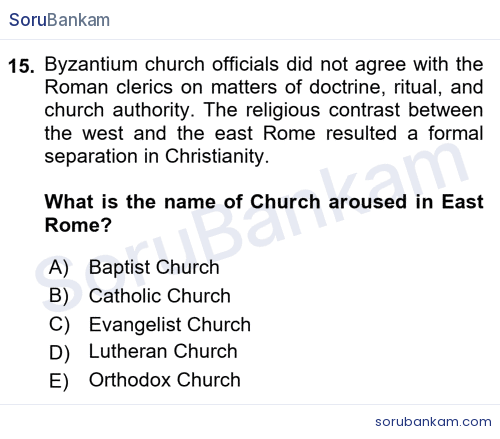
Byzantium church officials did not agree with the Roman clerics on matters of doctrine, ritual, and church authority. The religious contrast between the west and the east Rome resulted a formal separation in Christianity. What is the name of Church aroused in East Rome? A) Baptist Church B) Catholic Church C) Evangelist Church D) Lutheran Church E) Orthodox Church
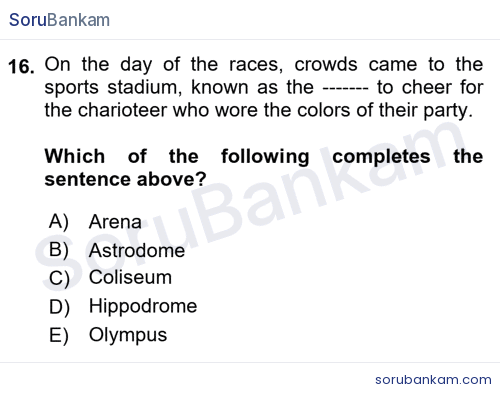
On the day of the races, crowds came to the? sports stadium, known as the to cheer for the charioteer who wore the colors of their party. Which of the following completes the sentence above? A) Aгепа B) Astrodome C) Coliseum D) Hippodrome E) Olympus
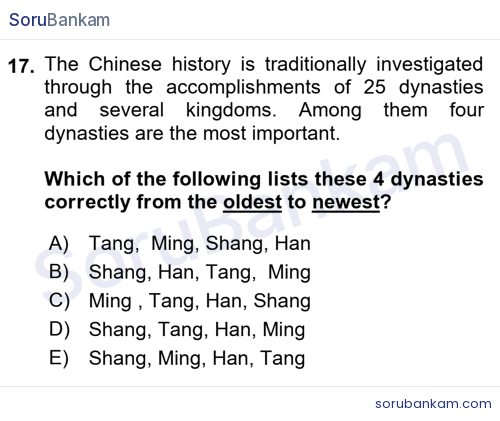
The Chinese history is traditionally investigated through the accomplishments of 25 dynasties and several kingdoms. Among them four dynasties are the most important. Which of the following lists these 4 dynasties correctly from the oldest to newest? A) Tang, Ming, Shang, Han B) Shang, Han, Tang, Ming C) Ming, Tang, Han, Shang D) Shang, Tang, Han, Ming E) Shang, Ming, Han, Tang
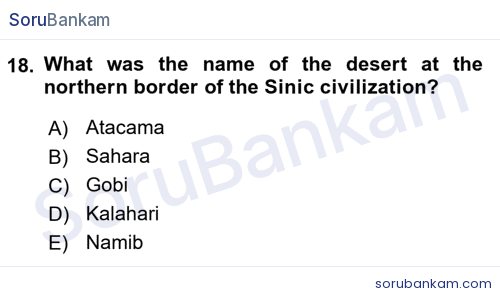
What was the name of the desert at the northern border of the Sinic civilization? A) Atacama B) Sahara C) Gobi D) Kalahari E) Namib
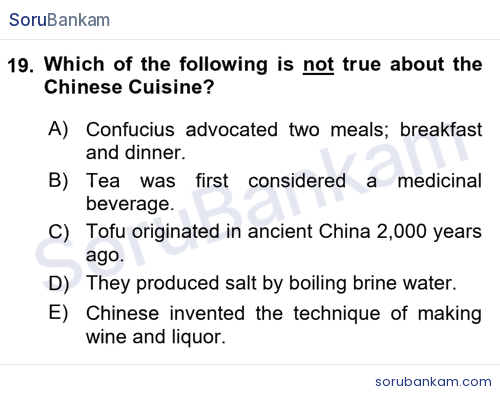
19. Which of the following is not true about the Chinese Cuisine? A) Confuciys advocated twe, meals; breakfast and dinner. BJ Tea was first considered a medicinal beverage. c) Tofu originalit in ancient China 2,000 years ago. D) They produced salt by boiling brine water. E) Chinese invented the technique of making wine and liquor.
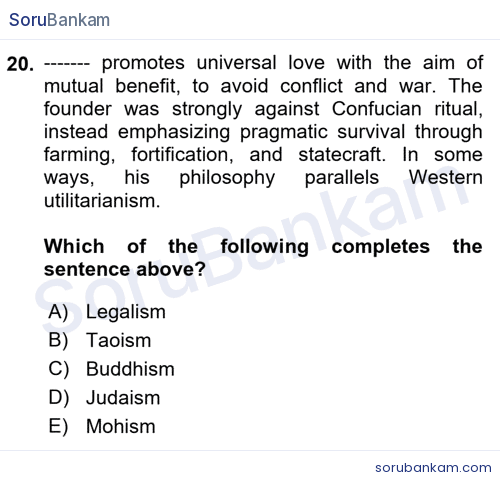
- promotes universal love with the aim of mutual benefit, to avoid conflict and war. The founder was strongly against Confucian ritual, instead emphasizing pragmatic survival through farming, fortification, and statecraft. In some ways, his philosophy parallels Westem utilitarianism. Which of the following completes the sentence above? A) Legalism B) Taoism C) Buddhism D) Judaism E) Mohism