ULI101U Introduction to World Civilization 2017-2018 Vize Soruları
20 soru · Vize · 2017-2018
ULI101U Introduction to World Civilization dersinin 2017-2018 vize sınavı 20 sorudan oluşur; ders AÖF Siyaset Bilimi ve Kamu Yönetimi (İngilizce) bölümünde okutulur. Sorular aşağıda sırasıyla yer alır. Doğru cevaplar ve sonucun, testi çözdüğünde görünür.
Önizleme · 20 soru. Cevaplamak ve sonucunu görmek için sınavı başlat.
Sorular
20 soru
Soru 1
Soru 2
Soru 3
Soru 4
Soru 5
Soru 6
Soru 7
Soru 8
Soru 9
Soru 10
Soru 11
Soru 12
Soru 13
Soru 14
Soru 15
Soru 16
Soru 17
Soru 18
Soru 19
Soru 20
Sınav modunda süre tutulur, doğru cevaplar ve sonucun sınav bitince görünür.
Dersin üniteleri
Ünite özetleri ve konu anlatımları
- 1. Ünite: The Civilization Approach To Human Development
- 2. Ünite: The Mesopotamian Civilization
- 3. Ünite: The Egyptian Civilization
- 4. Ünite: Anatolian Civilizations
- 5. Ünite: The Hellenic Civilization
- 6. Ünite: The Roman Civilization
- 7. Ünite: The Byzantine Civilization
- 8. Ünite: The Sinic Civilization
ULI101U Introduction to World Civilization ders sayfası: bütün sınavlar ve üniteler
Soruların metni (otomatik okuma)
Görsellerden otomatik okunmuştur; hata içerebilir. Sorular, görsellerdeki hâliyle geçerlidir.
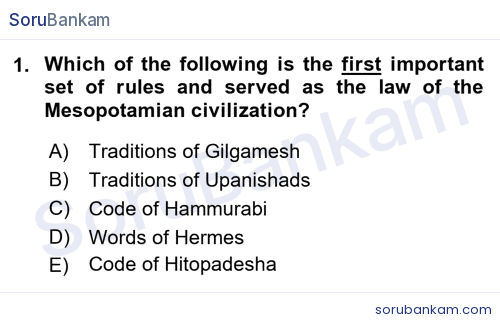
Which of the following is the first important set of rules and served as the law of the Mesopotamian civilization? A) Traditions of Gilgamesh B) Traditions of Upanishads C) Code of Hammurabi D) Words of Hermes E) Code of Hitopadesha
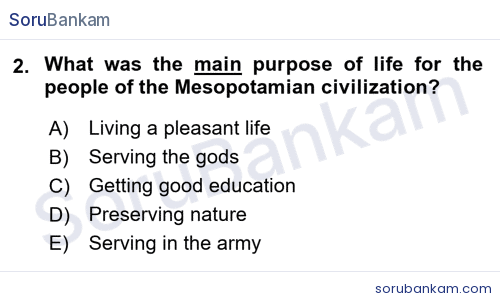
What was the main purpose of life for the people of the Mesopotamian civilization? A) Living a pleasant life B) Serving the gods C) Getting good education D) Preserving nature E) S Serving in the army
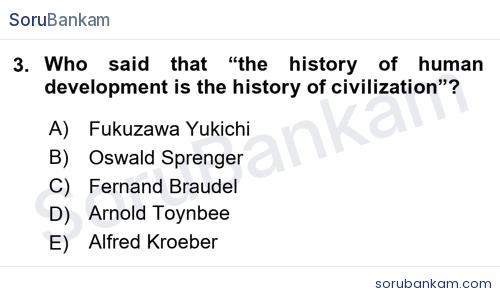
Who said that "the history of human development is the history of civilization"? A) Fukuzawa Yukichi B) Oswald Sprenger C) Fernand Braudel D) Arnold Toynbee E) Alfred Kroeber
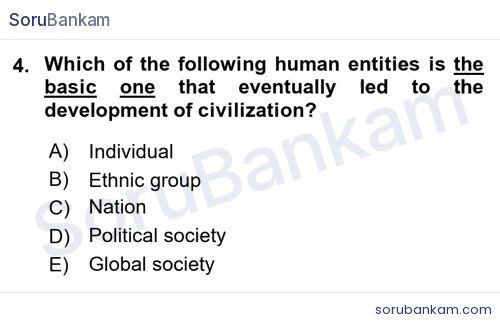
Which of the following human entities is the. basic one that eventually led to the development of civilization? A) Individual B) Ethnic group C) Nation D) Political society E) Global society
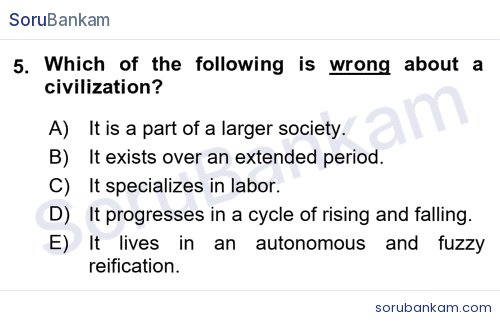
Which of the following is wrong about a civilization? A) It is a part of a larger society. B) It exists over an extended period. C) "' C) It specializes in labor. D) It progresses in a cycle of rising and falling. E) It lives in an autonomous and fuzzy reification.
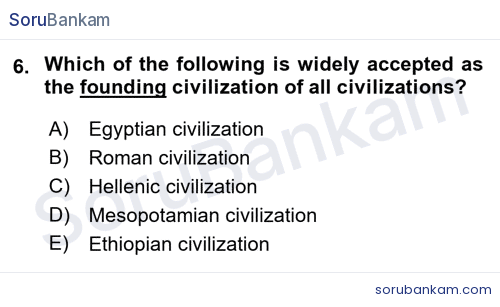
Which of the following is widely accepted as the founding civilization of all civilizations? A) Egyptian civilization B) Roman civilization C) Hellenic civilization D) Mesopotamian civilization E) S Ethiopian civilization
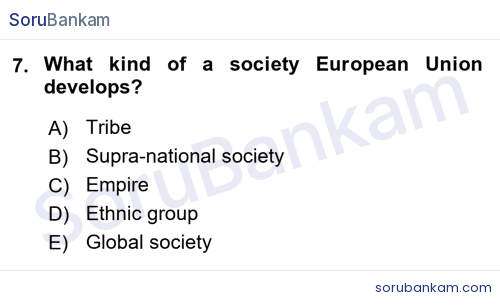
What kind of a society European Union develops? A) Tribe B) Supra-national society C) Empire D) Ethnic group 25. E) Global society
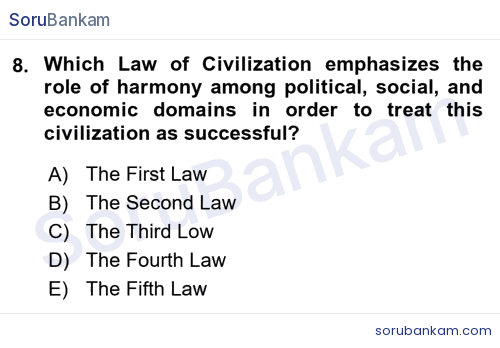
Which Law of Civilization emphasizes the role or harmony among political, social, and economic domains in order to treat this civilization as successful? „ A) The First Law B) The Second Law C) The Third Low D) Tbé Eourth Law E) „E) • The Fifth Law
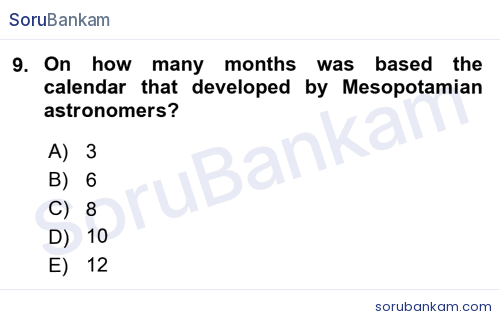
9. On how many months was based the calendar that developed by Mesopotamian astronomers? A) B) C) 8 D) 10 E) 12
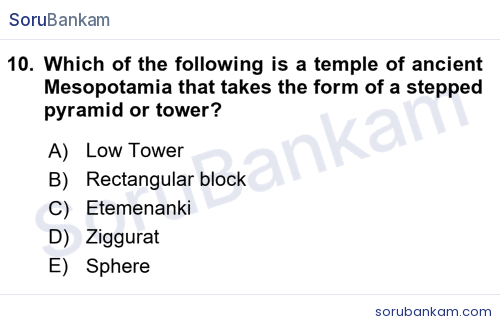
Which of the following is a temple of ancient Mesopotamia that takes the form of a stepped pyramid or tower? A) Low Tower B) Rectangular block C) Etemenanki D) Ziggurat E) Sphere
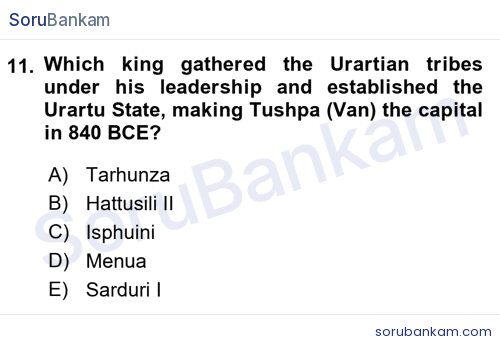
Which king gathered the Urartian tribes under his leadership and established the Urartu State, making Tushpa (Van) the capital in 840 BCE? A) Tarhunza B) Hattusili C) Isphuini D) Menua E) Sarduri
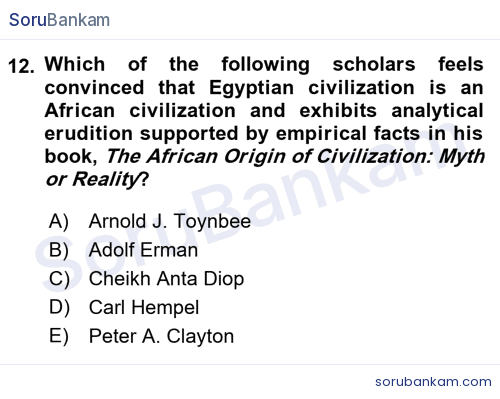
Which of the following scholars feels convinced that Egyptlan clvilization is an African civilization and exhibits analytical erudition supported by empirical facts in his book, The African Origin of Civilization: Myth or Reality? A) Arnold J. Toynbee B) Adolf Erman C) Cheikh Anta Diop D) Carl Hempel E) Peter A. Clayton
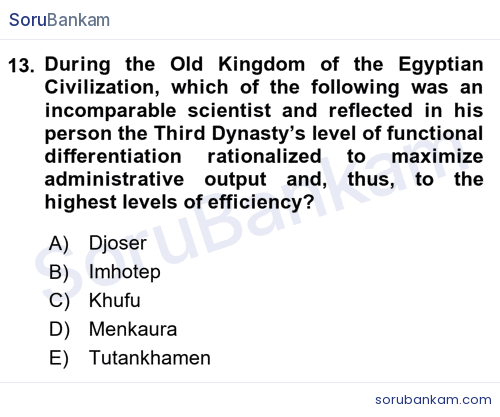
During the Old Kingdom of the Egyptian Civilization, which of the following was an incomparable scientist and reflected in his person the Third Dynasty's level of functional differentiation rationalized to maximize administrative output and, thus, to the highest levels of efficiency? A) Djoser B) Imhotep C) Khufu D) Menkaura E) Tutankhamen
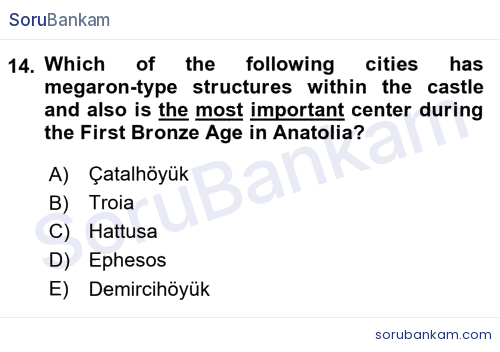
Which of the following cities has megaron-type structures within the, castle and also is the most important center during the FIrst Bronze Age in Anatofia? A) Çatalhöyük B) Troia C) Hattusa D) Ephesos N° E) piEy. Demircihöyük
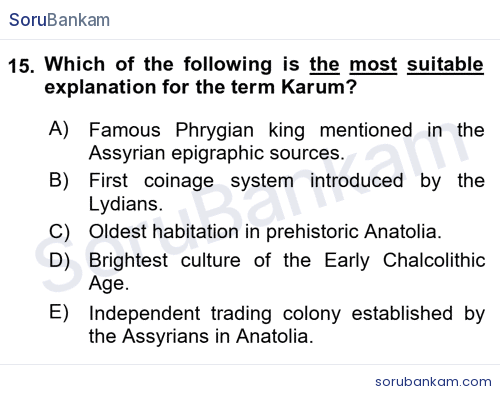
15. Which of the following is the most suitable explanation for the term Karum? A) Famous Phrygian king mentioned in the Assyrian epigraphic sources. First coinage system introduced by the Lydians. C) Oldest habitation in prehistoric Anatolia. D) Brightest culture of the Early Chalcolithic Age. Independent trading colony established by the Assyrians in Anatolia.
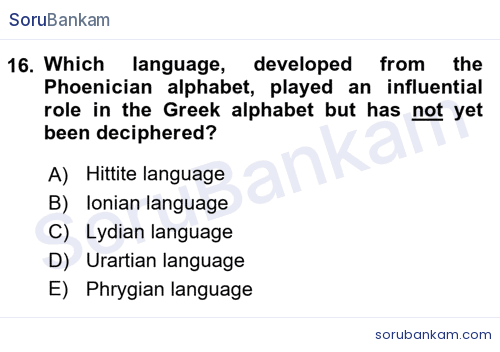
Which language, developed from the Phoenician alphabet, played an influential role in the Greek alphabet but has not yet been deciphered? A) Hittite language ('.. B) Ionian language ... C) Lydian language D) Urartian language E) Phrygian language
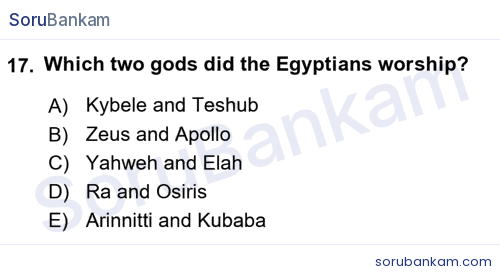
Which two gods did the Egyptians worship? A) Kybele and Teşhub B) Zeus ant Apollo . 1. C) Yahweh and Elah D) Ra and Osiris E) Arinnitti and Kababa
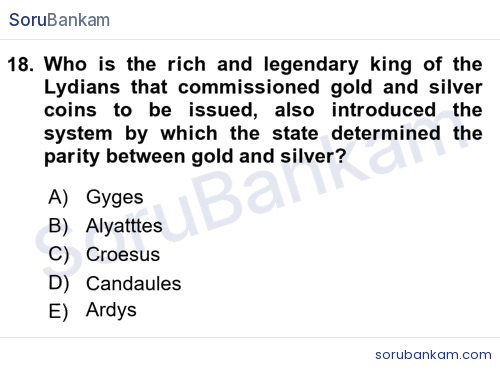
Who is the rich and legendary king of the Lydians that commissioned gold and silver coins to be issued, also introduced the system by which the state determined the A) parity between gold and silver? y. A) Gyges B) Alyatttes C) Croesus D) Gandaules E) Ardys
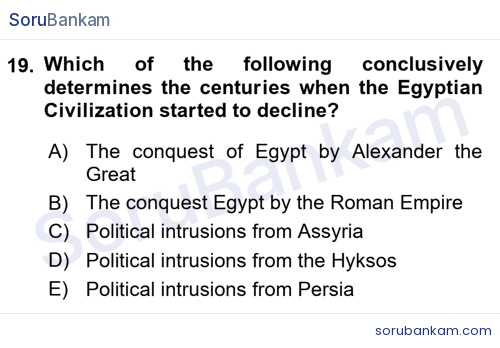
Which of the following conclusively determines the centuries when the Egyptian Civilization started to decline? A) The conquest of Egypt by Alexander the Great B) The conquest Egypt by the Roman Empire C) Political intrusions from Assyria D) Political intrusions from the Hyksos E) Political intrusions from Persia
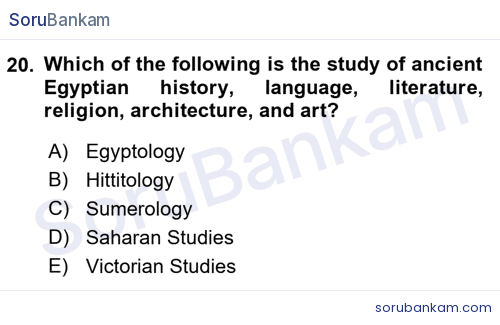
Which of the following is the study of ancient Egyptlan history, language, literature, religion, architecture, and art? A) Egyptology B) Hittitology C) Sumerology D) Saharan Studies E) Victorian Studies