SOS210U Organizational Behavior 2018-2019 Yaz Okulu Soruları
20 soru · Yaz okulu · 2018-2019
SOS210U Organizational Behavior dersinin 2018-2019 yaz okulu sınavı 20 sorudan oluşur; ders AÖF İktisat (İngilizce) bölümünde okutulur. Sorular aşağıda sırasıyla yer alır. Doğru cevaplar ve sonucun, testi çözdüğünde görünür.
Önizleme · 20 soru. Cevaplamak ve sonucunu görmek için sınavı başlat.
Sorular
20 soru
Soru 1
Soru 2
Soru 3
Soru 4
Soru 5
Soru 6
Soru 7
Soru 8
Soru 9
Soru 10
Soru 11
Soru 12
Soru 13
Soru 14
Soru 15
Soru 16
Soru 17
Soru 18
Soru 19
Soru 20
Sınav modunda süre tutulur, doğru cevaplar ve sonucun sınav bitince görünür.
Dersin üniteleri
Ünite özetleri ve konu anlatımları
- 1. Ünite: Introduction To Organizational Behavior
- 2. Ünite: Individual Differences: Personality, Perception, And Employee Attitudes
- 3. Ünite: Motivation Management
- 4. Ünite: Organisational Culture And Climate
- 5. Ünite: Groups And Work Teams İn Organizations
- 6. Ünite: Leadership İn Organizations
- 7. Ünite: Conflict Management
- 8. Ünite: Organizational Structure And Design
SOS210U Organizational Behavior ders sayfası: bütün sınavlar ve üniteler
Soruların metni (otomatik okuma)
Görsellerden otomatik okunmuştur; hata içerebilir. Sorular, görsellerdeki hâliyle geçerlidir.
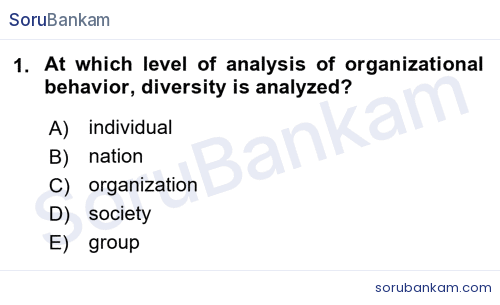
At which level of analysis of organizational behavior, diversity is analyzed? A) individual B) nation C) organization D) society E) group
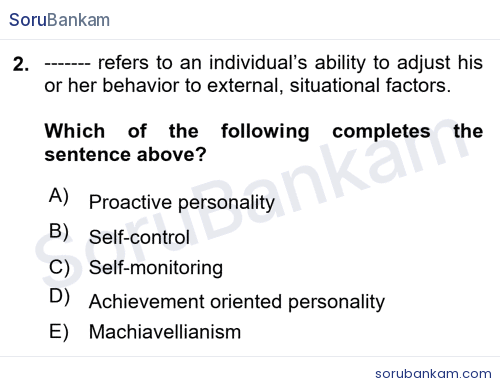
-- refers to an individual's ability to adjust his or her behavior to external, situational factors. Which of the following completes the sentence above? A) Proactive personality B) Self-control C) Self-monitoring D) Achievement oriented personality E) Machiavellianism
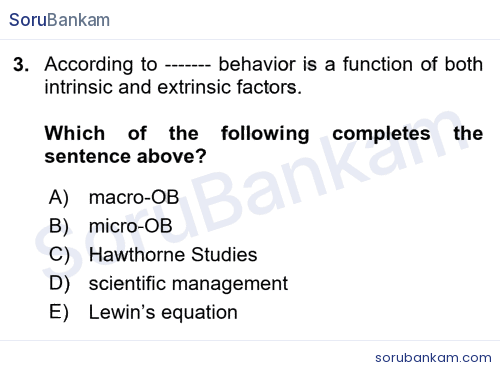
3. According to behavior is a function of 004 intrinsic and extrinsic factors. Which of the following completes the sentence above? A) macro-OB micro-OB C) Hamporne Studies 1 # "scientific management Lewin's equation
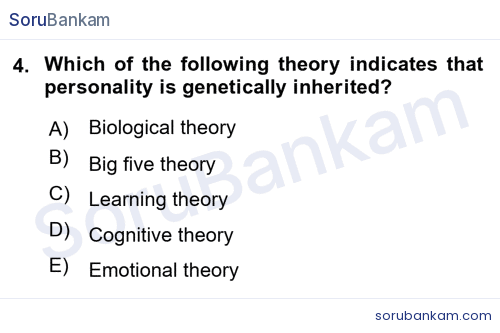
Which of the following theory indicates that personality is genetically inherited? A) Biological theory B) Big five theory C) Learning theory D) Cognitive theory E) Emotional theory
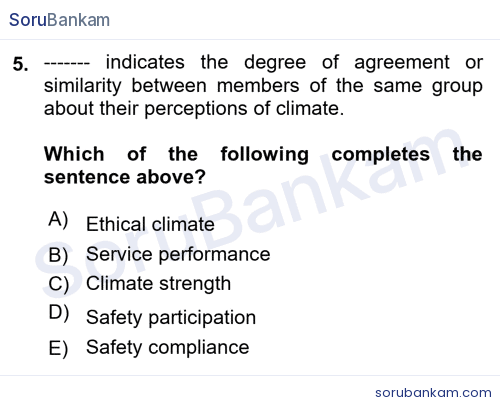
..-- indicates the degree of agreement or similarity between members of the same group about their perceptions of climate. Which of the following completes the sentence above? A) Ethical climate B) Service performance C) Climate strength D) Safety participation E) Safety compliance
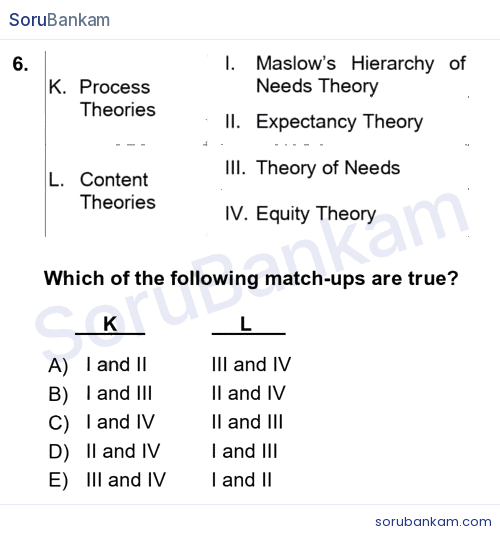
Maslow's Hierarchy of K. Process Needs Theory Theories II. Expectancy Theory III. Theory of Needs y: L. Content Theories IV. Equity Theory Which of the following match-ups are true? A) land il Ill and B) d and !!I Il and C) • C) I and IV Il and Ill D) Il and IV 1 and Ill E) Ill and iV I and !l
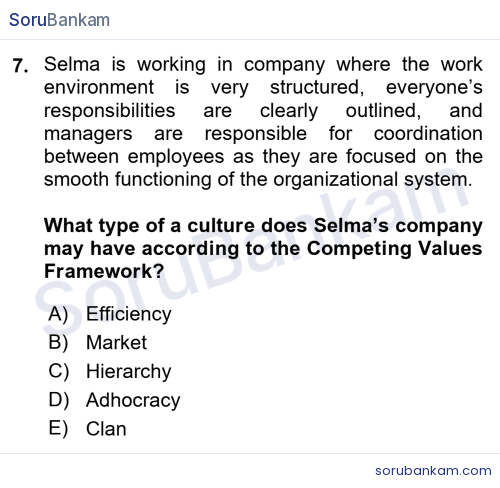
Selma is working in company where the work environment is very structured, everyone's responsibilities are clearly outlined, and managers are responsible for coordination between employees as they are focused on the smooth functioning of the organizational system. What type of a culture does Selma's company may have according to the Competing Values Framework? A) Efficiency B) Market C) Hierarchy D) Adhocracy E) Clan
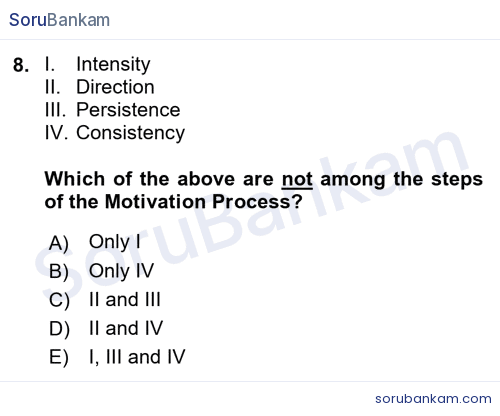
I. Intensity II. Direction III. Persistence IV. Consistency Which of the above are not among the steps of the Motivation Process? A) Only B) Only C) Il and HIl D) Il and E) I, Ill and
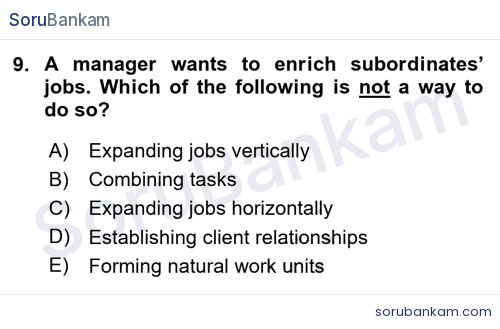
A manager wants to enrich subordinates' jobs. Which of the following is not a way to do so? A) Expanding jobs verticaliy B) Combining tasks C) Expanding jobs horizontally D) Establishing client relatignsbips E) Forming natural work tits
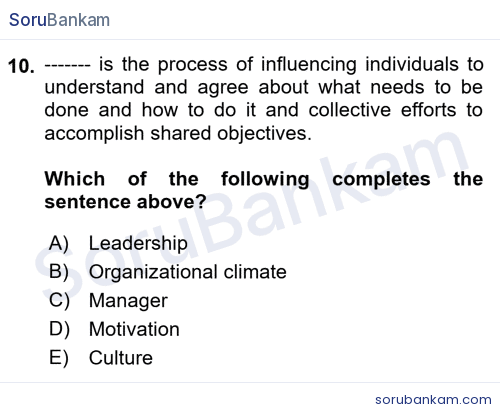
- is the process of influencing individuals to understand and agree about what needs to be done and how to do it and collective efforts to accomplish shared objectives. Which of the following completes the sentence above? A) Leadership B) Orgahizational climate C) Manager D) Motivation E) Culture
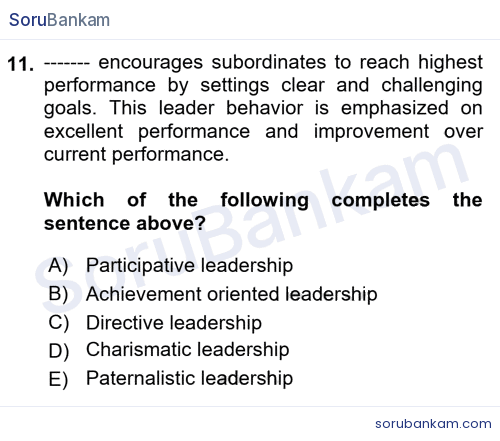
-- encourages subordinates to reach highest performance by settings clear and challenging goals. This leader behavior is emphasized on excellent performance and improvement over current performance. Which of the following complete the sentence above? A) Participative leadership B) Achievement oriented leadership C) Directive leadership D) Charismatic leadership E) Paternalistic leadership
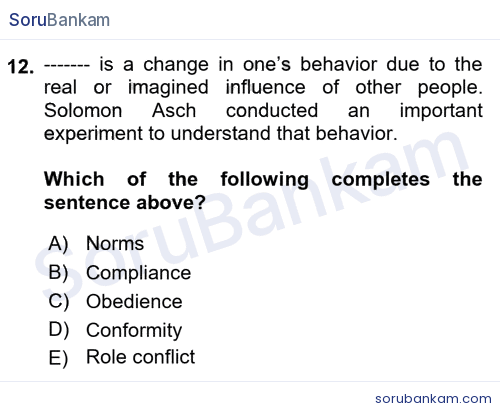
- is a change in one's behavior due to the real or imagined infuence of other people. Solomon Asch, a conducted important experiment to riderstand that behavior. ahich of the following completes the sentence above? A) Norms Obedience Obedience D) Conformity E) Role conflict
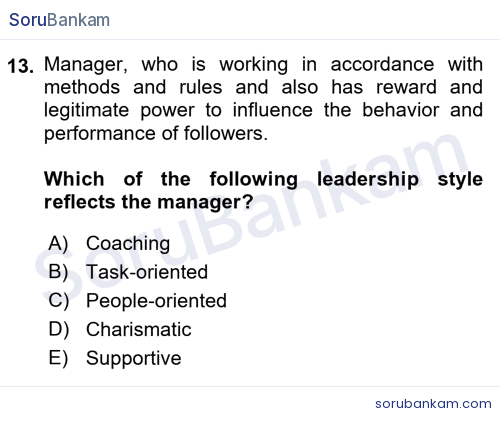
Manager, who is working in accordance with methods and rules and also has reward and legitimate power to influence the behavior and performance of followers. Which of the following leadership style reflects the manager? A) Coaching B) Task-oriented C) People-oriented D) Charismatic E) Supportive
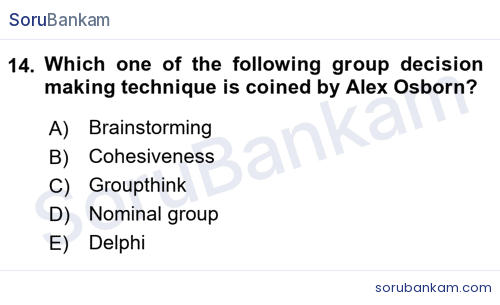
Which one of the following group decision making technique is coined by Alex Osborn? A) Brainstorming B) Cohesiveness C) Groupthink D) Nominal group E) Delphi
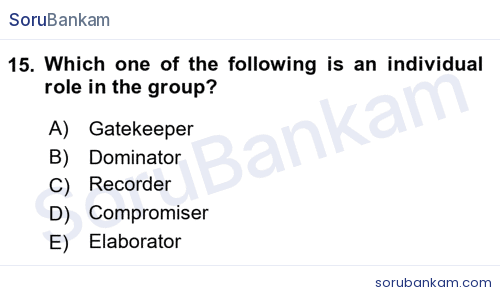
Which one of the following is an individual role in the group? A) Gatekeeper B) Dominator C) Recorder D) Compromiser E) Elaborator
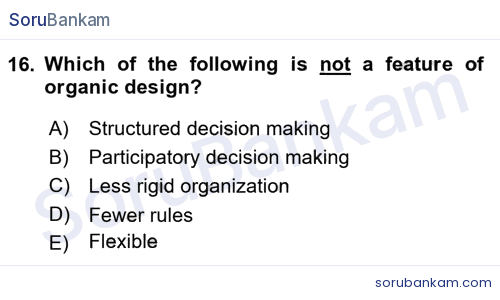
Which of the following is not a feature of organic design? A) Structured decision making «'". B) Participatory decision making C) Less rigid organization D) Fewer rules E) Flexible
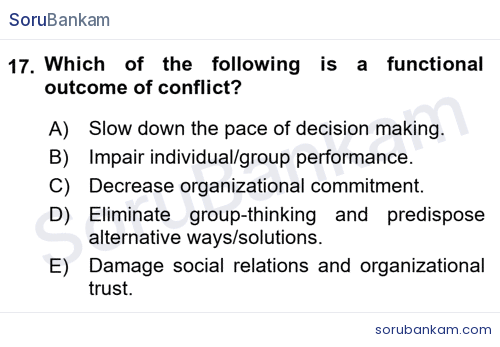
Which of the following is a functional outcome of conflict? A) Slow down the pace of decision making. B) Impair individual/group performance. C) Decrease organizational commitment. D) Eliminate group-thinking and predispose alternative ways/solutions. E) Damage social relations and organizational trust.
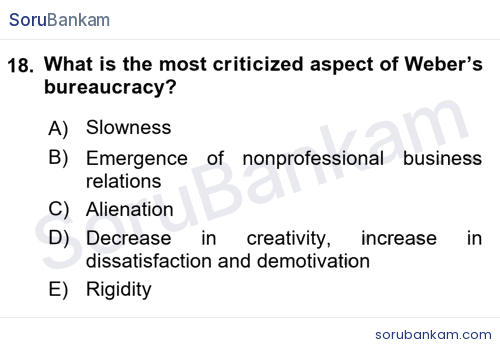
What is the most criticized aspect of Weber's bureaucracy? A) Slowness B) Emergence of nonprofessional business relations C) Alienation D) Decrease in creativity, - increase dissatisfaction and demotivation E) Rigidity
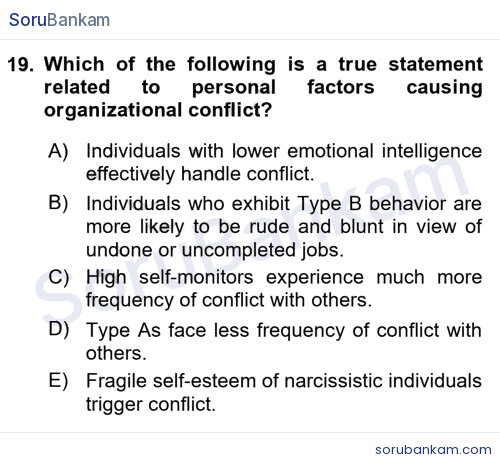
Which of the following is a true statement related personal factors causing organizational conflict? A) Inqividuals with tower emotional intelligence effectively handle conflict. B) Individuals who exhibit Type B behavior are more likely to be rude and blunt in view of undone or uncompleted jobs. C) High self-monitors experience much more frequency of conflict with others. D) Type As face less frequency of conflict with others. E) Fragile self-esteem of narcissistic individuals trigger conflict.
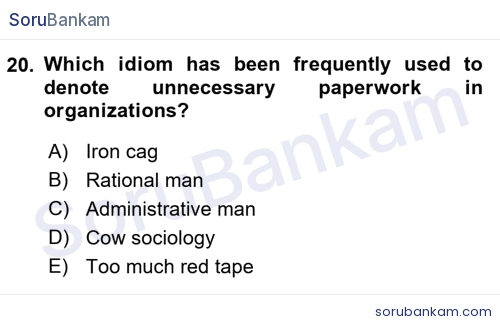
Which idiom has been frequently used to denote unnecessary paperwork organlzations? A) Iron cag B) Rational man C) Administrative man D) Cow sociology E) Too much red tape