SOS210U Organizational Behavior 2022-2023 Yaz Okulu Soruları
20 soru · Yaz okulu · 2022-2023
SOS210U Organizational Behavior dersinin 2022-2023 yaz okulu sınavı 20 sorudan oluşur; ders AÖF İktisat (İngilizce) bölümünde okutulur. Sorular aşağıda sırasıyla yer alır. Doğru cevaplar ve sonucun, testi çözdüğünde görünür.
Önizleme · 20 soru. Cevaplamak ve sonucunu görmek için sınavı başlat.
Sorular
20 soru
Soru 1
Soru 2
Soru 3
Soru 4
Soru 5
Soru 6
Soru 7
Soru 8
Soru 9
Soru 10
Soru 11
Soru 12
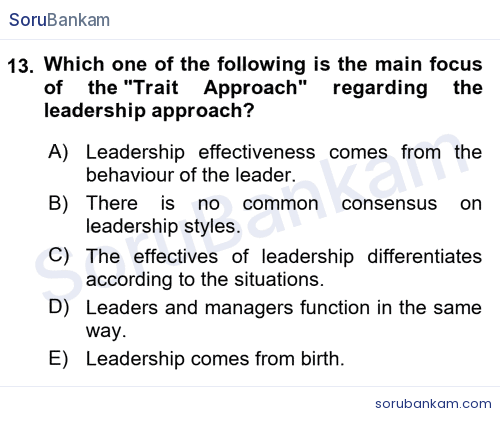
Soru 13
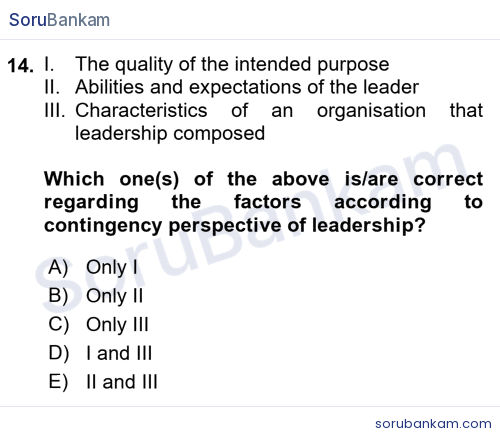
Soru 14
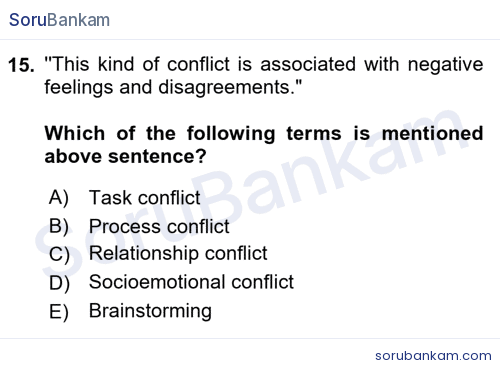
Soru 15
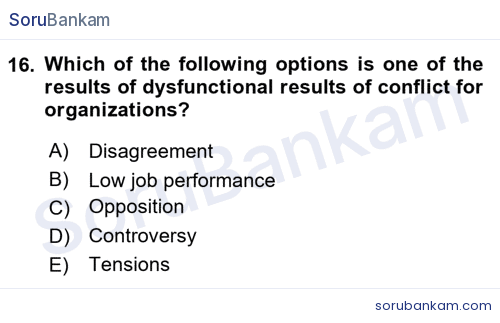
Soru 16
Soru 17
Soru 18
Soru 19
Soru 20
Sınav modunda süre tutulur, doğru cevaplar ve sonucun sınav bitince görünür.
Dersin üniteleri
Ünite özetleri ve konu anlatımları
- 1. Ünite: Introduction To Organizational Behavior
- 2. Ünite: Individual Differences: Personality, Perception, And Employee Attitudes
- 3. Ünite: Motivation Management
- 4. Ünite: Organisational Culture And Climate
- 5. Ünite: Groups And Work Teams İn Organizations
- 6. Ünite: Leadership İn Organizations
- 7. Ünite: Conflict Management
- 8. Ünite: Organizational Structure And Design
SOS210U Organizational Behavior ders sayfası: bütün sınavlar ve üniteler
Soruların metni (otomatik okuma)
Görsellerden otomatik okunmuştur; hata içerebilir. Sorular, görsellerdeki hâliyle geçerlidir.
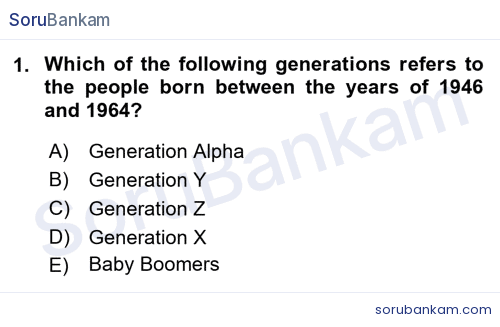
Which of the following generations refers to the people born between the years of 1946 and 1964? A) Generation Alpha B) Generation C) Generation D) Generation E) Baby Boomers
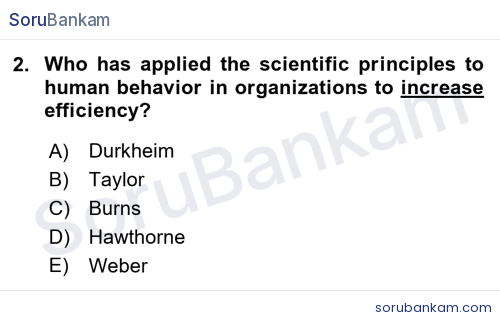
Who has applied the scientific principles to human behavior In organizations to increase efficiency? A) Durkheim B) Taylor C) Burns D) Hawthorne E) Weber
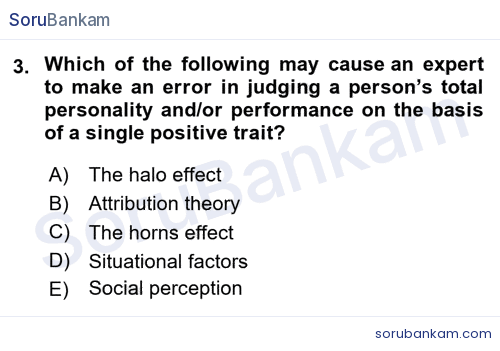
Which of the following may cause an expert to make an error in judging a person's total personality and/or performance on the basis of a single positive trait? A) The halo effect B) Attribution theory C) The horns effect D) Situational factors E) Social perception
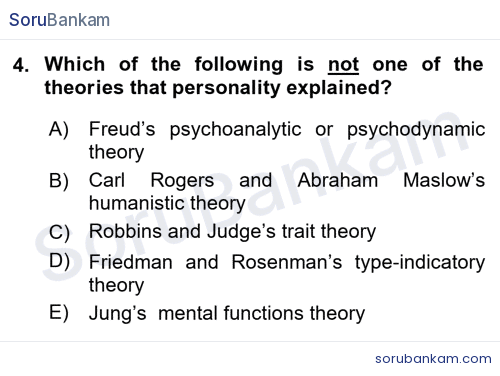
Which of the following is not one of the theories that personality explained? A) Freud's psychoanalytic or psychodynamic theory B) Carl Rogers and Abraham Maslow's humanistic theory C) Robbins and Judge's trait theory D) Friedman and Rosenman's type-indicatory theory E) Jung's mental functions theory
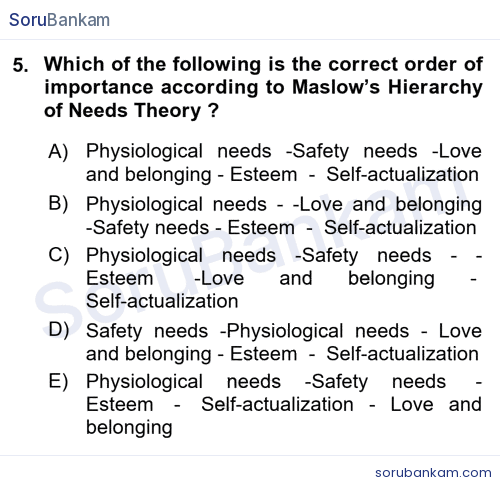
Which of the following is the correct order of importance according to Maslow's Hierarchy of Needs Theory ? A) Physiological needs -Safety needs -Love and belonging - Esteem - Self-actualization* B) Physiological needs - -Love and polonging -Safety needs - Esteem - Self-actualization C) Physiological needs -Safety needs - - Esteem -Love and belonging Self-actualization D) Safety needs -Physiological needs - Love and belonging - Esteem - Self-actualization E) Physlological needs -Safety needs - Esteem - Self-actualization - Love and belonging
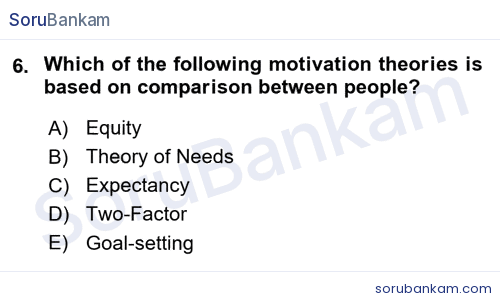
Which of the following motivation theories is based on comparison between people? A) Equity B) i heory of Needs " C) i C) Expectancy D) Two-Factor E) Goal-settiag
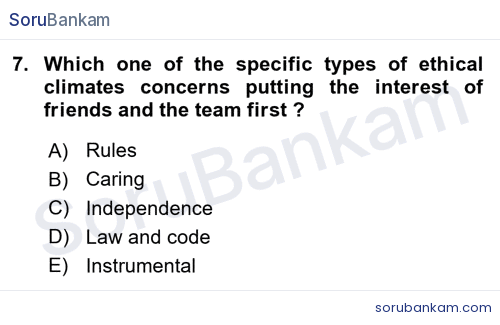
Which one of the specific types of ethical climates concerns putting the interest of friends and the team first ? A) Rules B) Caring C) Independence D) Law and code E) Instrumental
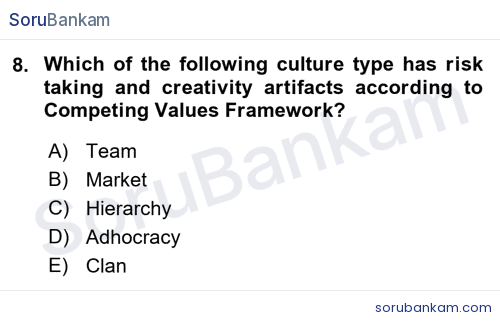
Which of the following culture type has risk taking and creativity artifacts according to Competing Values Framework? A) Team B) Market C) Hierarchy D) Adhocracy E) Clan
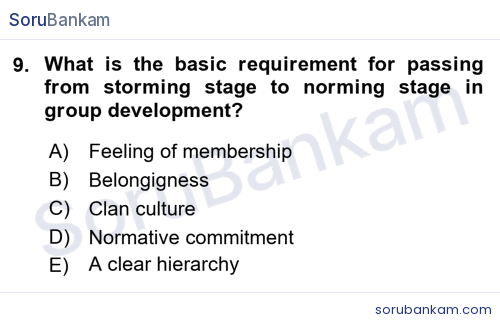
What is the basic requirement for passing from storming stage to norming stage in group development? A) Feeling of membership B) Belongigness C) Clan culture D) Normative commitment E) A clear hierarchy
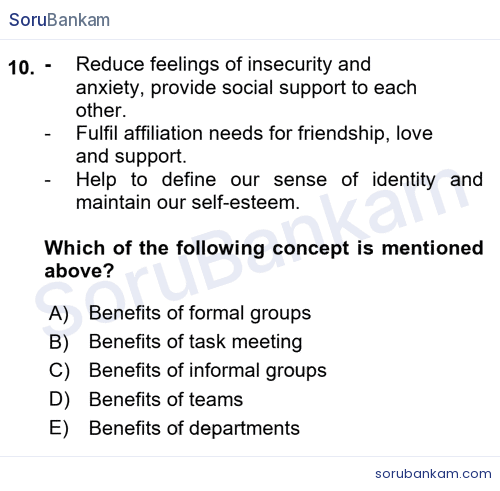
- Reduce feelings of insecurity and anxiety, provide social support to each other. - Fulfil affiliation needs for friendship, love and support. - Help to define our sense of identity, and maintain our self-esteem. Which of the following concept is mentioned above? A) Benefits of formal groups B) Benefits of task meeting C) Benefits of informal group's D) Benefits of teams E) Benefits of departments
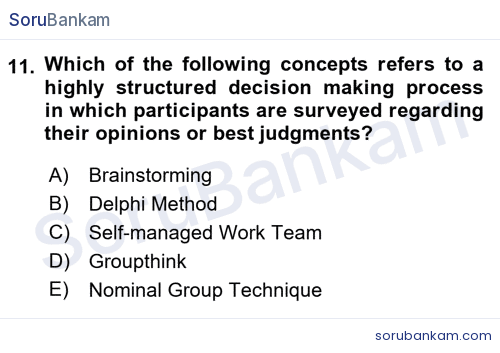
Which of the following concepts refers to a highly structured decision making process in which participants are surveyed regarding their opinions or best judgments? A) Brainstorming B) Delphi Method C) Self-managed Work Team D) Groupthink E) Nominal Group Technique
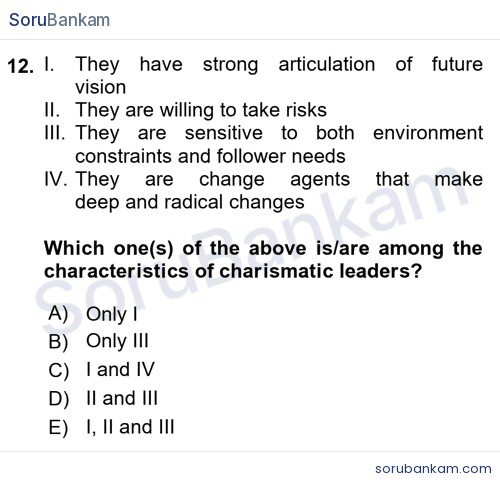
I. They have strong articulation of future Vision II. They are willing to take risks III. They are sensitive to both environment constraints and follower needs IV. They are change agents that maké" deep and radical changes Which one(s) of the above isfare among the characteristics of charismatic leaders? A) Only B) Only III C) I and D) Il and Ill E) I, Il and
Which one of the following is the main focus of the "Trait Approach" regarding the leadership approach? A) Leadership effectiveness comes from the behaviour of the leader. B) There is no common consensus on leadership styles. C) The effectives of leadership differentiates w. according to the situations. D) NºD) Leaders and managers function in the same way. E) Leadership comes from birth.
1. The quality of the intended purpose II. Abilities and expectations of the leader III. Characteristics of an organisation that leadership composed Which one(s) of the above is/are correct regarding the factors according contingency perspective of leadership? A) Only B) Only C) Only Ill D) I and III E) Il and Ill
"This kind of conflict is associated with negative feelings and disagreements." Which of the following terms is mentioned above sentence? A) Task conflict B) Process conflict C) Relationship conflict D) Socioemotional conflict E) Brainstorming
Which of the following options is one of the results of dysfunctional results of conflict for organizations? A) Disagreement B) Low job performance C) Opposition D) Controversy E) Tansions
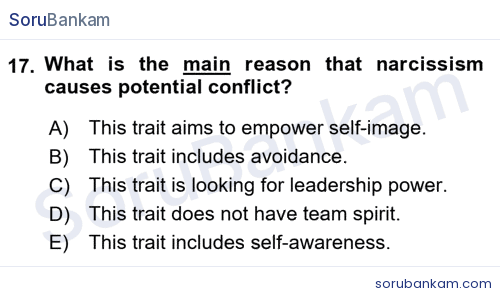
What is the main reason that narcisșism causes potential conflict? A) This trait aims to empower self-image. B) This trait includes avoidance. C) This trait is looking for leadership power:. D) This trait does not have team spint. E) This trait includes self-awareness.
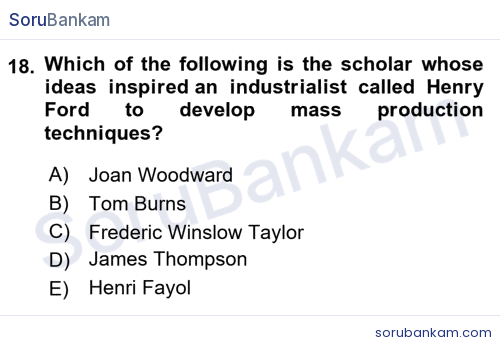
Which of the following is the scholar whose ideas inspired an industrialist called Henry Ford develop mass -production A) techniques? ~ VAy Yoan Woodward B) Tom Burns C) Frederic Winslow Taylor D) James Thompson E) Henri Fayol
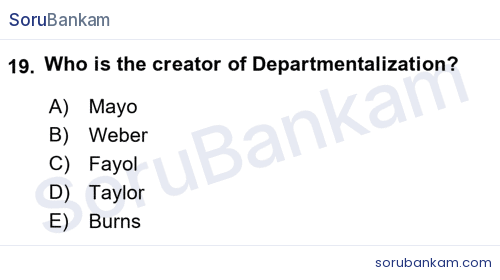
Who is the creator of Departmentalization? A) Mayo B) Weber C) Fayol D) Taylor E) Burns
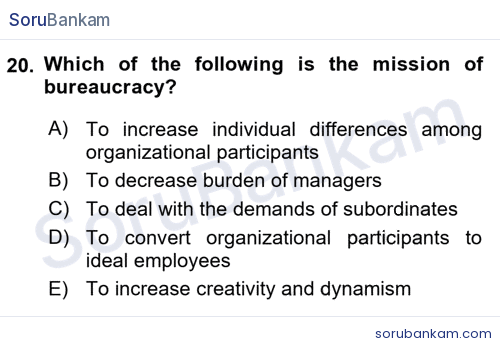
Which of the following is the mission of bureaucracy? A) To increase individual differences among organizational participants B) To decrease burden of managers C) To deal with the demands of subordinates D) To convert organizational participants to ideal employees E) To increase creativity and dynamism