SOS210U Organizational Behavior 2018-2019 Final Soruları
20 soru · Final · 2018-2019
SOS210U Organizational Behavior dersinin 2018-2019 final sınavı 20 sorudan oluşur; ders AÖF İktisat (İngilizce) bölümünde okutulur. Sorular aşağıda sırasıyla yer alır. Doğru cevaplar ve sonucun, testi çözdüğünde görünür.
Önizleme · 20 soru. Cevaplamak ve sonucunu görmek için sınavı başlat.
Sorular
20 soru
Soru 1
Soru 2
Soru 3
Soru 4
Soru 5
Soru 6
Soru 7
Soru 8
Soru 9
Soru 10
Soru 11
Soru 12
Soru 13
Soru 14
Soru 15
Soru 16
Soru 17
Soru 18
Soru 19
Soru 20
Sınav modunda süre tutulur, doğru cevaplar ve sonucun sınav bitince görünür.
Dersin üniteleri
Ünite özetleri ve konu anlatımları
- 1. Ünite: Introduction To Organizational Behavior
- 2. Ünite: Individual Differences: Personality, Perception, And Employee Attitudes
- 3. Ünite: Motivation Management
- 4. Ünite: Organisational Culture And Climate
- 5. Ünite: Groups And Work Teams İn Organizations
- 6. Ünite: Leadership İn Organizations
- 7. Ünite: Conflict Management
- 8. Ünite: Organizational Structure And Design
SOS210U Organizational Behavior ders sayfası: bütün sınavlar ve üniteler
Soruların metni (otomatik okuma)
Görsellerden otomatik okunmuştur; hata içerebilir. Sorular, görsellerdeki hâliyle geçerlidir.
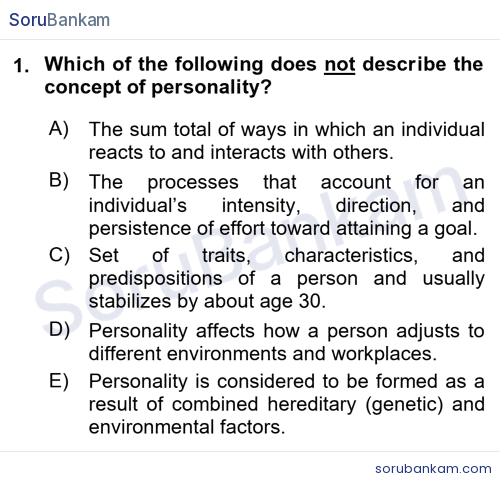
Which of the following does not describe the concept of personality? A) The sum fotal of ways in which an individual reacts to and interacts with others. B) The processes that account for an individual's intensity, direction, and persistence of effort toward attaining a goal. C) Set of traits, characteristics, and predispositions of a person and usually stabilizes by about age 30. D) Personality affects how a person adjusts to different environments and workplaces. E) Personality is considered to be formed as a result of combined hereditary (genetic) and environmental factors.
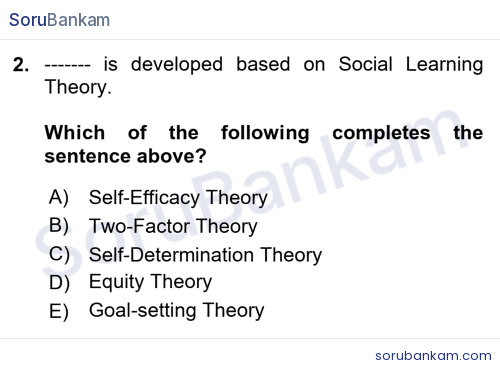
- is developed based on Social Learning Theory. Which of the following completes the sentence above? • j' A) Self-Efficacy Theory B) Two-Factor Theory C) Self-Determination Theory D) Equity Theory E) Goal-setting Theory
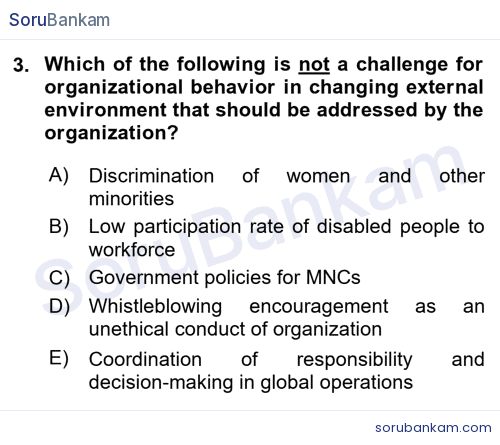
3. Which of the following is not a challenge for organizational behavior in changing external environment that should be addressed by the organization? A) Discrimination of women and other minorities B) Low participation rate of disabled people to workforce C) Government policies for MNCs D) Whistleblowing encouragement as an unethical conduct of organization Coordination of responsibility and decision-making in global operations
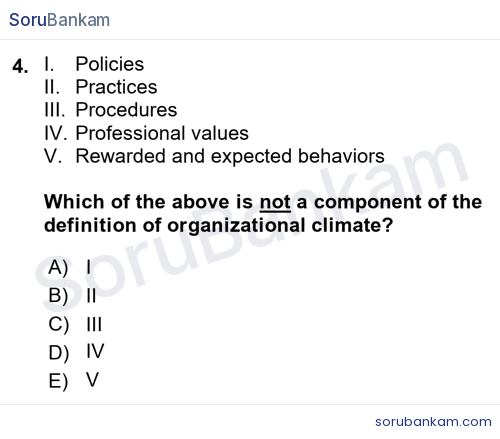
4. I. Policies II. Practices III. Procedures IV. Professional values V. Rewarded and expected behaviors Which of the above is not a component of the definition of organizational climate? A) I B) II C) D) E) V-
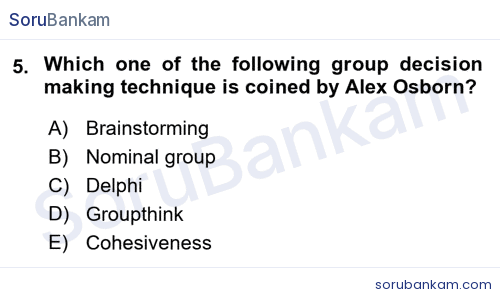
Which one of the following group decision making technique iș coined by Alex Osborn? A) Brainstorming B) Nominal group C) v d) Delphi D) Groupthink E) Cohesiveness
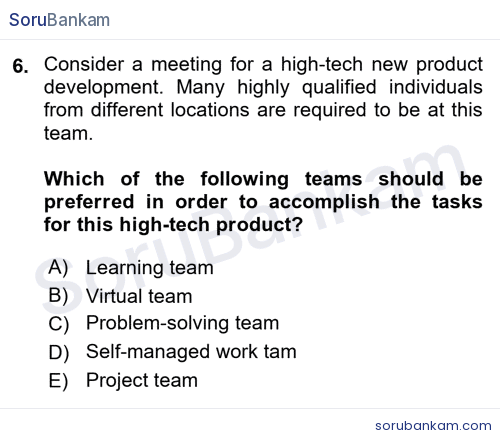
Consider a meeting for a high-tech new product development. Many highly qualified individuals from different locations are required to be at this team. Which of the following teams should be preferred in order to accomplish the tasks for this high-tech product? A) Learning team B) Virtual team C) Problem-solving team D) Self-managed work tam E) Project team
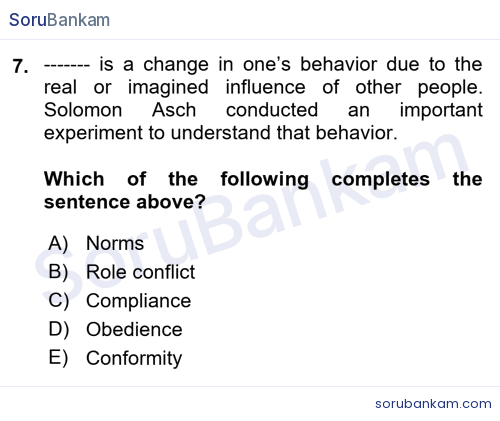
- is a change in one's behavior due to the real or imagined influence of other people. Solomon Asch conducted important experiment to understand that behavior. Which of the following completes the sentence above? A) Norms B) Role conflict C) Compliance D) Obedience E) Conformity
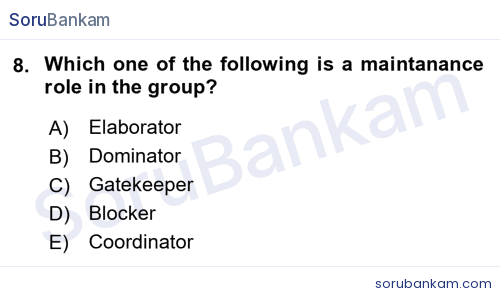
Which one of the following is a maintanance role in the group? A) Elaborator B) Dominator C) Gatekeeper D) Blocker E) Coordinator
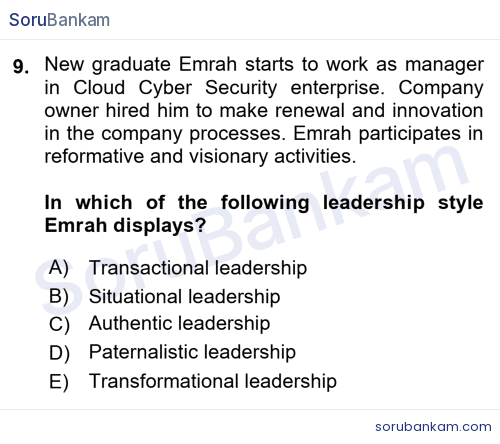
New graduate Emrah starts to work as manager in Cloud Cyber Security enterprise. Company owner hired him to make renewal and innovation in the company processes. Emrah participates in reformative and visionary activities. In which of the following leadership style Emrah displays? A) Transactional leadership B) Situational leadership C) Authentic leadership D) Paternalistic leadership E) Transformational leadership
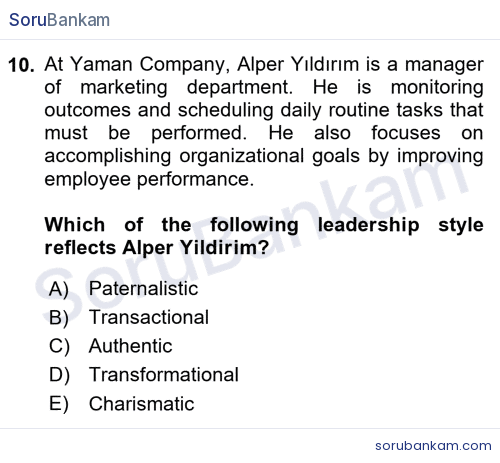
At Yaman Company, Alper Yıldırım is a manager of marketing department. He is monitoring outcomes and scheduling daily routine tasks that must be performed. He aiso" focuses on accomplishing organizatonal goals by improving employee performance. Which of the following leadership style reflects Alper Ylldirim? A) Paternalistic B) Transactional C) Authentic D) Transformational . ." E) . Charismatic
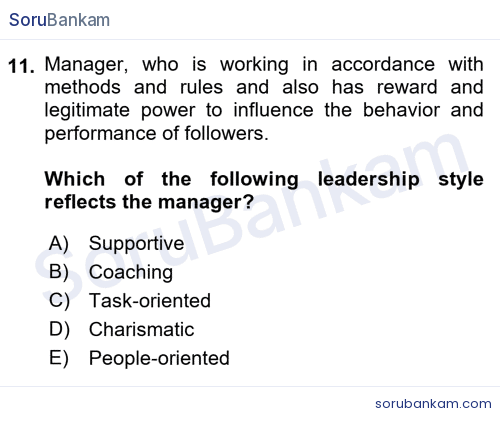
Manager, who is working in accordance with methods and rules and also has reward and legitimate power to influence the behavior and performance of followers. Which of the following leadership style reflects the manager? A) Supportive B) Coaching C) Task-oriented D) Charismatic E) People-oriented
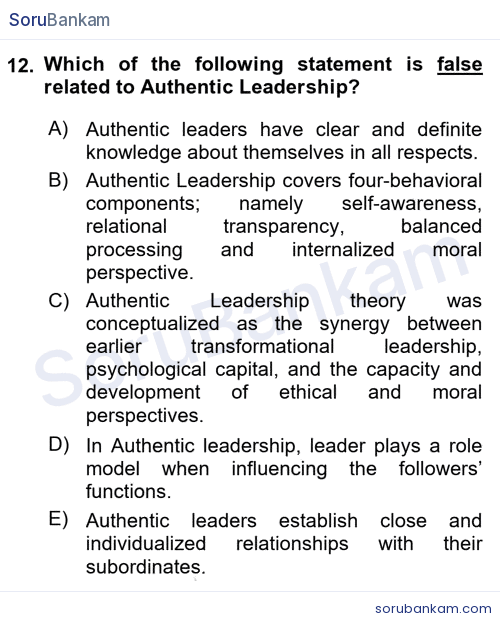
Which of the following statement is false related to Authentic Leadership? A) Authentic leaders have clear and definite knowledge about themselves in all respects. B) Authentic Leadership covers four-behavioral components; namely self-awareness, relational transparency,.. balanced processing and internalized moral perspective. C) Authentic Leadership theory was conceptualized as the synergy between earlier transformational leadership, psychological capita, and the capacity and development of ethical and moral perspectives. D) In Authentic leadership, leader plays a role *the followers' made when intenan tunetions. E) Authentic leaders establish close and individualized relationships with their subordinates.
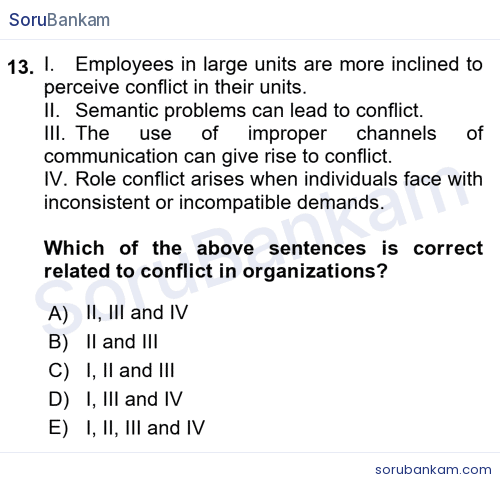
. Employees in large units are more inclined to perceive conflict in their units. II. Semantic problems can lead to conflict. Ili. The - use improper channels of communication can give rise to conflict. IV. Role conflict arises when individuals face with inconsistent or incompatible demands. Which of the above sentences is correct related to conflict in organizations? A) II, III and B) Il and Ill C) I,!l and D) Ï, Ill and E) I, II, Ill and
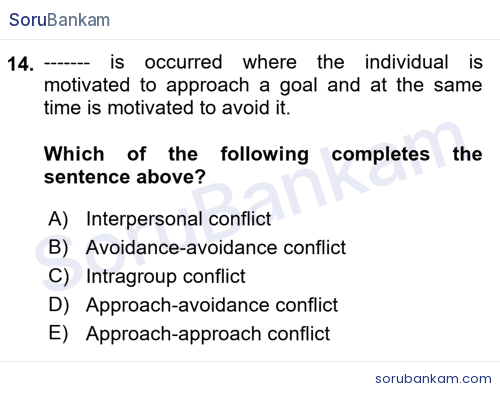
- is occurred where the individual is motivated to approach a goal and at the same time is motivated to avoid it. Which of the following completes the sentence above? A) Interpersonal conflict B) Avoidance-avoidance conflict C) Intragroup conflict D) Approach-avoidance conflict E) Approach-approach conflict
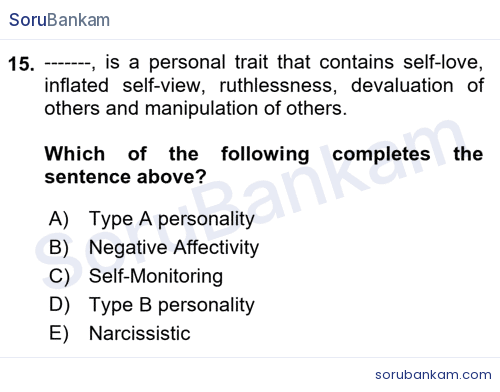
-, is a personal trait that contains self-love, inflated self-view, ruthlessness, devaluation of others and manipulation of others. Which of the following completes the sentence above? A) Type A personality B) Negative Affectivity C) Self-Monitoring D) Type B personality E) Narcissistic
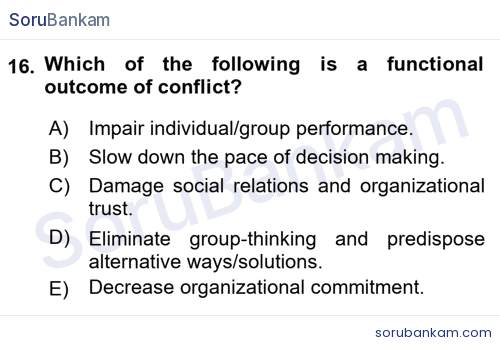
Which of the following is a functional outcome of conflict? A) Impair individual/group performance. B) Slow down the pace of decision making. C) Damage social relations and organizational trust. D) Eliminate group-thinking and predispose alternative ways/solutions. E) Decrease organizational commitment.
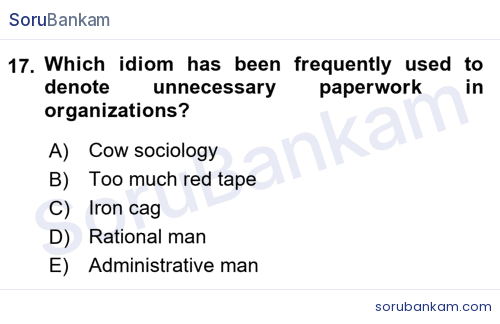
Which idiom has been frequently used to denote unnecessary paperwork in organizations? A) Cow sociology B) Too much red tape C) Iron cag D) Rationa, marr E) Administrative man i v'
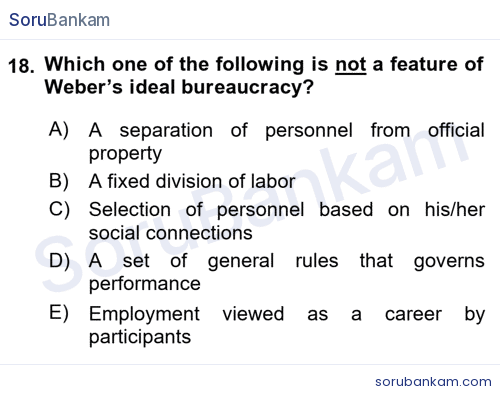
Which one of the following is not a feature of Weber's ideal bureaucracy? A) A • separation of personnel from official property B) A fixed division of labor C) Selection of personnel based on his/her social connections D) A set of general rules that governs performance E) Employment viewed as a career by participants
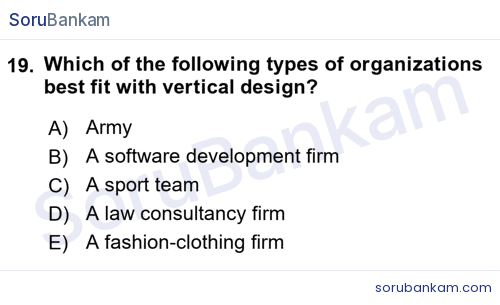
Which of the following types of organizations best fit with vertical design? A) Army B) A software development firm C) A sport team D) Alaw consultancy firm E) A fashion-clothing firm
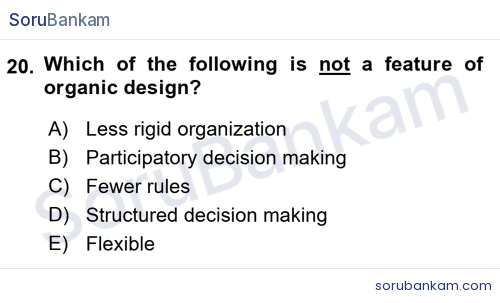
Which of the following is not a feature of organlc design? A) Less rigid organization B) Participatory decision making C) Fewer rules D) Structured decision making E) Flexible•