IKT321U Behavioral Economics 2023-2024 Final Soruları
20 soru · Final · 2023-2024
IKT321U Behavioral Economics dersinin 2023-2024 final sınavı 20 sorudan oluşur; ders AÖF İktisat (İngilizce) bölümünde okutulur. Sorular aşağıda sırasıyla yer alır. Doğru cevaplar ve sonucun, testi çözdüğünde görünür.
Önizleme · 20 soru. Cevaplamak ve sonucunu görmek için sınavı başlat.
Sorular
20 soru
Soru 1
Soru 2
Soru 3
Soru 4
Soru 5
Soru 6
Soru 7
Soru 8
Soru 9
Soru 10
Soru 11
Soru 12
Soru 13
Soru 14
Soru 15
Soru 16
Soru 17
Soru 18
Soru 19
Soru 20

Sınav modunda süre tutulur, doğru cevaplar ve sonucun sınav bitince görünür.
Dersin üniteleri
IKT321U Behavioral Economics ders sayfası: bütün sınavlar ve üniteler
Soruların metni (otomatik okuma)
Görsellerden otomatik okunmuştur; hata içerebilir. Sorular, görsellerdeki hâliyle geçerlidir.
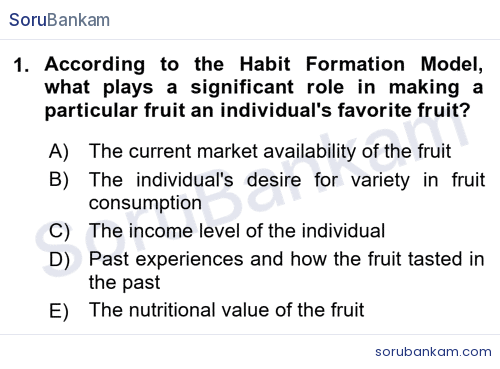
1. According to the Habit Formation Model, what plays a significant role in making a particular fruit an individual's favorite fruit? A) The current market availability of the fruit The individual's desire for variety in fruit consumption C) The income level of the individual D) Past experiences and how the fruit tasted in the past E) The nutritional value of the fruit
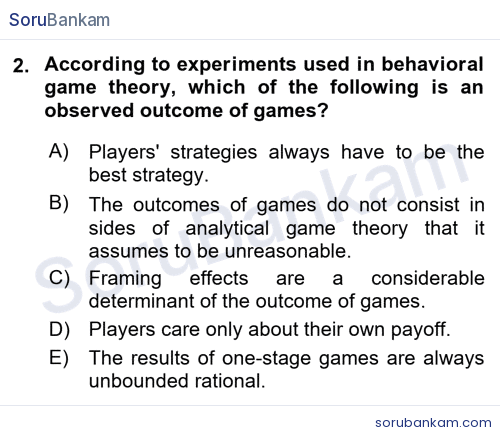
According to experiments used in behavioral game theory, which of the following is an observed outcome of games? A) Players' strategies always have to be the best strategy. B) The outcomes of games do not consist in sides of analytical game theory that it assumes to be unreasonable. C) Framing effects are a considerable determinant of the outcome of games. D) Players care only about their own payoff. E) The results of one-stage games are always unbounded rational.
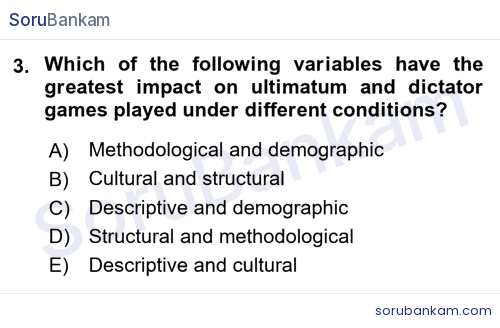
Which of the following variables have the greatest impact on ultimatum and dictator games played under different conditions? A) Methodological and demographic B) Cultural and structural C) Descriptive and demographic D) Structural and methodological E) Descriptive and cuiturai
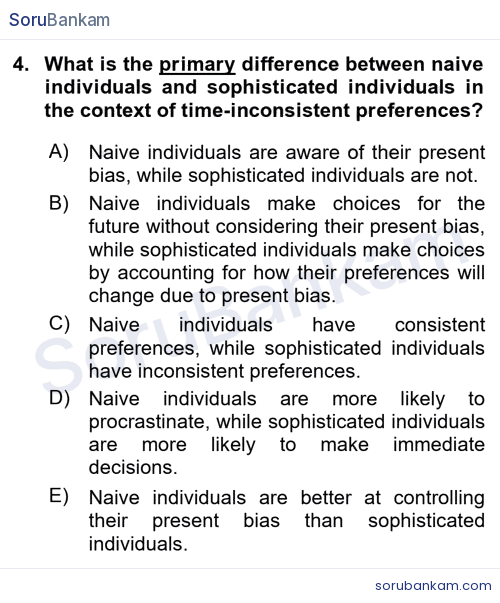
4. What is the primary difference between naiye individuals and sophisticated individyals in the context of time-inconsistent preferences? A) Naive individuals are aware of their present bias, while sophisticated individuals are not. B) Naive individuals make choices for the future without considering their present bias, while sophisticated individuals make choices by accounting for how their preferences will change due to present bias. C) Naive individuals have consistent preferences, while sophisticated individuals have inconsistent preferences. D) Naive individuals are more likely to procrastinate, while sophisticated individuals are more likely to make immediate decisions. Naive individuals are better at controlling their present bias than sophisticated individuals.
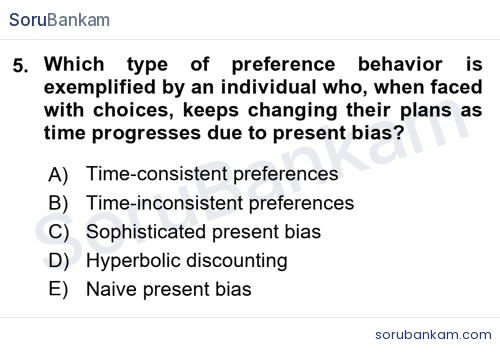
Which type of preference behavior is exemplified by an individual who, when faced with choices, keeps changing their plans as time progresses due to present bias? A) Time-consistent preferences B) Time-inconsistent preferences C) Sophisticated present bias D) Hyperbolic discounting E) Naive present bias
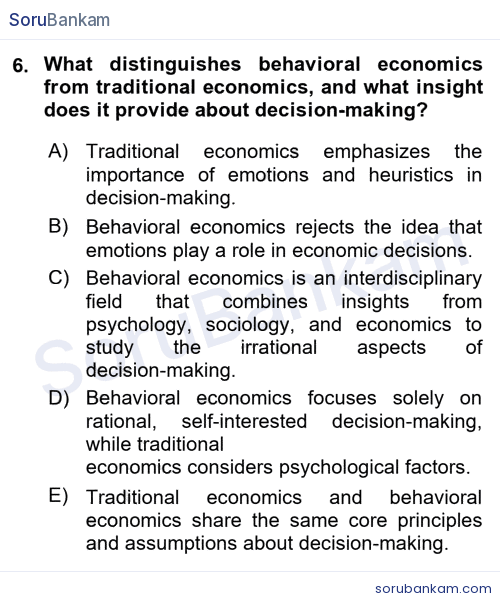
6. What distinguishes behavioral economics from traditional economics, and what insight does it provide about decision making? A) Traditional economics » lo emphasizes the Importance of emotions and heuristics in decision-making. B) Behavioral economics rejects the idea that emotions play a role in economic decisions. Behavioral economics is an interdisciplinary field that combines insights from psychology, sociology, and economics to study the irrational aspects of decision-making. Al Behavioral economics focuses solely on rational, self-interested decision-making, while traditional economics considers psychological tactors. E) Tradional economics and behavioral. i economics share the same core principles and assumptions about decision-making.
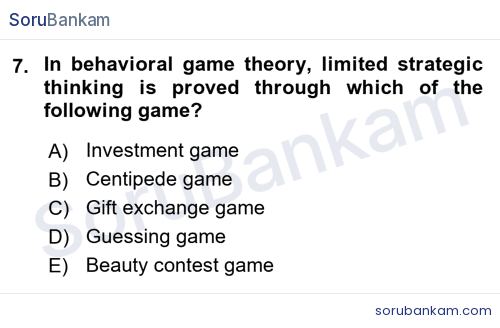
In behavioral game theory, limited strategic thinking is proved through which of the following game? A) Investment game B) Centipede game C) Gift exchange game D) Guessing game E) Beauty contest game
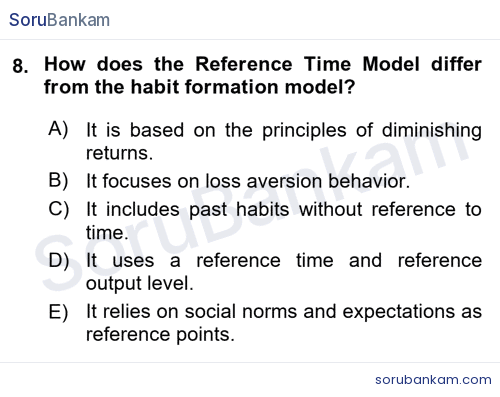
8. How does the Reference Time Model differ from the habit formation model? A) It is based on the principles of diminishing returns. B) It focuses on loss aversion behavior. C) It includes past habits without reference to time. D) It uses a reference time and reference output level. It relies on social norms and expectations as reference points.
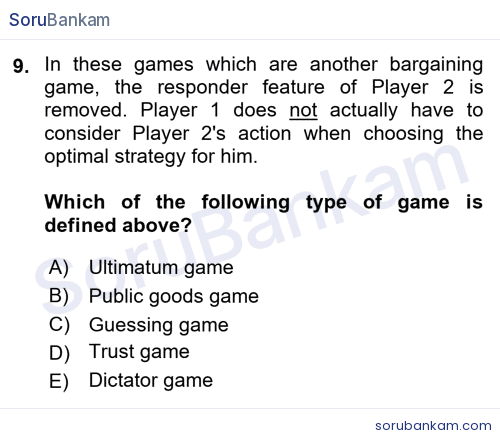
In these games which are another bargaining game, the responder feature of Player 2 is removed. Player 1 does not actually have to consider Player 2's action when choosing the optimal strategy for him: Which of the following type of game is defined above? A) Ultimatum game B) Public goods game C) Guessing game D) Trust game E) Dictator game
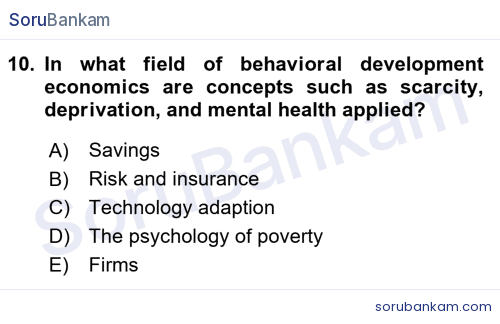
In what field of behavioral development economics are concepts such as scarcity, deprivation, and mental health applied? A) Savings B) Risk and insurance C) Technology adaption D) The psychołogy of poverty E) Firms
The automatic enrollment plan in the Private Pension System is an example of which choice architectute principle? A) Default options I B) Incentives C) Understand mappings D) Expect error E) Structure complex choices
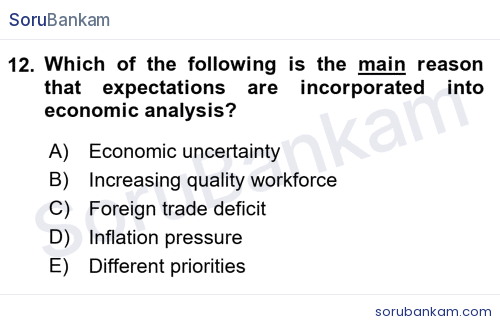
Which of the following is the main reason that expectations are incorporated Into economic analysis? A) Economic uncertainty B) Increasing quality workforce C) Foreign trade deficit D) Inflation pressure E) Different priorities
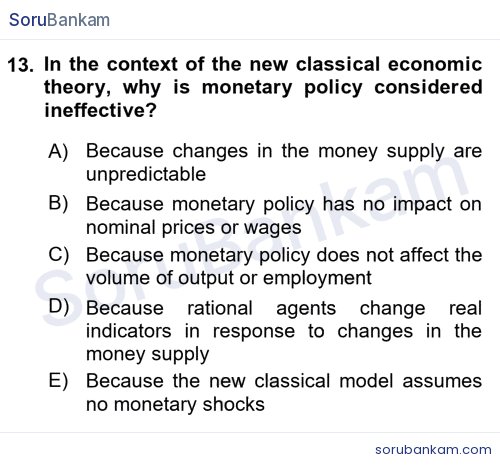
In the context of the new classical economic theory, why is monetary policy considered ineffective? A) Because changes in the money supply are unpredictable B) Because monetary policy has no impact on nominal prices or wages C) Because monetary policy does not affect the volume of output or employment D) Because rational agents change real indicators in response to changes in the money supply E) Because the new olassical model assumes no monetary shocks
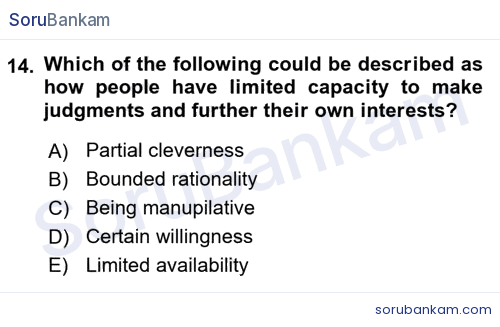
Which of the following could be described as how people have limited capacity to make judgments and further their own interests? A) Partiar cleverness B) 1 "B) Bounded rationality C) Being manupilatiye D) Certain willingness E) Limited availability
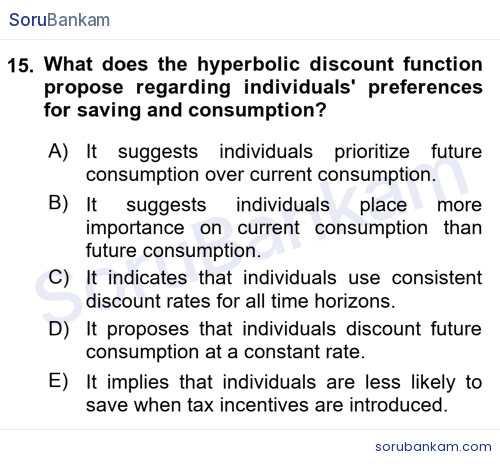
What does the hyperbolic discount function propose regarding, individuals' preferences for saving and consumption? A) It suggests individuals prioritize future consumption over current consumption. B) " B) It suggests individuals place more importance on current consumption than future consumption. C) It indicates that individuals use consistent discount rates for all time horizons. D) It proposes that individuals discount future consumption at a constant rate. E) It implies that individuals are less likely to save when tax incentives are introduced.
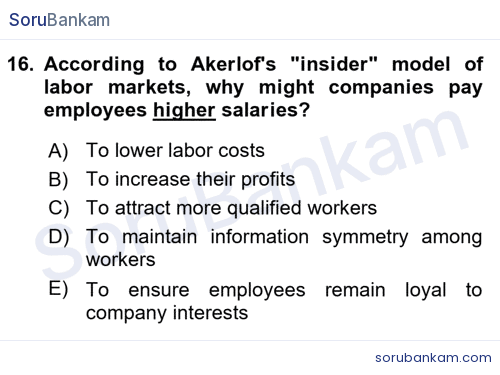
According to Akerlofs "insider" model of labor markets, why might companies pay employees higher salaries? A) To lower labor costs B) To increase their profits C) To attract more qualified workers D) To maintain information symmetry among workers E) To ensure employees remain loyal to company interests
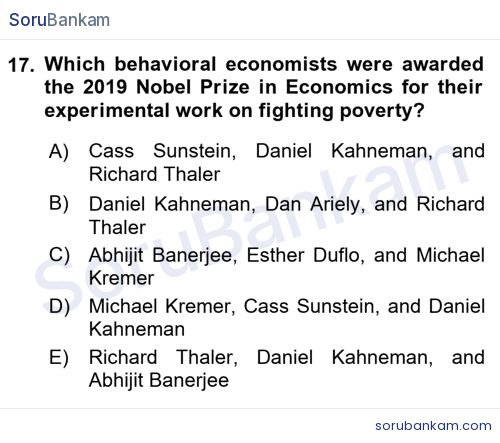
Which behavioral economists were awarded the 2019 Nobel Prize in Economics for their experimental work on fighting poverty? A) Cass Sunstein, Daniel Kahneman, and Richard Thaler B) Daniel Kahneman, Dan Ariely, and Richard Thaler C) Abhijit Banerjee, Esther Dufio, and Michael Kremer D) Michael Kremer, Cass Sunstein, and Daniel Kahneman E) e) Richard Thaler, Daniel Kahneman, and Abhijit Banerjee
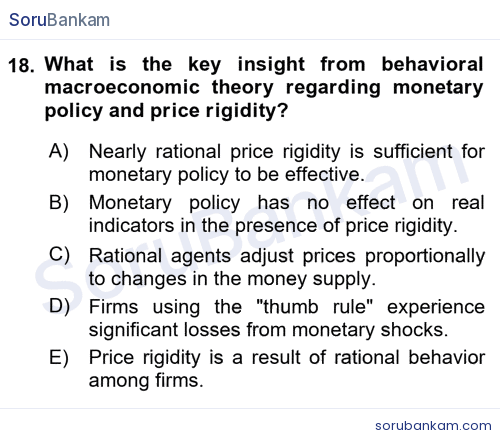
18. What is the key insight from behavioral\ macroeconomic theory regarding monetary policy and price rigidity? A) Nearly rational price rigidity is sufficient for monetary policy to be effective. Monetary policy has no effect on real indicators in the presence of price rigidity. C) Rational agents adjuşt príces proportionally to changes in the money supply. D) Firms using the "thumb rule" expertence significant losses from monetary shocks. E) Price rigidity is a result of rational behavior among firms.
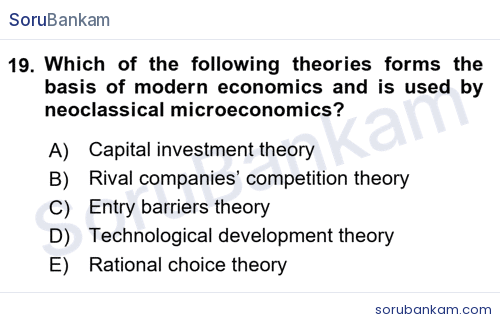
Which of the following theories forms the basis of modern economics and is used by neoclassical microeconomics? A) Capital investment theory B) Rival companies' competition theory C) Entry barriers theory D) Technological development theory E) Rational choice theory
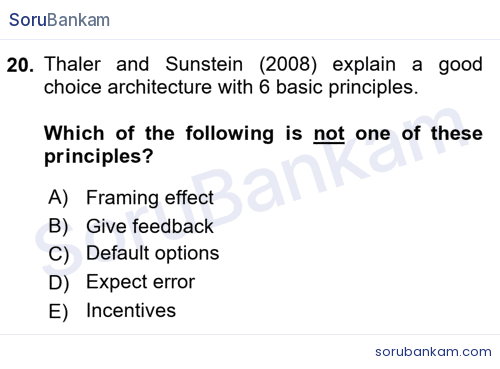
Thaler and Sunstein (2008) explain a good choice architecture with 6 basic principles: Which of the following is not one of these principles? A) Framing effect B) Give feedback C) Default options D) Expect error E) Incentives