PSI106U Psychology 2021-2022 Yaz Okulu Soruları
20 soru · Yaz okulu · 2021-2022
PSI106U Psychology dersinin 2021-2022 yaz okulu sınavı 20 sorudan oluşur; ders AÖF İşletme (İngilizce) bölümünde okutulur. Sorular aşağıda sırasıyla yer alır. Doğru cevaplar ve sonucun, testi çözdüğünde görünür.
Önizleme · 20 soru. Cevaplamak ve sonucunu görmek için sınavı başlat.
Sorular
20 soru
Soru 1
Soru 2
Soru 3
Soru 4
Soru 5
Soru 6
Soru 7
Soru 8
Soru 9
Soru 10
Soru 11
Soru 12
Soru 13
Soru 14
Soru 15
Soru 16
Soru 17
Soru 18
Soru 19
Soru 20
Sınav modunda süre tutulur, doğru cevaplar ve sonucun sınav bitince görünür.
Dersin üniteleri
Ünite özetleri ve konu anlatımları
Soruların metni (otomatik okuma)
Görsellerden otomatik okunmuştur; hata içerebilir. Sorular, görsellerdeki hâliyle geçerlidir.
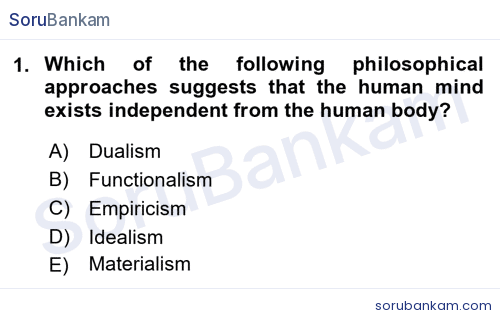
Which of the following philosophical approaches suggests that the human mind exists independent from the human body? A) Dualism B) Functionalism C) Empiricism D) Idealism E) Materialism
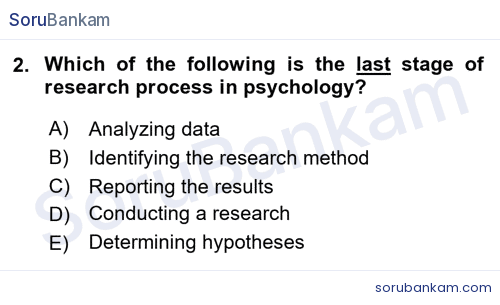
Which of the following is the last stage of research process in psychology? A) Analyzing data B) Identifying the research method C) Reporting the results D) Conducting a research E) Determining hypotheses
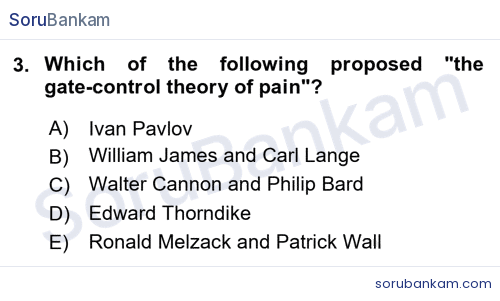
Which of the following proposed "the gate-control theory of pain"? A) Ivan Pavlov B) William James and Can Lange C) Walter Cannon and Philip Bard D) Edward Thorndike E) Ronald Melzack and Patrick Wall
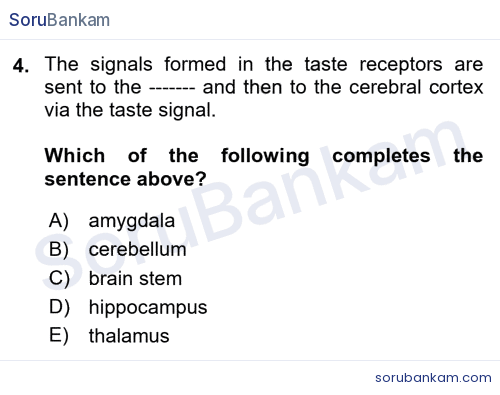
4. The signals formed in the taste receptors are sent to the - and then to the cerebral cortex via the taste signal Which the following completes the sentence above? A) amygdala B) cerebellum Q. brain stem . "D) hippocampus E) thalamus
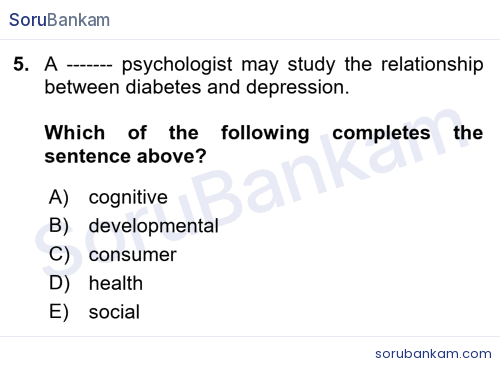
A — psychologist may study the relationship between diabetes and depression. Which of the following completes the sentence above? A) cognitive B) developmentai C) consumer D) health E) social
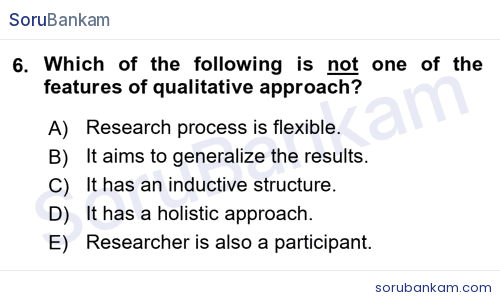
Which of the following is not one of the features of qualitative approach? A) Research process is flexible. B) It aims to generalize the results. C) It has an inductive structure. D) It has a holistic approach. E) Researcher is also a participant.
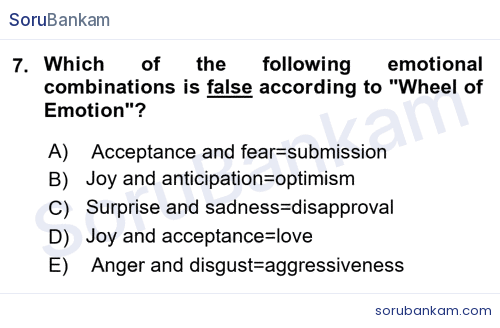
Which the following emotional combinations is false according to "Wheel of Emotion"? A) Acceptance and fear=submission B) Joy and anticipation=optimism C) Surprise and sadness=disapproval D) Joy and acceptance=love E) _Anger and disgust=aggressiveness
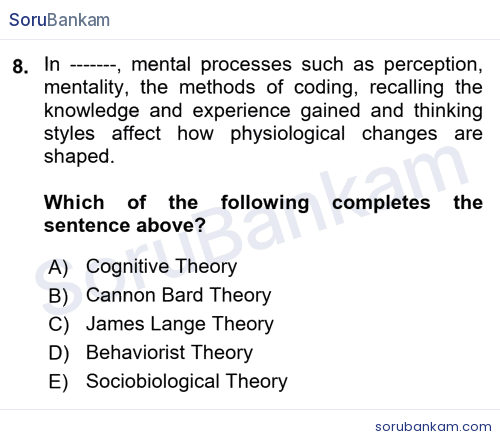
In --, mental processes such as perception, mentality, the methods of coding, recalling the knowledge and experience gained and thinking styles affect how physiological changes are shaped. Which of the following completes the sentence above? A) Cognitive Theory B) Cannon Bard Theory C) James Lange Theory D) Behaviorist Theory E) Sociobiological Theory
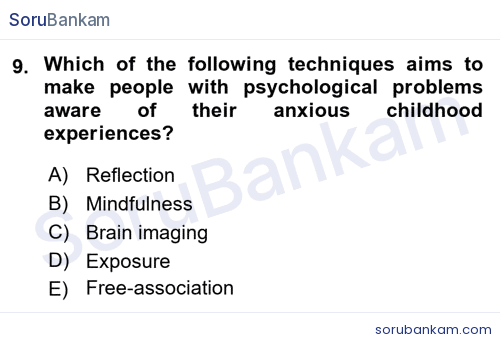
Which of the following techniques aims to make people with psychological problems aware their anxious childhood experiences? A) Reflection B) Mindfulness C) Brain imaging D) Exposure E) Free-association
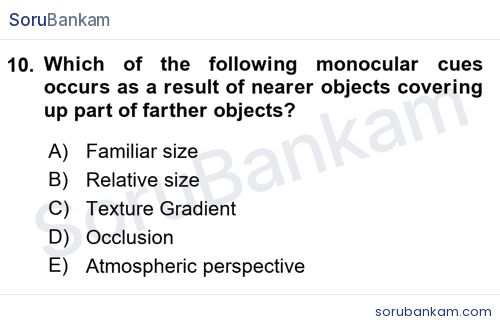
Which of the following monocular cues occurs as a result of nearer objects covering up part of farther objects? A) Familiar size B) Relative size C) Texture Gradient D) Occlusion. E) Atmospheric perspective
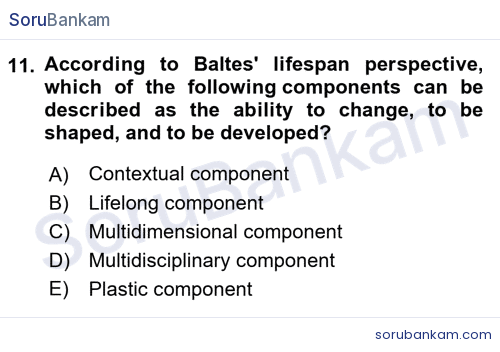
According to Baltes' lifespan perspective, which of the following components can be described as the ability to change, to be shaped, and to be developed? A) Contextual component B) Lifelong component C) Multidimensional component D) Multidisciplinary component E) Plastic component
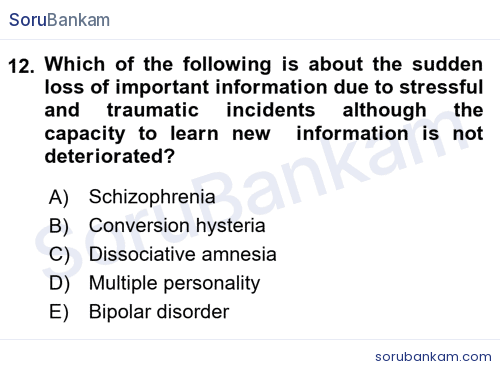
Which of the following is about the sudden loss of important information due to stressful and traumatic incidents although the capacity to learn new information is not deteriorated? A) Schizophrenia B) Conversion hysteria C) Dissociative amnesia D) Multiple personality E) Bipolar disorder
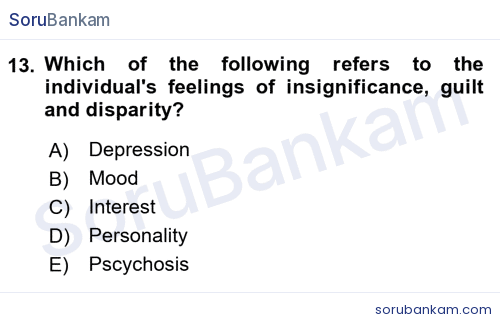
Which of the following refers individual's feelings of insignticanse buil and disparity? A) Depression B) Mood C) Interest D) Personality E) Psychosis
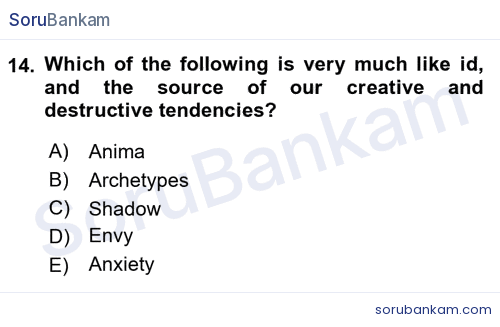
1W t the flowing is very much like 19' and the source our creative •'and destructive tendencles? A) Anima B) " B) "Archetypes C) Shadow D) Envy E) Anxiety
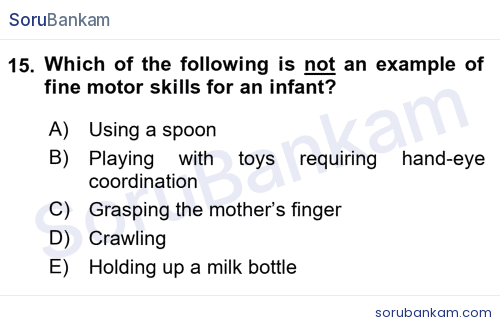
Which of the following is not an example of fine motor skills for an infant? A) Using a spoon B) Playing with toys requiring hand-eye coordination C) Grasping the mother's finger D) Crawling E) Holding up a milk bottle
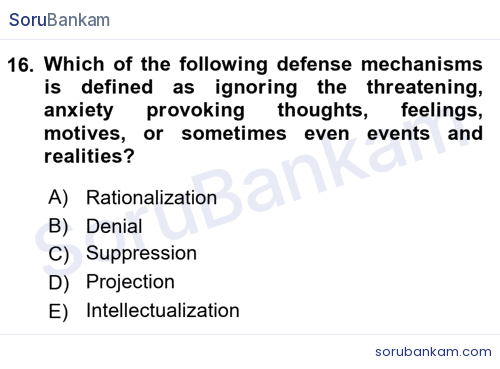
Which of the following defense mechanisms is defined as ignoring the threatening, anxiety provoking thoughts, feelings, motives, or sometimes even events and realities? A) Rationalization B) Denial C) Suppression D) Projection E) Intellectualization
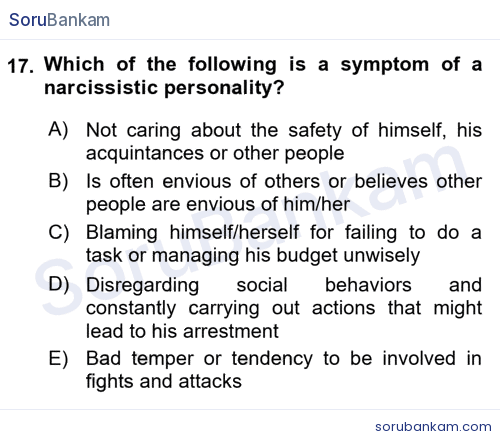
Which of the following is a symptom of a narcissistic personality? A) Not cariig about the safety of himself, his acquintances or other people B) Is often envious of others or believes other people are envious of him/her C) Blaming himself/herself for failing to do a task of managing his budget unwisely D) . Disregarding social behaviors and constantly carrying out actions that might lead to his arrestment E) Bad temper or tendency to be involved in fights and attacks
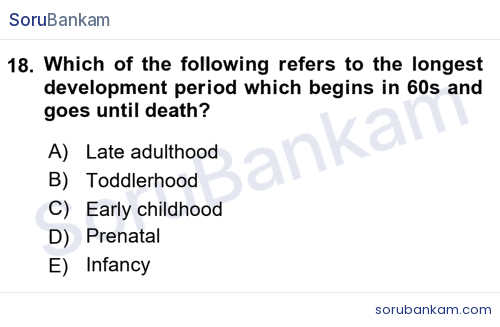
Which of the following refers to the longest development period which begins In 60s and goes until death? A) fate adulthood B) • Toddlerhood C) Early childhood D) Prenatal E) Infancy
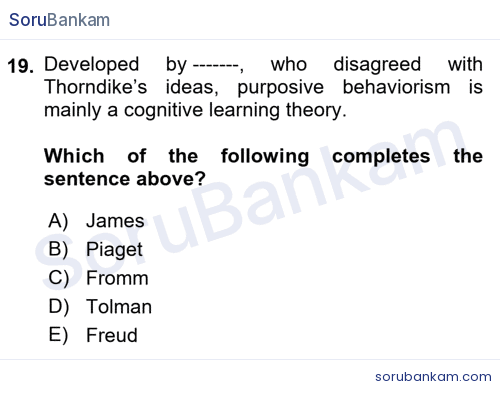
Developed by.., who disagreed with Thorndike's ideas, purposive behaviorism is mainly a cognitive leaming theory: Which of the following completes the sentence above? A) James B) Piaget C) Fromm D) Tolman E) Freud
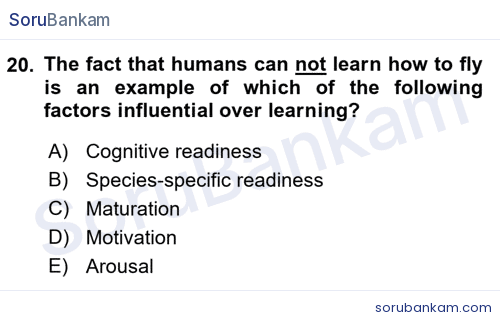
The fact that humans can not learn how to fly is an example of which of the following factors influential over learning? A) Cognitive readiness B) Species-specific readiness C) Maturation D) Motivation E) Arousal