PSI106U Psychology 2023-2024 Final Soruları
20 soru · Final · 2023-2024
PSI106U Psychology dersinin 2023-2024 final sınavı 20 sorudan oluşur; ders AÖF İşletme (İngilizce) bölümünde okutulur. Sorular aşağıda sırasıyla yer alır. Doğru cevaplar ve sonucun, testi çözdüğünde görünür.
Önizleme · 20 soru. Cevaplamak ve sonucunu görmek için sınavı başlat.
Sorular
20 soru
Soru 1
Soru 2
Soru 3
Soru 4
Soru 5
Soru 6
Soru 7
Soru 8
Soru 9
Soru 10
Soru 11
Soru 12
Soru 13
Soru 14
Soru 15
Soru 16
Soru 17
Soru 18
Soru 19
Soru 20
Sınav modunda süre tutulur, doğru cevaplar ve sonucun sınav bitince görünür.
Dersin üniteleri
Ünite özetleri ve konu anlatımları
Soruların metni (otomatik okuma)
Görsellerden otomatik okunmuştur; hata içerebilir. Sorular, görsellerdeki hâliyle geçerlidir.
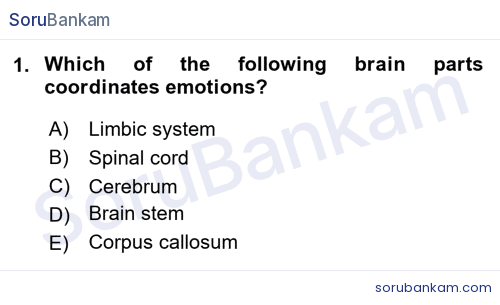
Which of the following brain parts coordinates emotions? A) Limbic system B) Spinal cord C) Cerebrum D) Brain stem E) Corpus callosum
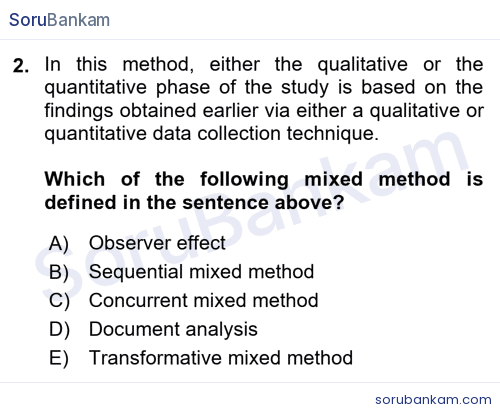
In this method, either the qualitative or the quantitative phase of the study is based on the findings obtained earlier via either a qualitative or quantitative data collection technique. Which of the following mixed method is defined In the sentence above? A) Observer effect B) Sequential mixed method C) Concurrent mixed method D) Document analysis E) Transformative mixed method
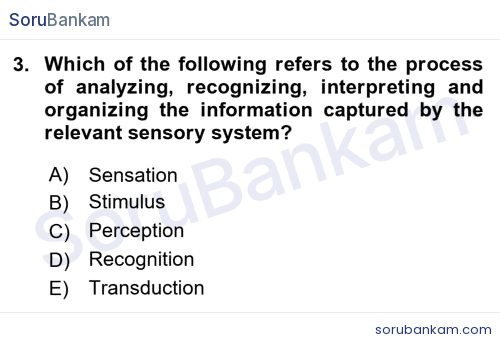
Which of the following refers to the process! of analyzing, recognizing, interpreting 'and organizing the information captured by the relevant sensory system? A) Sensation B) Stimulus C) Perception D) Recognition E) Transduction
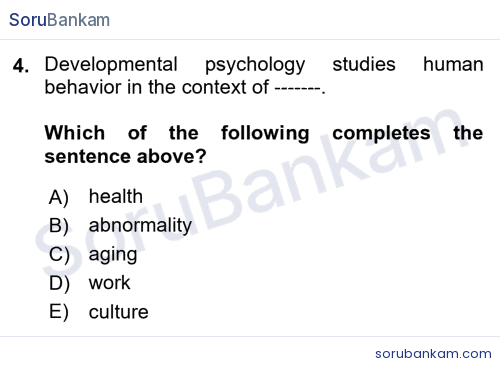
Developmental psychology studies humam behavior in the context of -. Which ol, the following completes the sentence above? A) "A) health B) abnormality C) aging • V. D) work E) culture
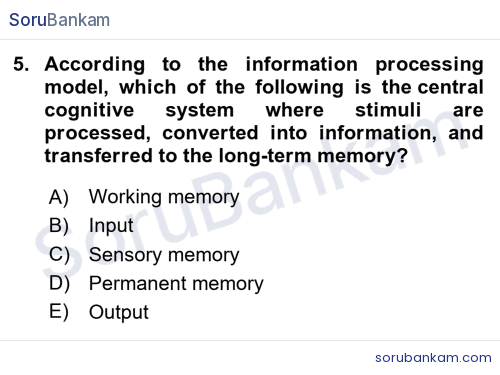
According to the information processing model, which of the following is the central cognitive system where stimuli are processed, converted into information, and transferred to the long-term memory? A) Working memory B) Input C) Sensory memory D) Permanent memory E) Output
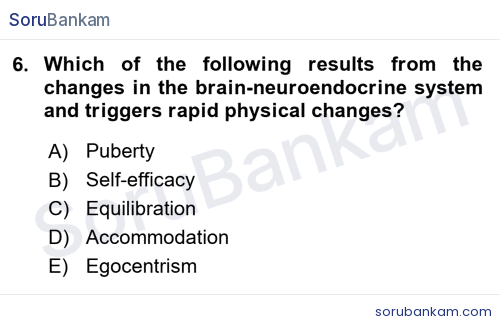
Which of the following results from the changes In the braln-neuroendocrine system and triggers rapid physical changes? A) Puberty B) Self-efficacy C) Equilibration D) Accommodation E) Egocentrism
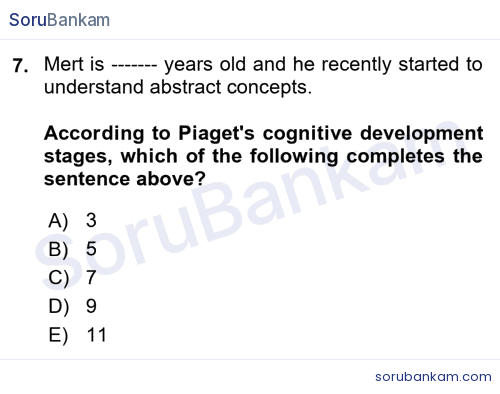
7. Mert is - years old and he recently started to understand abstract concepts. According torpiager's cogntive developmant stages, which of the following completes the sentence above? A) 3 B) 5 7' E) 11
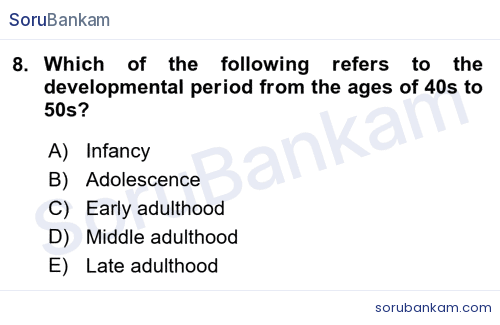
Which of the following refers the developmental period from the ages of 40s to 50s? A) Infancy B) 'B) Adolescence C) Early adulthood D) Middle adulthood E) Late adulthood
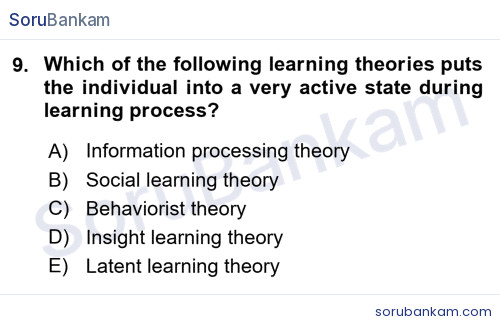
Which of the following learning theories puts the Individual into a very active state during learning process? A) Information processing theory B) Social leaming theory C) Behaviorist theory D) Insight learing theory E) Latent learning theary
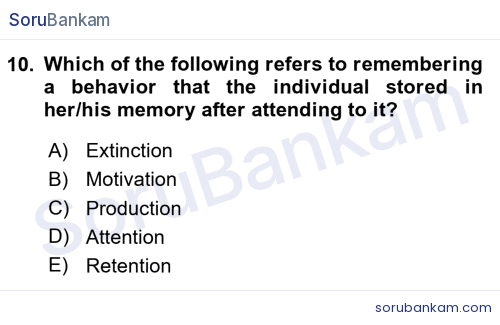
Which of the following refers to remembering a behavior that the individual stored in her/his memory after attending to it? A) Extinction B) Motivation C) Production D) Attention E) Retention
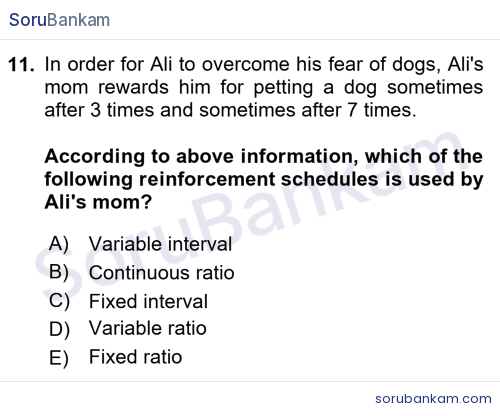
In order for Ali to overcome his fear of dogs, Al's mom rewards him for petting a dog sometimes after 3 times and sometimes after 7 times. According to above information, which of the following reinforcement schedules is used by Ali's mom? A) Variable interval B) Continuous ratio C) Fixed interval D) Variable ratio E) Fixed ratio
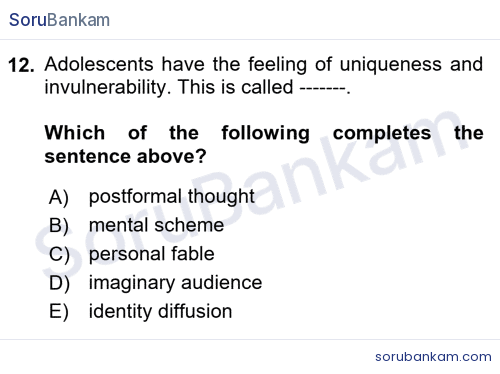
Adolescents have the feeling of uniqueness and invulnerability. This is called-..-. Which of the following completes the sentence above? A) postformal thought B) mental scheme C) personal fable D) imaginary audience E) identity diffusion
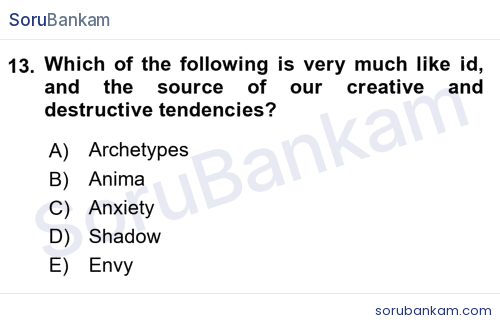
Which of the following is very much like id, and the source of our creatiye. and destructive tendencies? A) Archetypes B) Anima 1.• C) Anxiety D) Shadow E) Envy
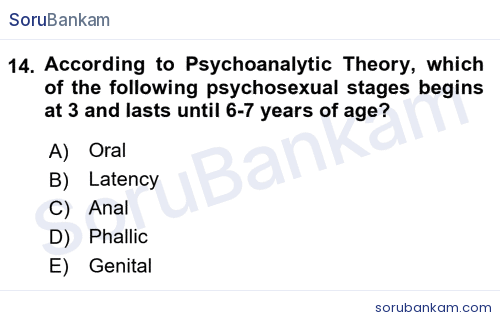
According to Psychoanalytic Theory, which of the following psychosexual stageş begíns at 3 and lasts until 6-7 years of age? A) Oral B) Latency C) Anal D) Phallic E) Genital
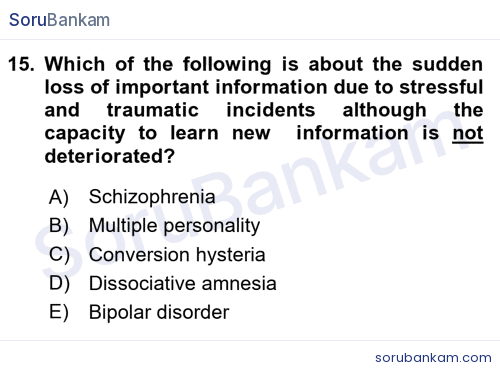
Which of the following is about the sudden loss of important information due to stressful and traumatic incidents although the capacity to learn new information is not deteriorated? A) Schizophrenia B) Multiple personality C) Conversion hysteria D) S Dissociative amnesia E) Bipolar disorder
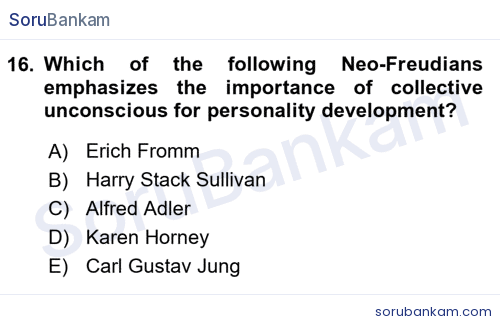
Which of the following Neo-Freudians emphasizes the Importance of collective unconscious for personality development? A) Erich Fromm B) Harry Stack Sullivan C) Alfred Adler D) Karen Horney E) Carl Gustav Jung
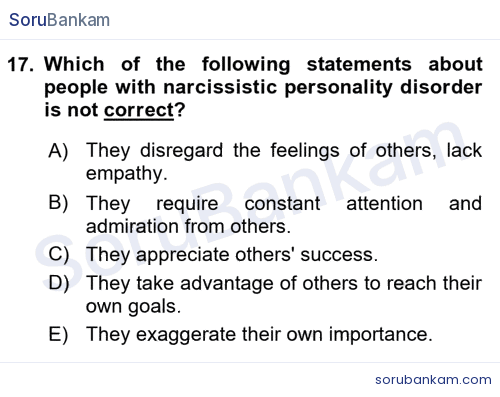
Which of the following statements about people with narcissistic personality disorder is not correct? A) They disregard the feelings of others, lack empathy. B) They require constant attention and admiration from others. C) They appreciate others' success. D) Di They take advantage of others to reach their own goals. E) They exaggerate their own importance.
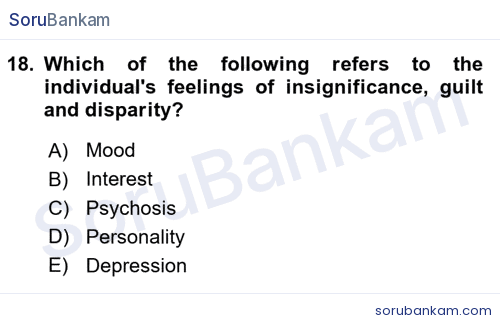
Which of the following refers to the individual's feelings, of insignificance, guilt and disparity? i A) Mood:"! B) Interest C) Psychosis D) Personality E) Depression
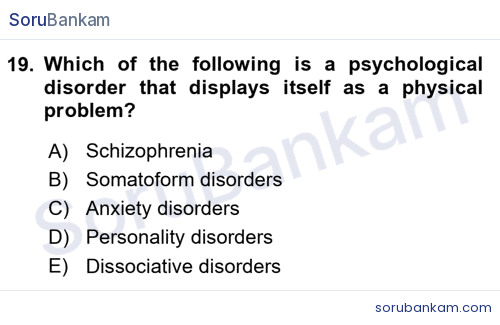
Which of the following is a psychological disorder that displays itself as a physical problem? A) Schizophrenia B) Somatoform disorders C) Anxiety disorders D) Personality disorders E) Dissociative disorders
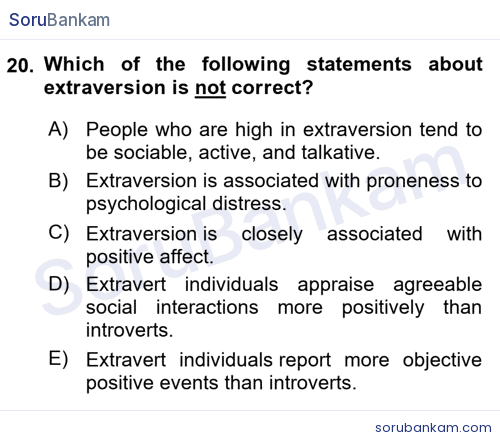
Which of the following statements about extraversion is not correct? A) People who are high in extraversion tend to be sociable, active, and talkative. B) Extraversion is associated with proneness to psychological distress. C) Extraversion is closely associated with positive affect. D) Extravert individuals appraise agreeable social interactions more positively than introverts. E) Extravert individuals report more objective positive events than introverts.