IKT108U Introduction to Economics 2 2018-2019 Final Soruları
20 soru · Final · 2018-2019
IKT108U Introduction to Economics 2 dersinin 2018-2019 final sınavı 20 sorudan oluşur; ders AÖF İktisat (İngilizce) bölümünde okutulur. Sorular aşağıda sırasıyla yer alır. Doğru cevaplar ve sonucun, testi çözdüğünde görünür.
Önizleme · 20 soru. Cevaplamak ve sonucunu görmek için sınavı başlat.
Sorular
20 soru
Soru 1
Soru 2
Soru 3
Soru 4
Soru 5
Soru 6
Soru 7
Soru 8
Soru 9
Soru 10
Soru 11
Soru 12
Soru 13
Soru 14
Soru 15
Soru 16
Soru 17
Soru 18
Soru 19
Soru 20
Sınav modunda süre tutulur, doğru cevaplar ve sonucun sınav bitince görünür.
Dersin üniteleri
Ünite özetleri ve konu anlatımları
- 1. Ünite: Basic Concepts And National Income Accounting
- 2. Ünite: Determination Of National Income
- 3. Ünite: Equilibrium İn The Economy
- 4. Ünite: Fiscal Policy And Aggregate Expenditures
- 5. Ünite: Money And The Economy
- 6. Ünite: Aggregate Demand-Aggregate Supply Analysis And Economic Stability
- 7. Ünite: International Trade And Finance
- 8. Ünite: Economic Growth And Development
IKT108U Introduction to Economics 2 ders sayfası: bütün sınavlar ve üniteler
Soruların metni (otomatik okuma)
Görsellerden otomatik okunmuştur; hata içerebilir. Sorular, görsellerdeki hâliyle geçerlidir.
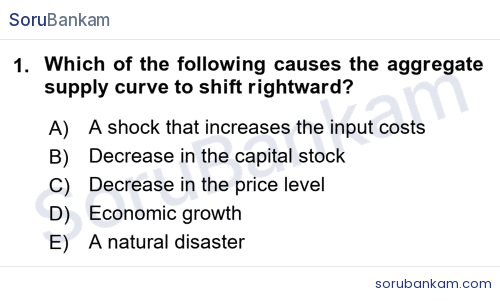
Which of the following causes the aggregate supply curve to shift rightward? A) A shock that increases the input costs B) Decrease in the capital stock C) Decrease in the price level D) Economic growth E) A natural disaster
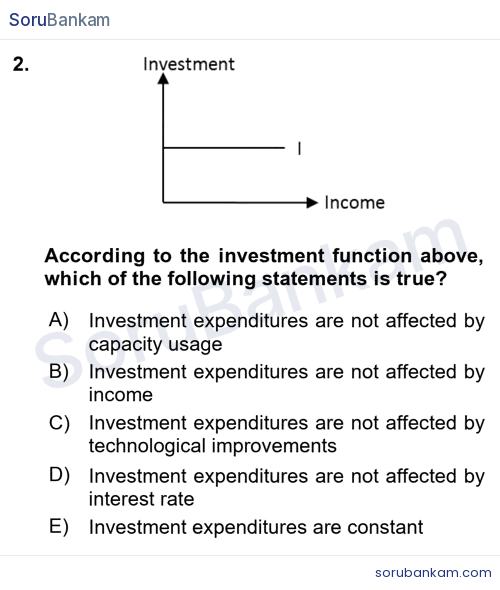
Investment • Income According to the investment function above, which of the following statements is true? A) Investment expenditures are not affected by capacity usage B) Investment expenditures are not affected by income C) Investment expenditures are not affected by technological improvements D) Investment expenditures are not affected by interest rate E) Investment expenditures are constant
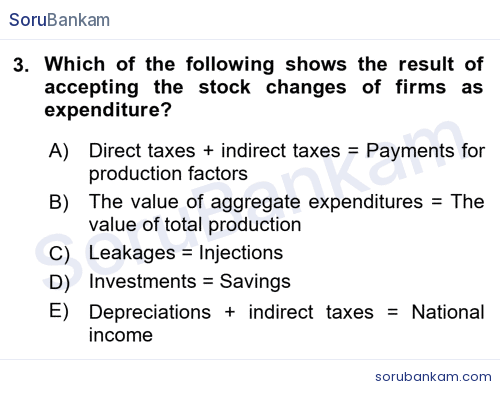
3. Which of the following shows the result of accepting the stock changes of firms as expenditure? A) Direct taxes + indirect taxes = Payments for production factors B) The value of aggregate expenditures = The value of total production Leakages = Injections D) Investments = Savings E) Depreciations + indirect taxes = National income
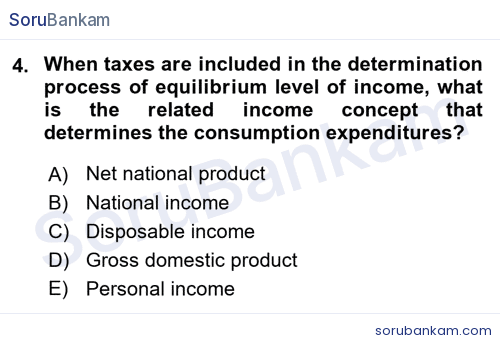
When taxes are included in the determination process of equilibrium level of income, what the related income concept that determines the consumption expenditures? A) Net national product B) National income C) Disposable income D) Gross domestic product E) Personal income
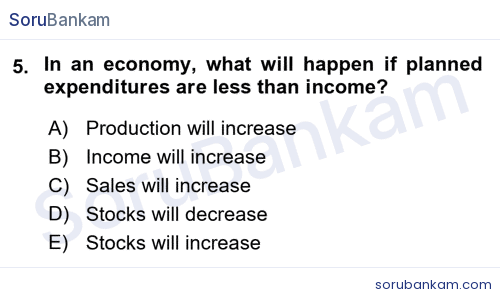
In an economy, what will happen if planned expenditures are leșs than income? A) Production will increase B) Income will increase C) v Č) Sales will increase D) Stocks will decrease E) Stocks will increase
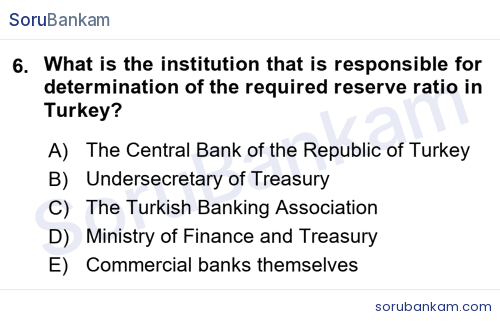
What is the institution that is responsible for determination of the required reserve ratio in Turkey? A) The Central Bank of the Republic of Turkey B) Undersecretary of Treasury C) The Turkish Banking Association D) Ministry of Finance and Treasury E) Commercial banks themselves
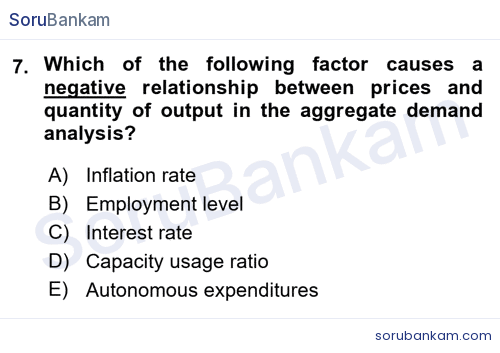
Which of the following factor causes a negative relationship between prices and quantity of output in the aggregate demand analysiş? A) Inflation rate B) Employment level C) Interest rate D) Capacity usage ratio E) e) Autonomous expenditures
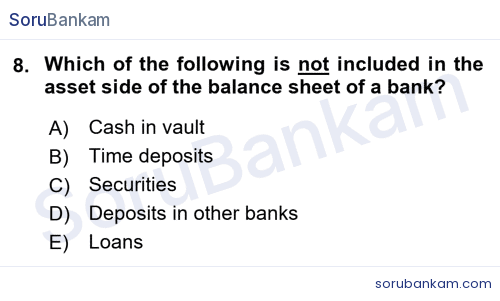
Which of the following is not included in the asset side of the balance sheet of a bank? A) Cash in vault B) Time deposits C) Securities D) Deposits in other banks E) Loans
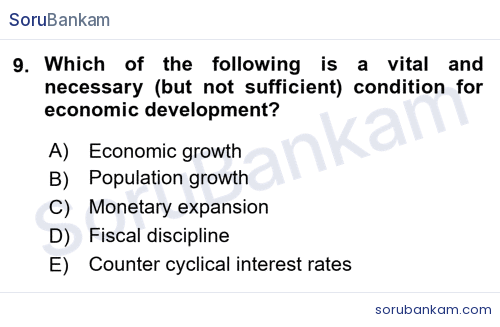
Which of the following is a vital and necessary (but not sufficient) condition for economic development? A) Economic growth B) Population growth C) Monetary expansion D) Fiscal discipline E) Counter cyclical interest rates
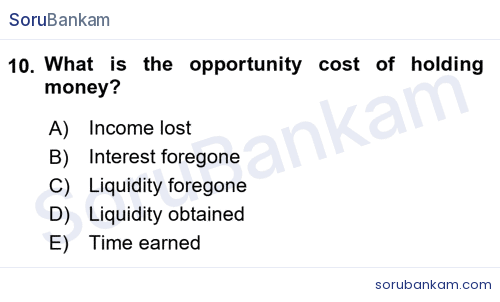
What is the opportunity cost of holding money? A) Income last ". B) E Interest foregone C) Liquidity foregone ' D) Liquidity obtained E) S Time eamed
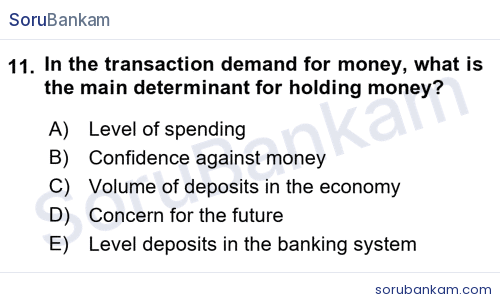
In the transaction demand for money, what is the main determ nant for holding money? A) Level of spending B) Confidence against money C) Volume of deposits in the economy D) Concern for the future E) Level deposits in the banking system
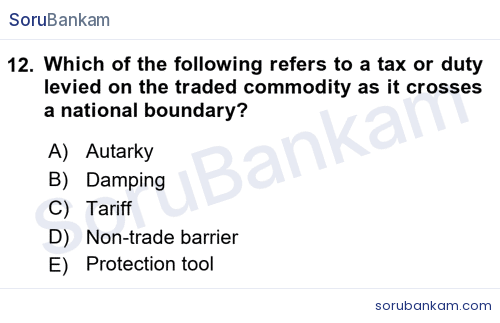
Which of the following refers to a tax or duty levied on the traded commodity as it crosses a national boundary? A) Autarky B) Damping C) Tariff D) Non-trade barrier E) Protection tool
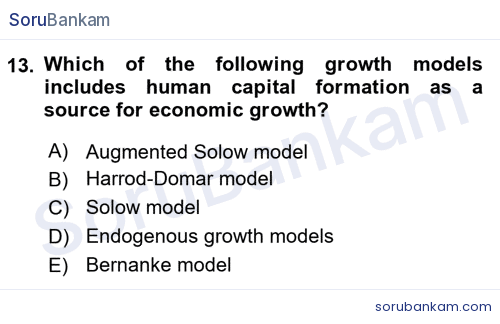
Which of the following growth models includes human capital formation as a source for economic growth? A) Auğmented Solow model B) Harrod-Domar model C) Solow model D) Endogenous growth models E) Bemanke model
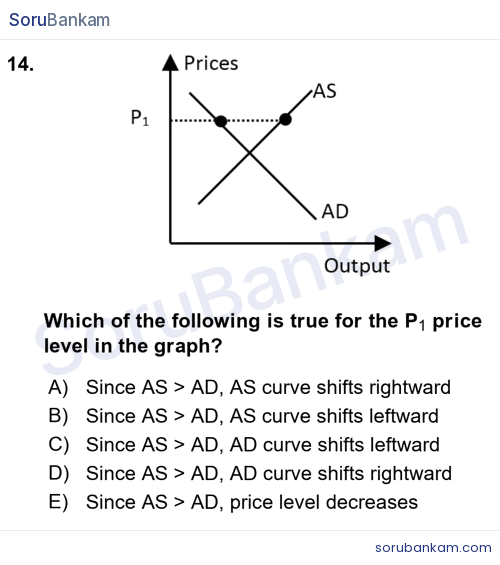
A Prices Output Which of the following is true for the P1 price level in the graph? A) Since AS > AD, AS curve shifts rightward B) Since AS > AD, AS curve shifts leftward C) Since AS > AD, AD curve shifts leftward D) Since AS > AD, AD curve shifts rightward E) Since AS > AD, price level decreases
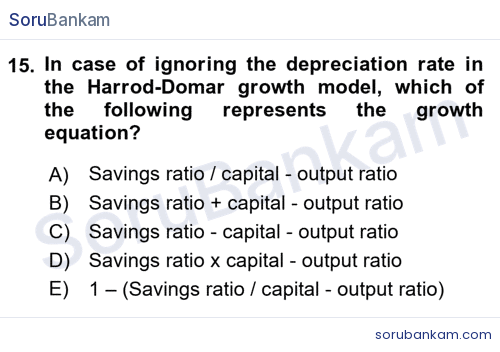
In case of ignoring the depreciation rate in the Harrod-Domar growth model, which of the following represents the growth equation? A) Savings ratio / capital - output ratio B) Savings ratio + capital - output ratio C) Savings ratio - capital - output ratio D) Savings ratio x capital - output ratio E) 1 - (Savings ratio / capital - output ratio)
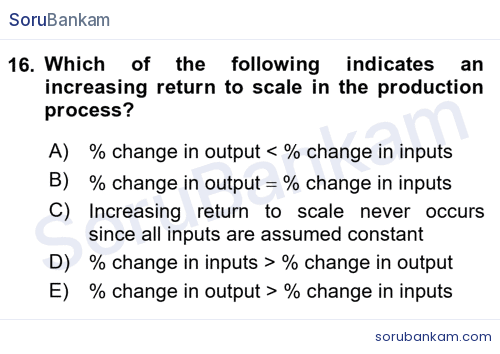
Which of the following indicates increasing return to scale in the production process? A) % change in output < % change in inputs B) % change in output = % change in inputs C) Increasing return to scale never occurs since all inputs are assumed constant D) % change in inputs > % change in output E) % change in output > % change in inputs
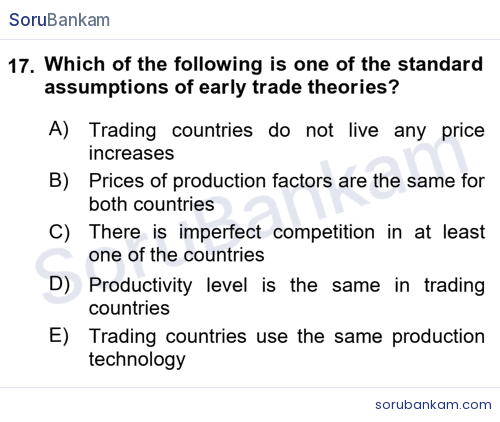
Which of the following is one of the standard assumptions of early trade theories? A) Trading countries do not live any price increases B) Prices of production factors are the same for' both countries C) There is imperfect competition in at least one of the countries D) Productivity level is the same in trading countries E) Trading countries use the same production technology
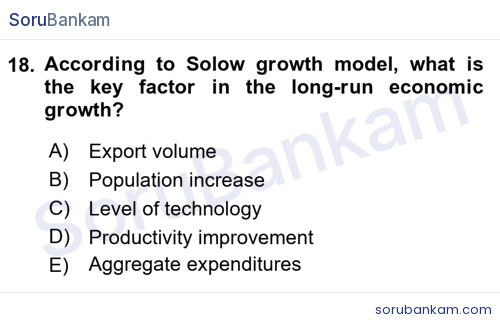
According to Solow growth model, what is the key factor in the long-run economic growth? A) Export volume B) Population increase C) Level of technology D) Productivity improvement E) Aggregate expenditures
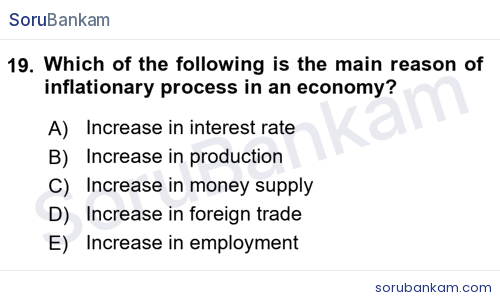
Which of the following is the main reason of inflationary process in an economy? A) Increase in interest rate B) Increase in production C) Increase in money supply D) Increase in foreign trade E) Increase in employment
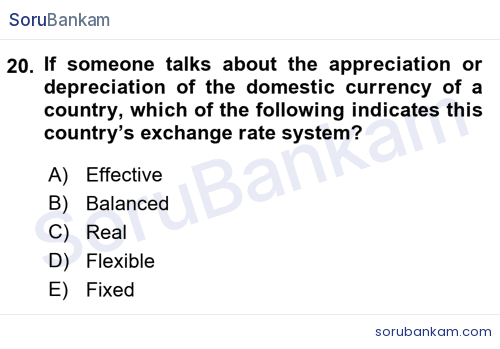
If someone talks about the appreciation or depreciation of the domestic currency of a country, which of the following indicates this country's exchange rate system? A) Effective B) Balanced C) Real D) Flexible E) Fixed