KYT102U Introduction To Public Administration 2024-2025 Vize Soruları
20 soru · Vize · 2024-2025
KYT102U Introduction To Public Administration dersinin 2024-2025 vize sınavı 20 sorudan oluşur; ders AÖF Siyaset Bilimi ve Kamu Yönetimi (İngilizce) bölümünde okutulur. Sorular aşağıda sırasıyla yer alır. Doğru cevaplar ve sonucun, testi çözdüğünde görünür.
Önizleme · 20 soru. Cevaplamak ve sonucunu görmek için sınavı başlat.
Sorular
20 soru
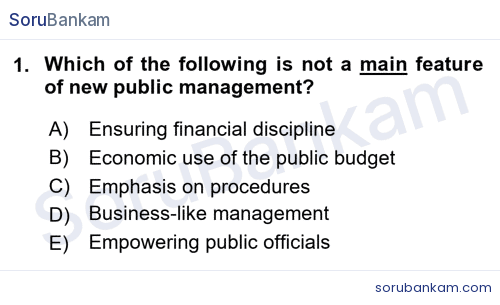
Soru 1
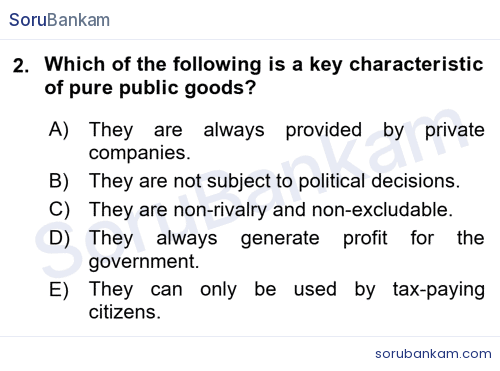
Soru 2
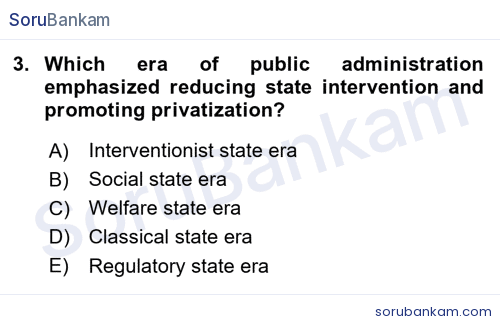
Soru 3
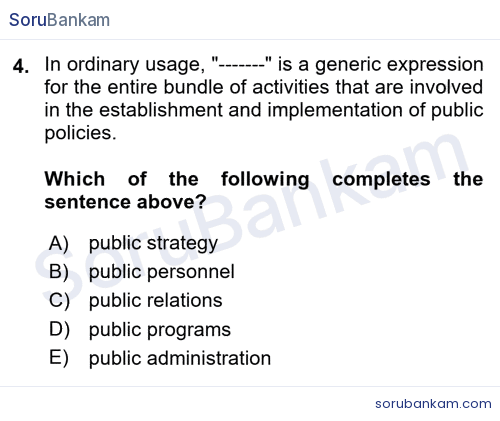
Soru 4
Soru 5
Soru 6
Soru 7
Soru 8
Soru 9
Soru 10
Soru 11
Soru 12
Soru 13
Soru 14
Soru 15
Soru 16
Soru 17
Soru 18
Soru 19
Soru 20
Sınav modunda süre tutulur, doğru cevaplar ve sonucun sınav bitince görünür.
Dersin üniteleri
KYT102U Introduction To Public Administration ders sayfası: bütün sınavlar ve üniteler
Soruların metni (otomatik okuma)
Görsellerden otomatik okunmuştur; hata içerebilir. Sorular, görsellerdeki hâliyle geçerlidir.
Which of the following is not a main feature of new public management? A) I Ensuring financial discipline B) Economic use of the public budget C) Emphasis on procedures D) Business-like management E) Empowering public officials
Which of the following is a key characteristic of pure public goods? A) They are always provided by private companies. B) They are not subject to political decisions. C) They are non-rivalry and non-excludable. D) They always generate profit for the government. E) They can only be used by tax-paying citizens.
Which ега public administration emphasized reducing state intervention and promoting privatization? A) Interventionist state era B) Social state era - 2" C) Welfare state era D) Classical state era E) Regulatory state era
4. In ordinary usage, "-.." is a generic expression for the entire bundle of activities that are invotved in the establishment and implementation of public policies. Which of the following completes the • sentence above? A) public,strategy public personnel "д) public relations D) public programs E) public administration ..d
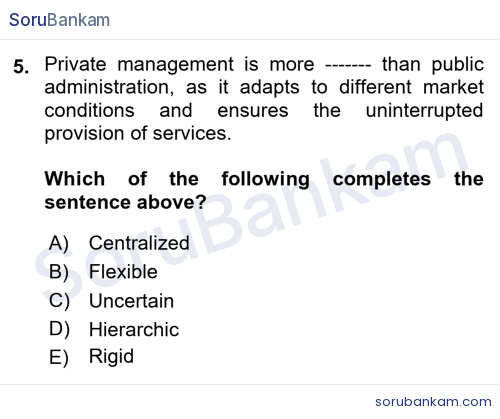
Private management is more - than public administration, as it adapts to different market conditions and ensures the uninterrupted provision of services. Which of the following completes the sentence above? A) Centralized B) Flexible C) Uncertain D) Hierarchic E) Rigid
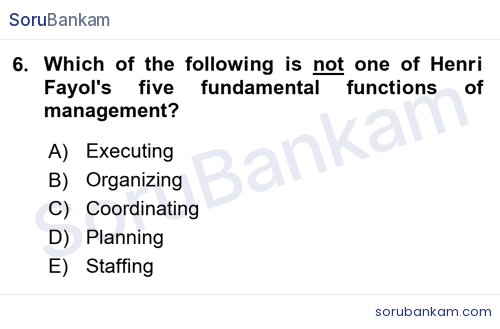
Which of the following is not one of Henri Fayol's five fundamental functlons of management? A) Executing B) Organizing C) Coordinating D) Planning E) Staffing
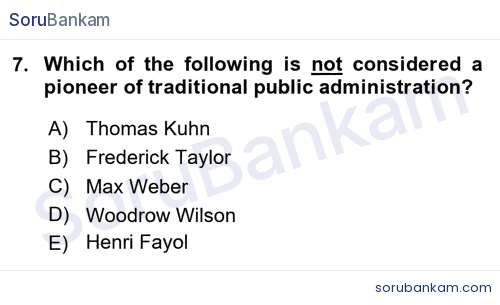
Which of the following is not considered a pioneer of traditional public administration? A) Thomas Kuhn B) Frederick Taylor C) Max Weber D) Woodrow Wilson E) Henri Fayol:
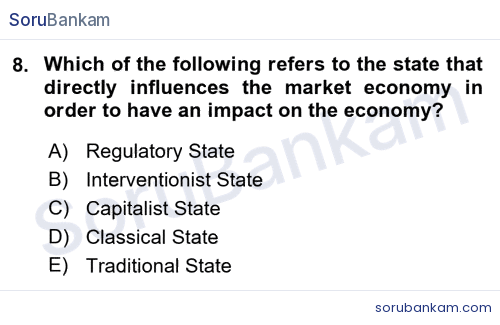
Which of the following refers to the state that directly influences the market economy in order to have an umpact on the economy? A) Regulatory State up A B) .. B) Interventionist State C) Capitalist State D) Classical State E) Traditiónal State
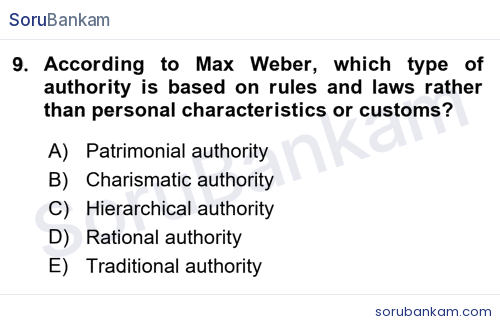
According to Max Weber, which type of authority is based on rules and laws rather than personai characteristics or customs? A) Patrimonial authority B) Charismatic authority C) Hierarchical authority D) Rational authority E) Traditional authority
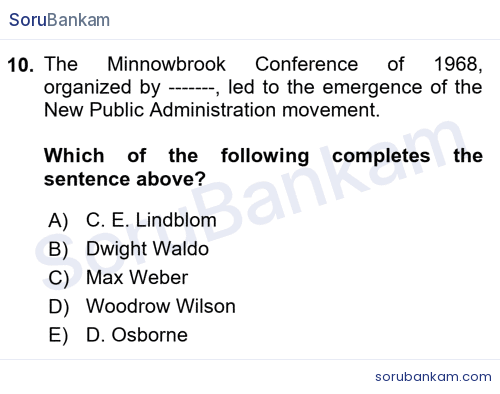
The Minnowbrook Conference 1968, organized by -, led to the emergence of the New Public Administration movement. Which of the following completes the sentence above? A) C. E. Lindblom B) Dwight Waldo C) Max Weber D) Woodrow Wilson E) D. Osborne
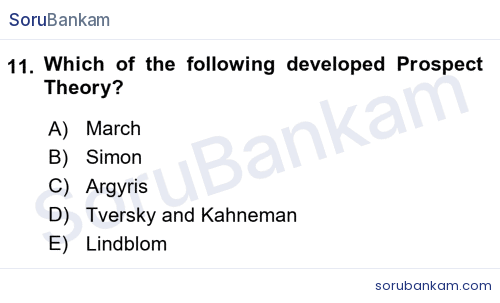
Which of the following developed Prospect Theory? A) March B) Simon C) Argyris D) Tversky and Kahneman E) Lindblom
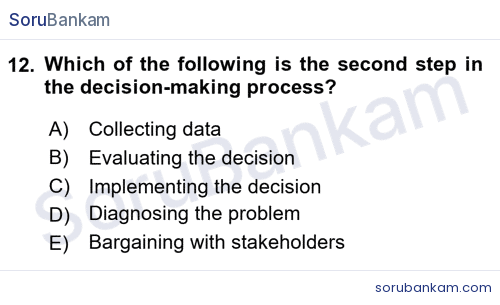
Which of the following is the second step in the decision-making process? A) Collecting data B) Evaluating the decision C) Implementing the decision D) Diagnosing the problem E) Bargaining with stakeholders
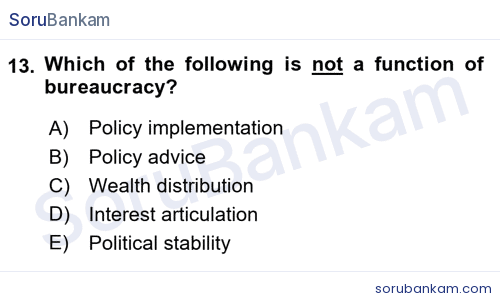
Which of the following is not a function of bureaucracy? A) Policy implementation B) Policy advice C) Wealth distribution D) Interest articulation E) Political stability
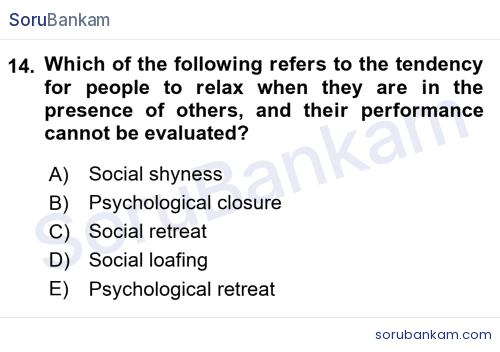
Which of the following refers to the tendency for people to relax when they are in the presence of others, and their performance cannot be evaluated? A) Social shyness B) Psychological closure C) Social retreat D) Social loafing E) Psychological retreat
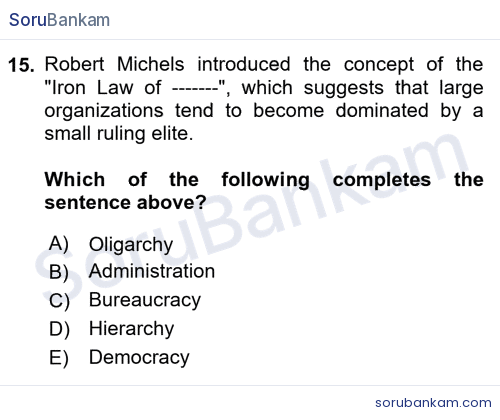
Robert Michels introduced the concept of the "Iron Law of -- -*, which suggests _that large organizations tend to become dominated by a small ruling elite" Which of the following completes thiế sentence above? A) Oligarchy B) Administration C) .., AC) Bureaucracy D) Hierarchy E) Democracy
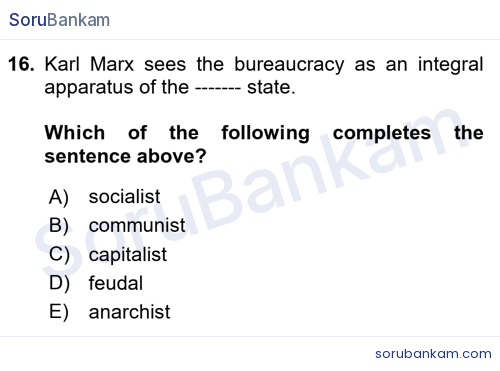
Karl Marx sees the bureaucracy as an integral apparatus of the ---- state. Which of the following completes the sentence above? A) socialist B) communist C) capitalist D) feudal E) anarchist
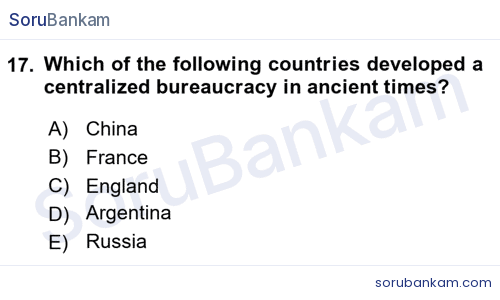
Which of the following countries developed a centralized bureaucracy in ancient times? A) China B) France C) England D) Argentina E) Russia
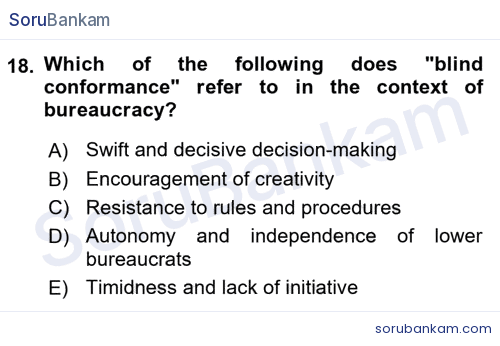
Which of the following does "blind conformance" refer to in the context of bureaucracy? A) Switzind decisive getsion-making B) Encouragement of creativity C) Resistance to rules and procedures D) Autonomy, and independence of lower bureaučrats E) Timidness and lack of initiative
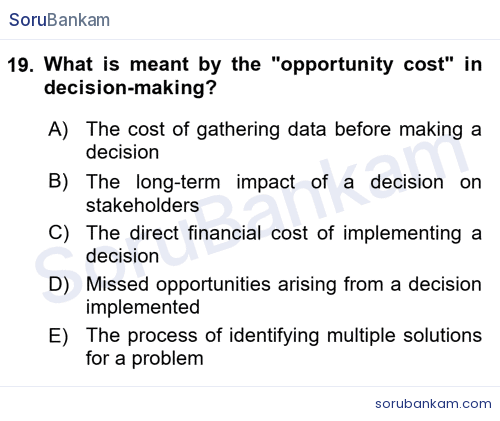
19. What is meant by the "opportunity cost" in declslon-making? A) The cost of gathering data before making a decision The long-term impact of a decision. on stakeholders C) The direct financial cost of implementing a decision D) Missed opportunities arising from a decision implemented E) The process of identifying multiple solutions for a problem
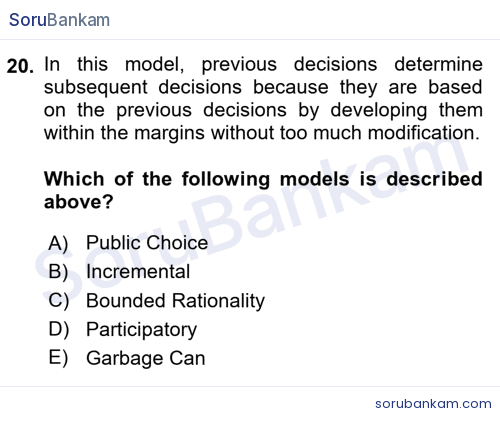
In this model, previous decisions determine subsequent decisions because they are based on the previous declsions by developing them within the margins without too much modification. Which of the following models is described above? A) Public Choice B) Incremental C) Bounded Rationality D) Participatory E) Garbage Can