INO405U Dil Edinimi 2015-2016 Vize Soruları
20 soru · Vize · 2015-2016
INO405U Dil Edinimi dersinin 2015-2016 vize sınavı 20 sorudan oluşur; ders AÖF İngilizce Öğretmenliği bölümünde okutulur. Sorular aşağıda sırasıyla yer alır. Doğru cevaplar ve sonucun, testi çözdüğünde görünür.
Önizleme · 20 soru. Cevaplamak ve sonucunu görmek için sınavı başlat.
Sorular
20 soru
Soru 1
Soru 2
Soru 3
Soru 4
Soru 5
Soru 6
Soru 7
Soru 8
Soru 9
Soru 10
Soru 11
Soru 12
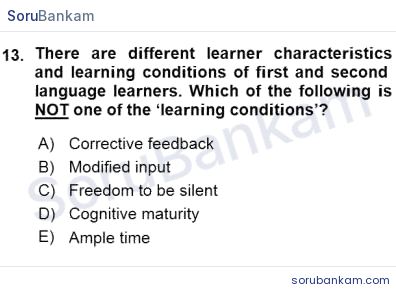
Soru 13
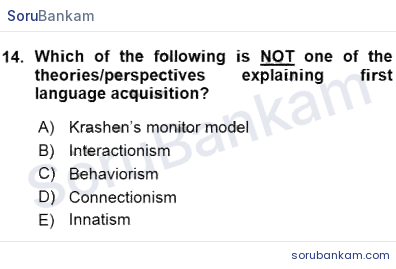
Soru 14
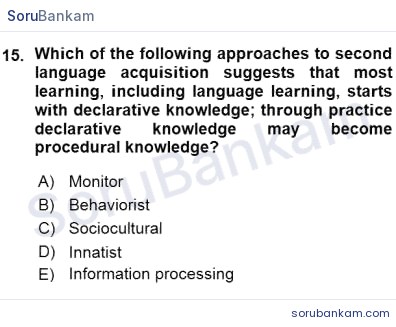
Soru 15
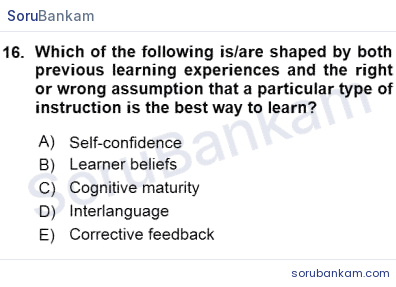
Soru 16
Soru 17
Soru 18
Soru 19
Soru 20
Sınav modunda süre tutulur, doğru cevaplar ve sonucun sınav bitince görünür.
Dersin üniteleri
INO405U Dil Edinimi ders sayfası: bütün sınavlar ve üniteler
Soruların metni (otomatik okuma)
Görsellerden otomatik okunmuştur; hata içerebilir. Sorular, görsellerdeki hâliyle geçerlidir.
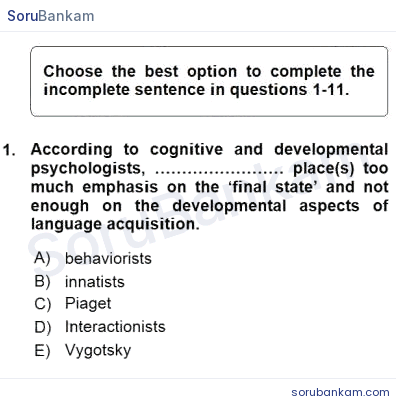
Choose the best option to complete the incomplete sentence in questions 1-11. 1. According to cognitive and developmental psychologists, .. RIade(s) too much emphasis on the finat state and not enougt on the developherital aspects of ancuage acquisition. A) behaviorists B) innatists: C) Piaget D) Interactionists E) Vygotsky
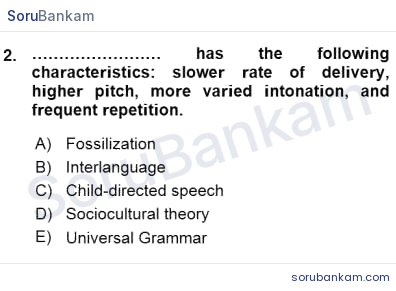
has the following characteristics: slower rate of delivery. higher pitch, more varied intohation, and frequent repetition. A) Fossilization rave to. B) Interlanguage, .... C) Child-diredted speech D) Stroccultural theory E) . "Ë) Universal Grammar
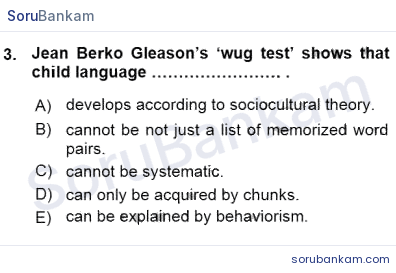
Jean Berko Gleason's 'wug test' poles mat child language .. A) develops according to sociocutual theory B) carnot be not just a list a netnorized n pairs. C) cannot be systemati D) can, prey be acadiced by sheiks. E) san bę explamedby behaviorism.
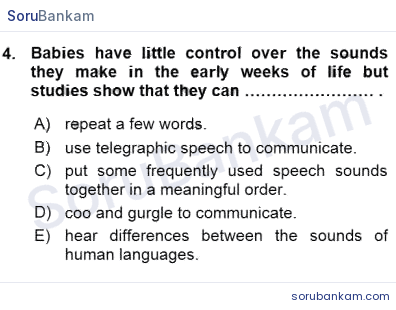
4. Babies havelütle controtover the saunds tney make in the marty weeks out studies show thaythey ca repeat a few wordst use telegraphic speech to communicate,.".** put some frequently used speech sounds together.ht a meaningful order. coo and gurgle to carimunicate. hear differences between the sounds of human languages.
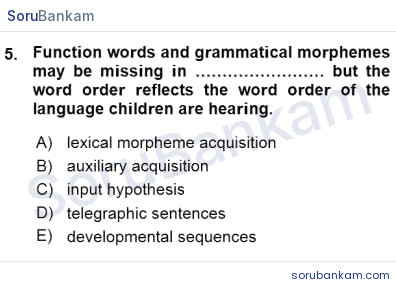
5. Function words and grammatical morphemes may be missing in .... but the word order reflects the word order of the • language children are hearing. A) lexical morpheme acquisition B) auxiliary acquisition C) input hypothesis telegraphic sentences"'**. developmental sequences
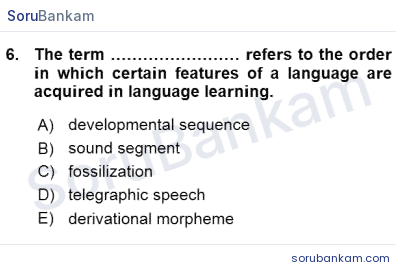
The term refers to the order in which certain features of a language are acquired in language learing. A) developmental sequence B) sound segment C) fassilization... D) telegraphic speech E) F) derivational morpheme
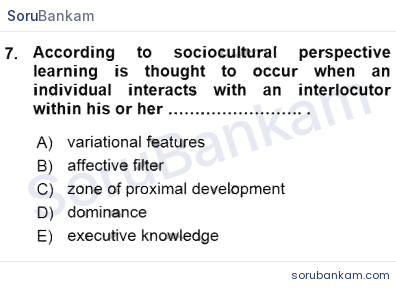
7. Aarorig is inougci toadcur esen an According when an individual interactș with an interlocutor within his or her. A) variational alteres B) affectiye, C) zâne ot proximal deve bant'"'
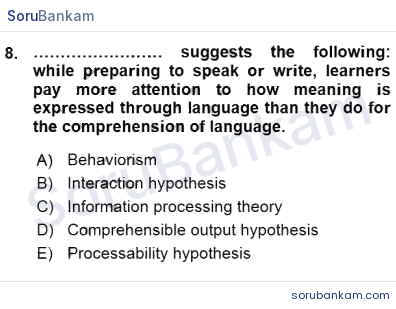
sugges following: while Preparing to spea ortmite, tarhers pay morg attention tol how meaning yet through arage than they do for O language. Behavichrist B) Infecapties hypothesis C) infarination processing theary Comprehensible output hypothesis Processability hypothesis
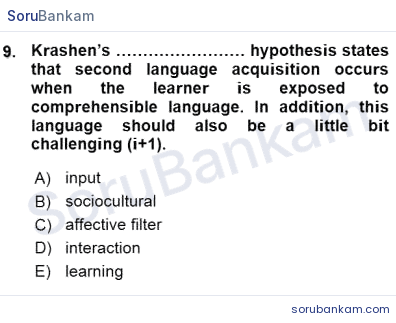
Krashen's ... hypothesis states that second language acquisition occurs when the learner exposed comprehensible language, In addition, this language should also little bit challenging (i+1). A) input B) sociocultural C) affective filter D) interaction E) leaming
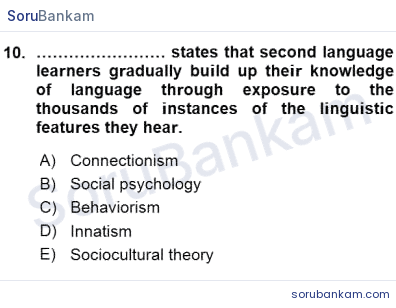
10. .. states that second languąge learners gradually build up their knowledge of language through exposure the thousands of instances of the linguistic features they hear. A) Connectionism B) Social psychology c) Behaviorism ..+. ...*"D) Innatism E) Sociocultural theory
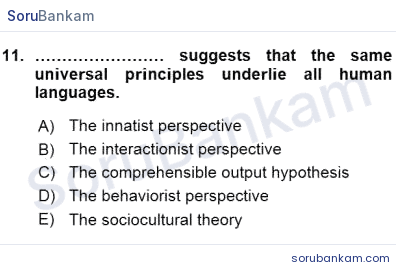
suggests that the same universal principles underlie all human languages. A) The innatist perspective B) The interactionist perspective C) The comprehensible output hypolhesis D) The behaviorist perspective E) . The sociocultural theory
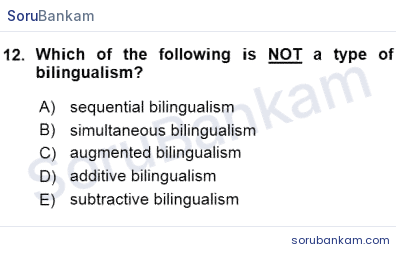
12. Which of the following is NOT a type of bilingualism? A) sequentia bilingualism simultaneaus bilingualism C) augmented bitingualism }......++. D) additive bilingualism subtractive bilingualisy. "
13. There are different learner characteristica and learning conditions of first and secondi language learners. Which of the followipg is NOT one of the 'learning conditions'? Corrective feedback B) Moditted input C) Freedom to be silent 0) Cognitive maturity "E) Ample time
14. Which ofathe rollowing HeR one o sanguage are one explathing A) Krashan's monito negractionism Behaviorisra. Connectionism Trinatism
Which of the foltowing approaches to second language acquisition suggests. that most Jearning, including language learning, starts with declarative knowledge; through practice declarative knowledge may become procedural knowledge? .... A) Monitor 4*" B) Behaviorist ..%* C) Sociocultural D) Innatist E) Information processing
16. Which of the following islare shaped by both previous learning experiences and the right or wrong assumption that a particular type of instruction is the best way to learn? A) Self-confidence B) Learner beliefs Cognitive maturity 27... C) D) Interlanguage 1.E) Corrective feedback
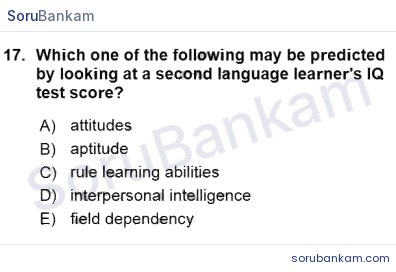
dersonat intelligenea." veda depano enc
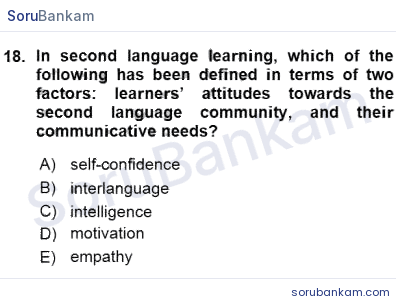
382In second, language earning, which of the atlowing has beel defted in terms of two actors. learnon towards the and their A) self smiteence interlanguage C), in Sligence *Motivation empathy
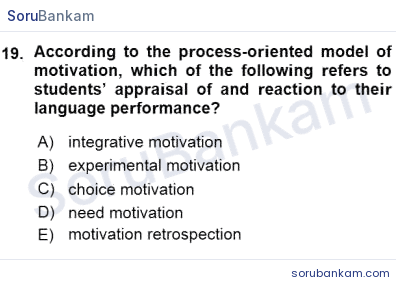
19. According to the process-oriented model of motivatión, which of the following refers to students' appraisal of and reaction to their language performance? A) integrative mativation B) experimental motivation ...... c) chaice mativation D) aaid motivation .... 4'E) motivation retrospection
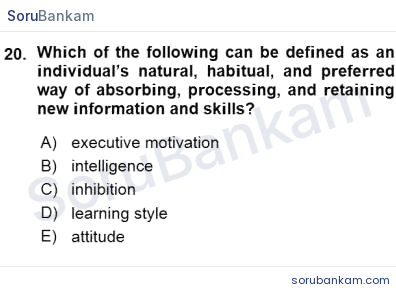
20. Which of the following can be detined as an individual's natural habitual, and preferred way of absorbing, processing, and retaining new information and skils? Al executive motivation B) intelligence .... C) inhibition ' i' Dy dreaming style ...* *''E) attitude