IKT453U Economics Of Natural Resources And Environment 2024-2025 Yaz Okulu Soruları
20 soru · Yaz okulu · 2024-2025
IKT453U Economics Of Natural Resources And Environment dersinin 2024-2025 yaz okulu sınavı 20 sorudan oluşur; ders AÖF İktisat (İngilizce) bölümünde okutulur. Sorular aşağıda sırasıyla yer alır. Doğru cevaplar ve sonucun, testi çözdüğünde görünür.
Önizleme · 20 soru. Cevaplamak ve sonucunu görmek için sınavı başlat.
Sorular
20 soru
Soru 1
Soru 2
Soru 3
Soru 4
Soru 5
Soru 6
Soru 7
Soru 8
Soru 9
Soru 10
Soru 11
Soru 12
Soru 13
Soru 14
Soru 15
Soru 16
Soru 17
Soru 18
Soru 19
Soru 20
Sınav modunda süre tutulur, doğru cevaplar ve sonucun sınav bitince görünür.
Dersin üniteleri
IKT453U Economics Of Natural Resources And Environment ders sayfası: bütün sınavlar ve üniteler
Soruların metni (otomatik okuma)
Görsellerden otomatik okunmuştur; hata içerebilir. Sorular, görsellerdeki hâliyle geçerlidir.
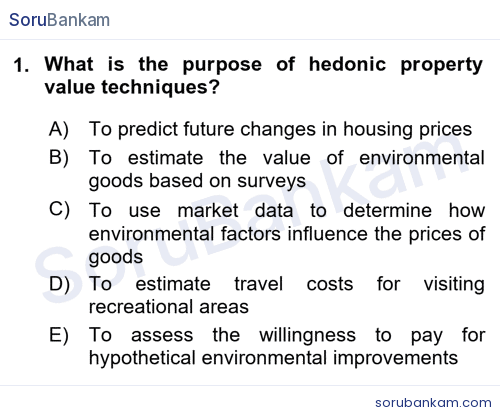
What is the purpose of hedonic property value techniques? A) To predict future changes in housing prices B) To estimate the Value of environmental goods based on surveys C) To use market data to determine how environmental factors influence the prices of goods D) To estimate travel costs for visiting recreational areas E) To assess the willingness to pay for hypothetical environmental improvements
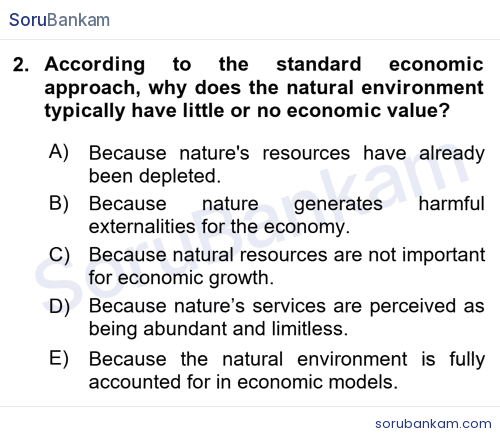
According to the standard economic approach, why does the natural environment typically have little or no economic value? A) Because nature's resources have already been depleted. B) Because nature generates harmful externalities for the economy. C) Because natural resources are not important for economic growth. D) Because nature's services are perceived as being abundant and limitless. E) Because the natural environment is fully accounted for in economic models.
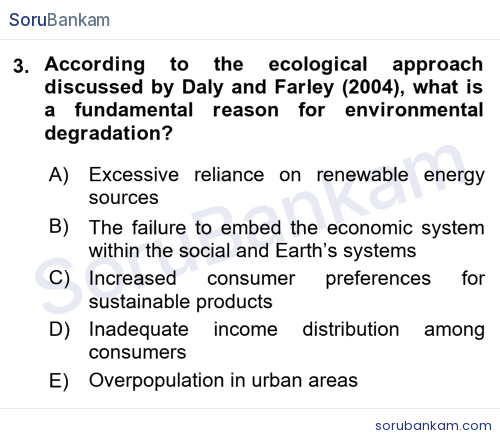
According to the ecological approach discussed by Daly and Farley (2004), what is a fundamental reason for environmental degradation? A) Excessive reliance on renewable energy sources B) The failure to embed the genomic system within the social and Earth's systems C) Incréased consumer preferences for sustainable products D) Inadequate income distribution among consumers E) Overpopulation in urban areas
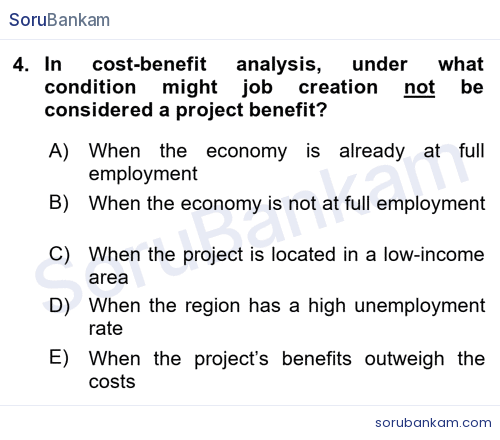
In cost-benefit analysis, under what condition might job creation not considered a project benefit? A) When the economy is already at full employment B) When the economy is not at full employment C) When the project is located in a low-income area D) When the region has a high unemployment rate E) When the project's benefits outweigh the costs
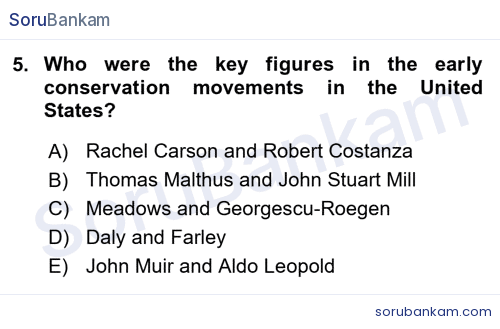
Who were the key figures in the early conservation movements in the United States? A) Rachel Carson and Robert Costanza B) Thomas Malthus and John Stuart Mill C) Meadows and Georgescu-Roegen : " • D) Daly and Farley E) John Muir and Aldo Leopold
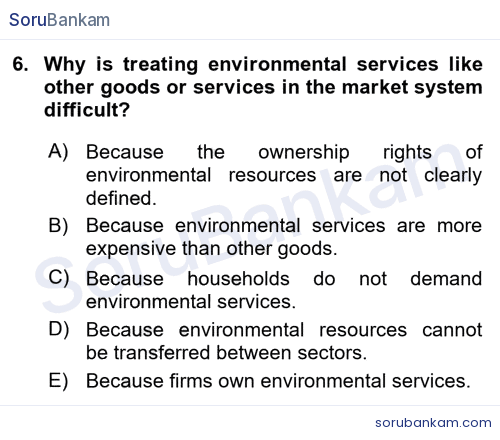
Why is treating environmental services like other goods or services in the market system difficult? A) Because the ownership rights of "4" environmental resources are not clearly defined. B) Because environmental services are more expensive than other goods. C) Cl. Because households do not demand environmental services. D) Because environmental resources cannot be transferred between sectors. E) Bedause firms own environmental services.
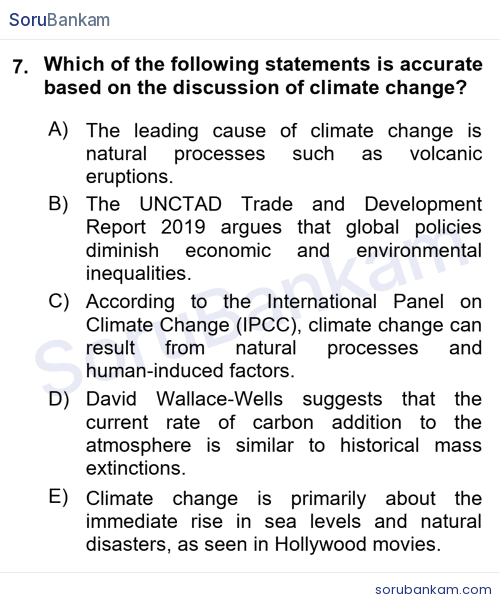
Which of the following statements is accurate based on the discussion of climate change? A) The leading cause of climate change is natural processes such as volcanic eruptions. B) The UNCTAD Trade and Development Report 2019 argues that global policies diminish economic and environmental inequalities. C) According to the International Panel on Climate Change (IPCC), climate change can result from natural processes and human-induced factors. D) David Wallace-Wells suggests that the current rate of carbon addition to the atmosphere is similar to historical mass extinctions. E) Climate change is primarily about the immediate rise in sea levels and natural disasters, as seen in Hollywood movies.
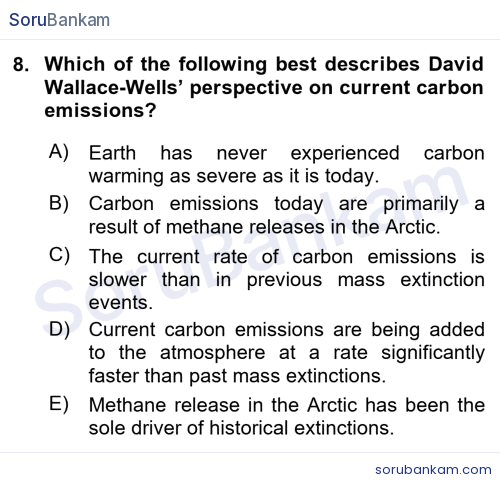
Which of the following best describes David Wallace-Wells' perspective on current carbon emissions? A) Earth has never experienced carbon warming as severe as it is today. B) Carbon emissions today are primarily a result of methane releases in the Arctic. C) The current rate of carbon emissions is slower than in previous mass extinction events. D) Current carbon emissions are being added to the atmosphere at a rate significantly faster than past mass extinctions. E) Methane release in the Arctic has been the sole driver of historical extinctions.
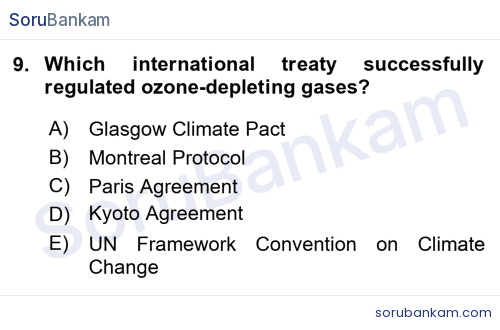
Which international treaty successfully regulated ozone depleting gases? A) Glasgow Climate Pact B) Montreal Protocol C) Paris Agreement D) Kyoto Agreement E) UN Framework Convention on Climate Change
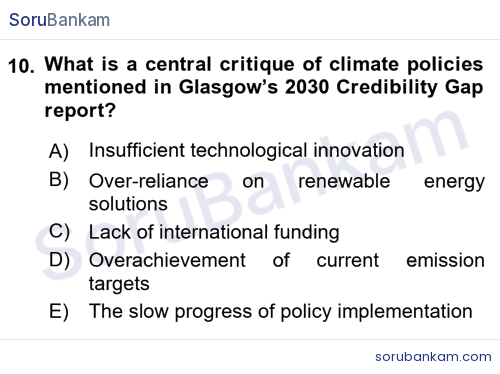
10. What is a central critique of climate policies' mentioned in Glasgow's 2030 Credibility Gap report? A) Insufficient technological innovation Over-reliance on renewable energy solutions C) Lack of international funding D) Overachievement jot current emission Targets "E) The slow progress of policy implementation
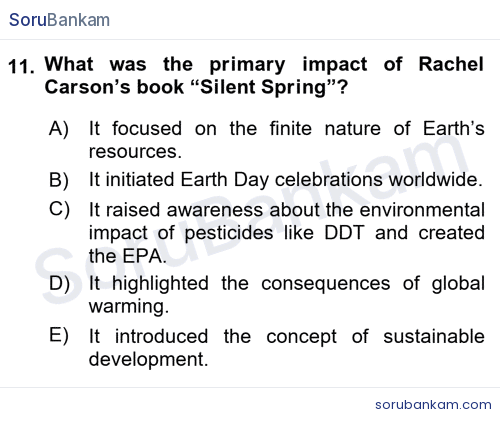
What was the primary impact of Rachel Carson's book "Silent Spring"? A) It focused on the finite nature of Earth's resources. B) It initiated Earth Day celebrations worldwide. C) It raised awareness about the environmental impact of pesticides like DDT and created the EPA D) It highlighted the consequences of globai warming. E) It introduced the concept of sustainable development.
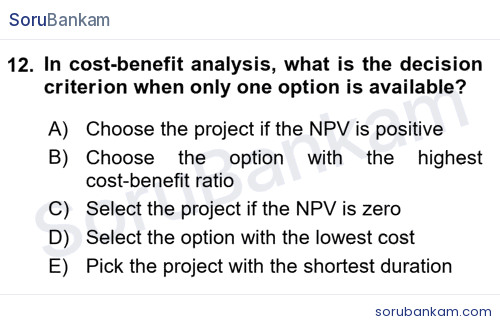
In cost-benefit analysis, what is the decision criterion when only one option is available? A) Choose the project if the NPV is positive B) Choose the option with the highest cost-benefit ratio C) Select the project if the NPV is zero. ' D) Select the option with the lowest cost E) Pick the project with thè shortest duration
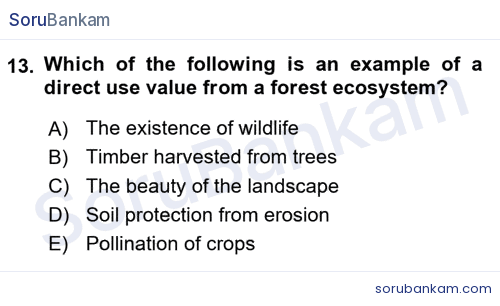
Which of the following is an example of a direct use value from a forest ecosystem? A) The existence of wildlife B) Timber harvested from trees C) The beauty of the landscape D) Soil protection from erosion E) Pollination of crops
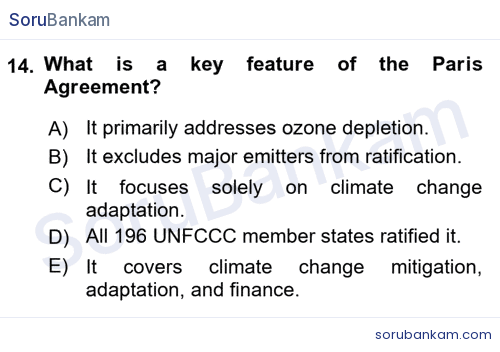
14. What is a key feature of the Paris Agreement? A) li primany addresses ozone depletion. B), It'excludes major emitters from ratification. It focuses solely on climate change adaptation. D) All 196 UNFÔCC member states ratified it. E) It, covers climate change mitigation, • adaptation, and finance.
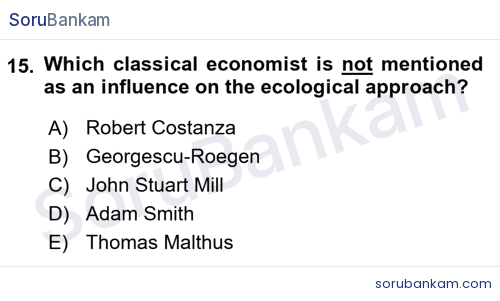
Which classical economist is not mentioned as an influence on the ecological approach? A) Robert Costanza B) Georgescu-Roegen C) John Stuart Mill D) Adam Smith E) Thomas Malthus
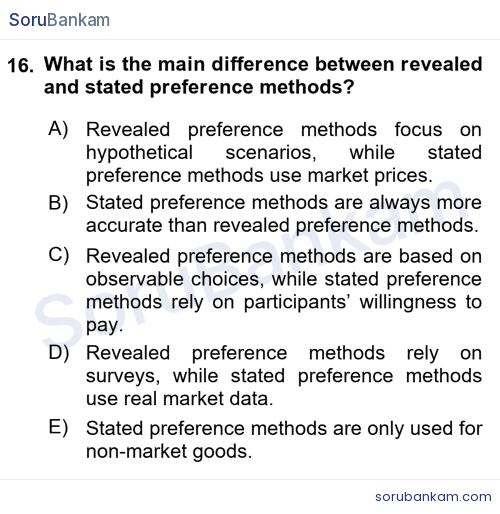
16. What is the main difference between revealed and stated preference methods? A) Revealed preference methods focus on hypothetical scenarios, while stated preference methods use market prices. B) Stated preference methods are always more accurate than revealed preference methods. Revealed preference methods are based on observable choices, while stated preference methods rely on participants' willingness to pay. D) Revealed preference methods rely on surveys, while stated preference methods use real market data. E) Stated preference methods are only used for non-market goods.
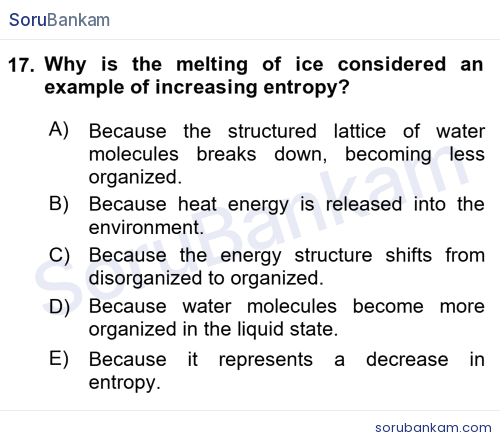
17. Why is the melting of ice considered an example of increasing entropy? A) Because the structured lattice of water molecules breaks down, becoming less organized. Because heat energy is released into the environment. C) Because the energy structure shifts from disorganized to organized. D) Because water molecules become more organized in the liquid state. E) Because it represents a decrease in entropy.
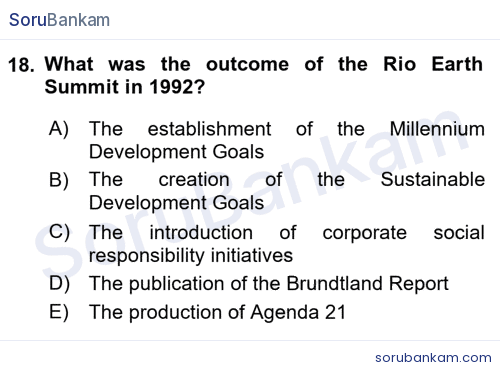
What was the outcome of the Rio Earth! Summit in 1992? A) The establishment of the Millennium Development Goals B) The creation of the Sustainable Development Goals C) The introduction of . corporate social responsibility initiatives D) The publication of the Brundtland Report E) The production of Agenda 21 .. 1.
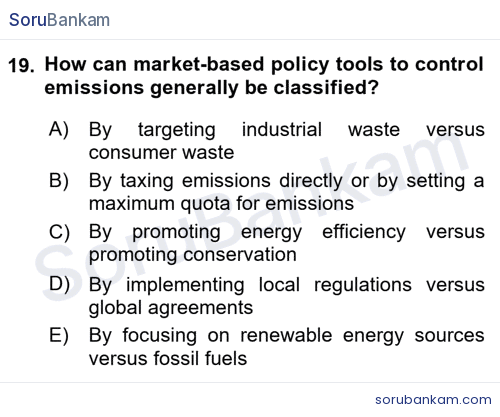
How can market-based policy tools to control emissions generally be classified? A) By targeting industrial waste versus consumer waste B) By taxing emissions directly or by setting a maximum quota for emissions C) By promoting energy efficiency versus promoting conservation D) By implementing local regulations versus global agreements E) By focusing on renewable energy sources versus fossil fuels
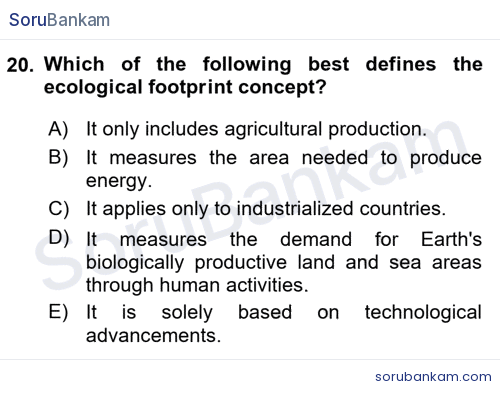
Which of the following best defines the ecological footprint concept? A) It only includes agricultural production. B) It measures the area needed to produce energy. C) It applies only to industrialized countrles. D) It measures the demand for Earth's biologically productive land and sea areas through human activities. E) It is solely based on technological advancements.