ULI456U The Balkans 2020-2021 Yaz Okulu Soruları
20 soru · Yaz okulu · 2020-2021
ULI456U The Balkans dersinin 2020-2021 yaz okulu sınavı 20 sorudan oluşur; ders AÖF Uluslararası İlişkiler (İngilizce) bölümünde okutulur. Sorular aşağıda sırasıyla yer alır. Doğru cevaplar ve sonucun, testi çözdüğünde görünür.
Önizleme · 20 soru. Cevaplamak ve sonucunu görmek için sınavı başlat.
Sorular
20 soru
Soru 1
Soru 2
Soru 3
Soru 4
Soru 5
Soru 6
Soru 7
Soru 8
Soru 9
Soru 10
Soru 11
Soru 12
Soru 13
Soru 14
Soru 15
Soru 16
Soru 17
Soru 18
Soru 19
Soru 20
Sınav modunda süre tutulur, doğru cevaplar ve sonucun sınav bitince görünür.
Dersin üniteleri
ULI456U The Balkans ders sayfası: bütün sınavlar ve üniteler
Soruların metni (otomatik okuma)
Görsellerden otomatik okunmuştur; hata içerebilir. Sorular, görsellerdeki hâliyle geçerlidir.
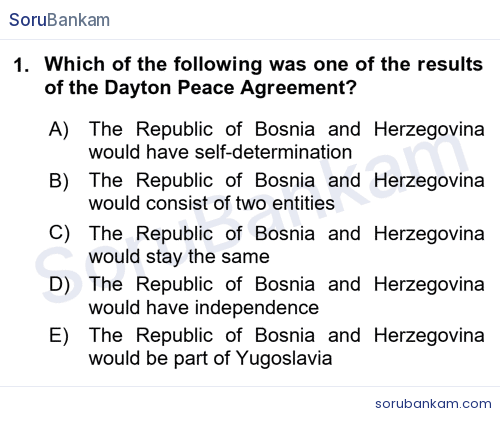
1. Which of the following was one of the results of the Dayton Peace Agreement? A) The Republic of Bosnia and Herzegovina would have self-determination The Republic of Bosnia and Herzegovina would consist of two entities C) The Republic of Bosnia and Herzegovina would stay the same D) The Republic of Bosnia and Herzegovina would have independence E) The Republic of Bosnia and Herzegovina would be part of Yugoslavia
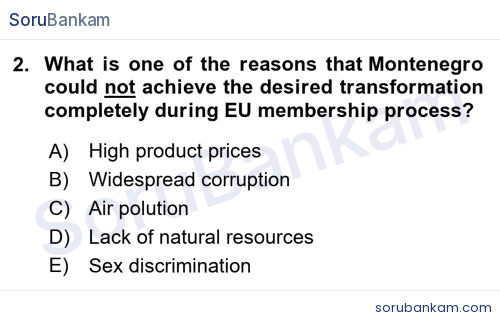
What is one of the reasons that Montenegro could not achieve the desired transformation completely during EU membership process? A) High product prices B) Widespread corruption C) Air polution D) E Lack of natural resources E) Sex discrimination
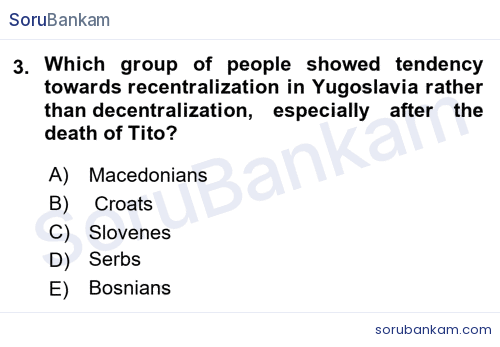
Which group of people showed tendency towards recentralization in Yugoslayja rather than decentralization, especially" after the death of Tito? A) Macedonians Li' B) Croats C) Slovenes D) Serbs-' " E) Bosnians
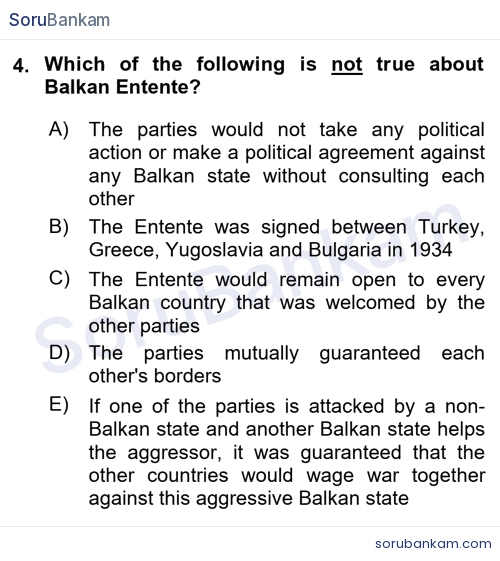
Which of the following is not true about Balkan Entente? A) The parties would not take any political action or make a political agreement against any Balkan state without consulting each other B) The Entente was signed between Turkey, Greece, Yugoslavia and Bulgaria in 1934 C) The Entente would remain open to every Balkan country that was welcomed by the other parties D) The parties mutually guaranteed each other's borders E) If one of the parties is attacked by a non- Balkan state and another Balkan state helps the aggressor, it was guaranteed that the other countries would wage war together against this aggressive Balkan state
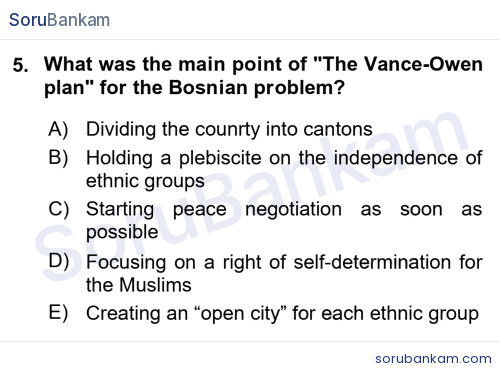
What was the main point of "The Vance-Owen plan" for the Bosnian problem? A) Dividing the county into cantons B) Holding a plebiscite on the independence of ethnic groups C) Starting peace negotiation as soon as possible D) Focusing on a right of self-determination for the Muslims E) Creating an "open city" for each ethnic group
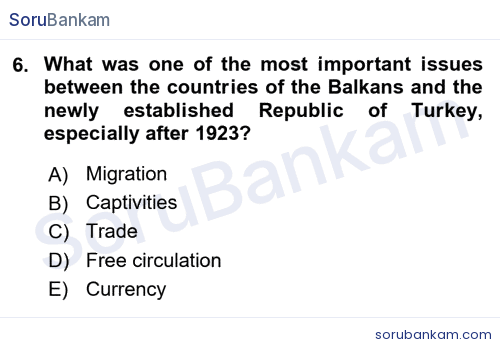
What was one of the most important issues between the countries of the Balkans and the newly established Republic of Turkey, especially after 1923? A) Migration B) Captivities C) Trade D) Free-sirculation E) NE) Currency
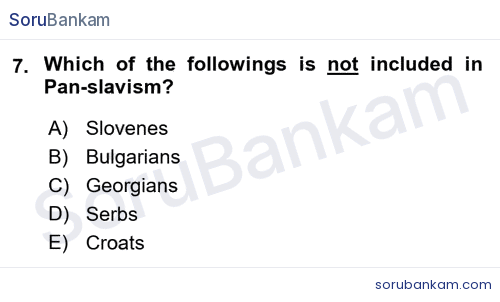
7. Which of the followings is not included in Pan-slavism? A) Slovenes By Belgians Georgians D) Serbs E) Croats
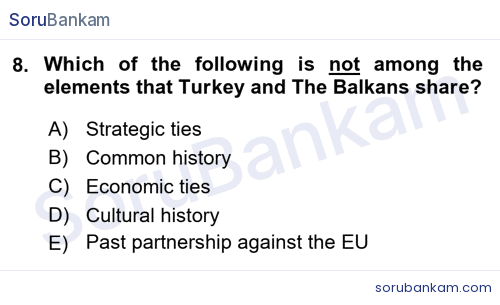
Which of the following is not among the elements that Turkey and The Balkans share? A) Strategic ties B) Common history C) Economic ties D) Cultural history E) Past partnership against the
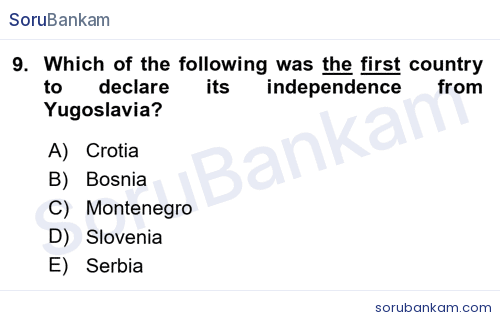
Which of the following was the first country to declare its independence from Yugoslavia? A) Crotia B) Bosnia C) Montenegro D) Slovenia E) Serbla
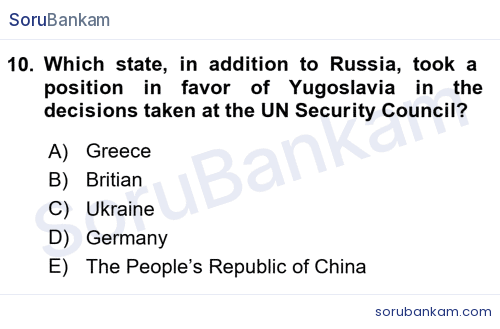
Which state, in addition to Russia, took a position In favor of Yugoslavia in the decisions taken at the UN Security Councll? A) Greece B) Britian C) Ukraine D) Germany E) The People's Republic of China
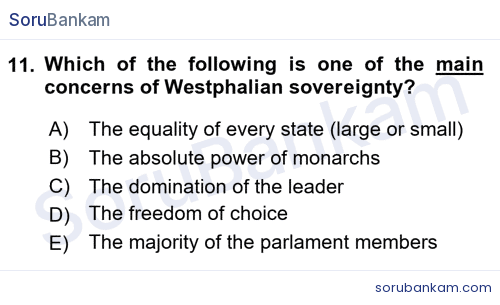
Which of the following is one of the main concerns of Westphalian sovereignty? A) The equality of every state (large or small) B) The absolute power of monarchs C) The domination of the leader D) The freedom of choice E) The majonty of the parlament members
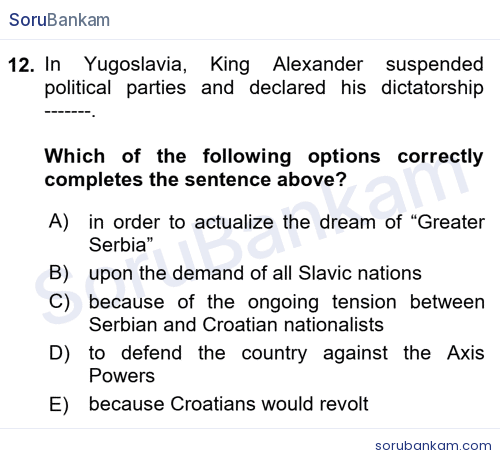
In Yugoslavia, King Alexander suspended political parties and declared his dictatorship Which of the following options correctly completes the sentence above? A) in order to actualize the dream of "Greater Serbia" B) upon the demand of all Slavic nations C) because of the ongoing tension between Serbian and Croatian nationalists D) to defend the country against the Axis Powers E) because Croatians would revolt
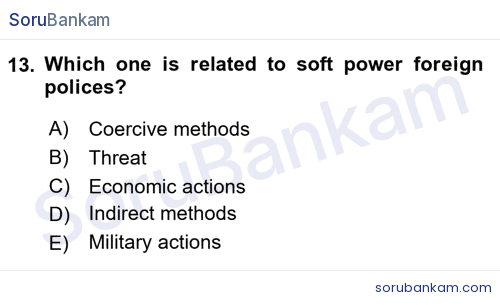
13. Which one is related to soft power foreign polices? A) Coercive methods Threat C) Economic actions D) Indirect methods Military actions
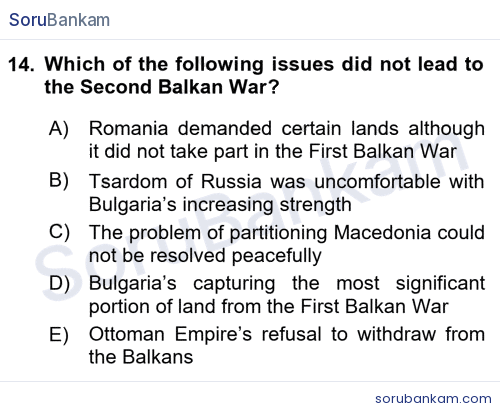
Which of the following issues did not lead to the Second Balkan War? A) Romanie demanded certain lands although B) it id not take part in the First Balkan War Tsardom of Russia was uncomfortable with Bulgaria's increasing strength C) The problem of partitioning Macedonia could not be resolved peacefully D) Bulgaria's capturing the most significant portion of land from the First Balkan War E) Ottoman Empire's refusal to withdraw from the Balkans
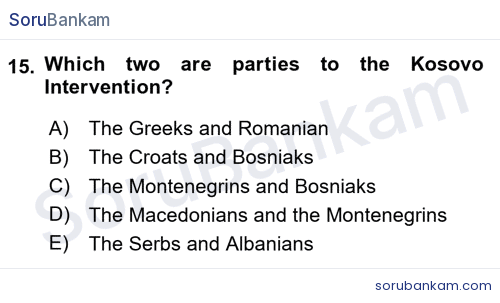
Which two are parties to the Kosovo Intervention? A) The Greeks and Romanian B) The Croats and Bosniaks C) The Montenegrins and Bosniaks D) The Macedonians and the Montenegrins E) The Serbs and Albanians
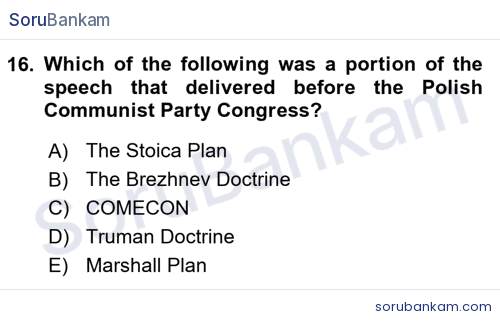
Which of the following was a portion of the speech that delivered before the Polish Communist Party Congress? A) The Stoica Plan B) The Brezhnev Doctrine C) COMECON D) Truman Doctrine E) Marshall Plan
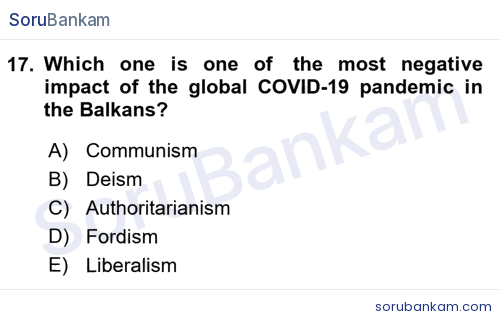
Which one is one of the most negative impact of the global COVID-19 pandemic in the Balkans? A) Communism B) Deism C) Authoritarianism D) Fordism E) Liberalism
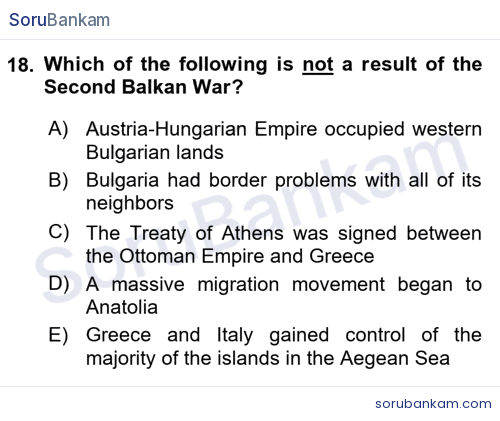
18. Which of the following is not a result of the Second Balkan War? A) Austria-Hungarian Empire occupied western Bulgarian lands (B) ) Bulgaria had border problems with all of its neighbors C) The Treaty of Athens was signed between the Ottoman Empire and Greece A massive migration movement began to Anatolia E) Greece • and Italy gained control of the majority of the islands in the Aegean Sea
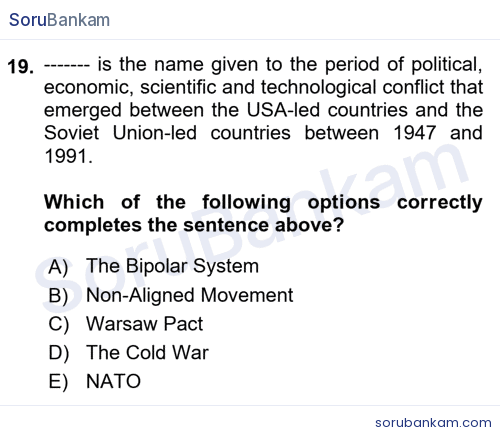
is the name given to the period of political, economic, scientific and technological conflict that emerged between the USA-led countries and the Soviet Union-led countries between 1947 and 1991. Which of the following options correctly completes the sentence above? A) The Bipolar System B) Non-Aligned Movement C) Warsaw Pact D) The Cold War E) NATO
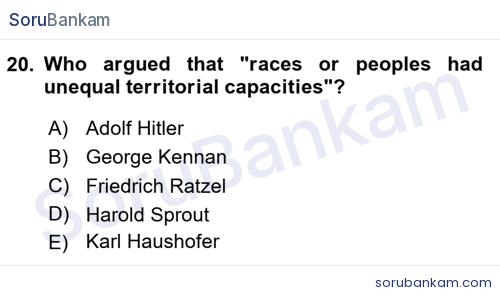
Who argued that "races or peoples had unequal territorial capacities"? A) Adolf Hitler B) George Kennan C) Friedrich Ratzel D) Harold Sprout E) Karl Haushofer