ISL113U Introduction to Business 2024-2025 Yaz Okulu Soruları
20 soru · Yaz okulu · 2024-2025
ISL113U Introduction to Business dersinin 2024-2025 yaz okulu sınavı 20 sorudan oluşur; ders AÖF İktisat (İngilizce) bölümünde okutulur. Sorular aşağıda sırasıyla yer alır. Doğru cevaplar ve sonucun, testi çözdüğünde görünür.
Önizleme · 20 soru. Cevaplamak ve sonucunu görmek için sınavı başlat.
Sorular
20 soru
Soru 1
Soru 2
Soru 3
Soru 4
Soru 5
Soru 6
Soru 7
Soru 8
Soru 9
Soru 10
Soru 11
Soru 12
Soru 13
Soru 14
Soru 15
Soru 16
Soru 17
Soru 18
Soru 19
Soru 20
Sınav modunda süre tutulur, doğru cevaplar ve sonucun sınav bitince görünür.
Dersin üniteleri
Ünite özetleri ve konu anlatımları
- 1. Ünite: Foundations Of Business
- 2. Ünite: Business İn The Global Context
- 3. Ünite: Management
- 4. Ünite: Managing Human Resources
- 5. Ünite: Marketing Management
- 6. Ünite: Production Management And Managing Information Systems
- 7. Ünite: Accounting And Financial Analysis
- 8. Ünite: Managing Financial Resources
ISL113U Introduction to Business ders sayfası: bütün sınavlar ve üniteler
Soruların metni (otomatik okuma)
Görsellerden otomatik okunmuştur; hata içerebilir. Sorular, görsellerdeki hâliyle geçerlidir.
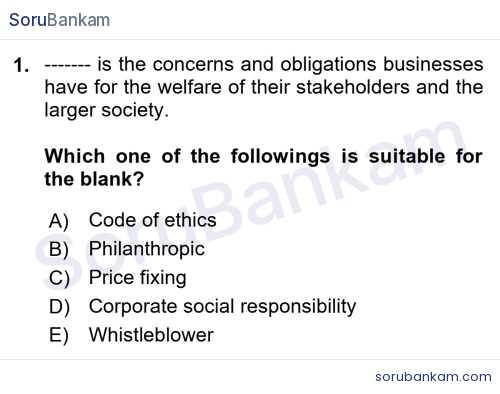
- is the concerns and obligations businesses have for the welfare of their stakeholders and the larger society. Which one of the followings is suitable for the blank? A) Code of ethics B) Philanthropic C) Price fixing D) Corporate social responsibility E) Whistleblower
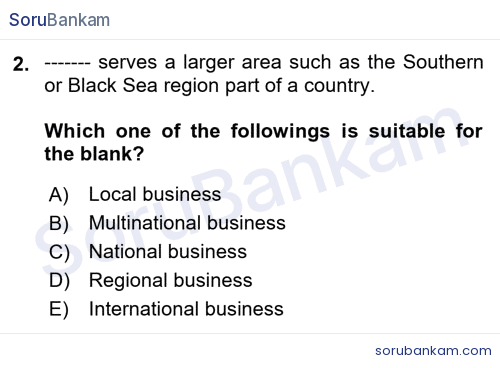
mons serves a larger area such as the Southern or Black Sea region part of a country. Which one of the followings is suitable for the blank? A) Local business B) Multinational business C) National business D) Regional business E) International business
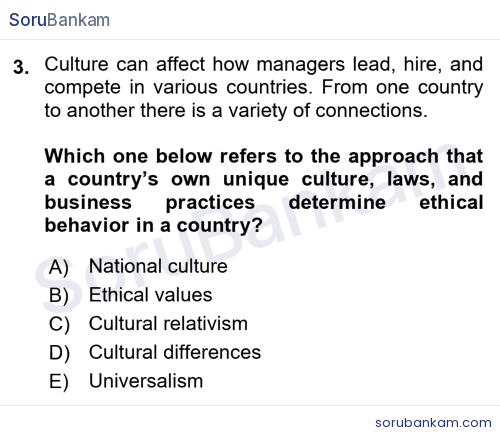
Culture can affect how managers lead, hire, and! compete in various countries. From one gountry to another there is a variety of connections. Which one below refers to the approach that a country's own unique culture, laws, and business practices determine ethical behavior in a country? A) National culture B) • By Ethical values C) Cultural relativism D) Cultural differences E) Unversalism
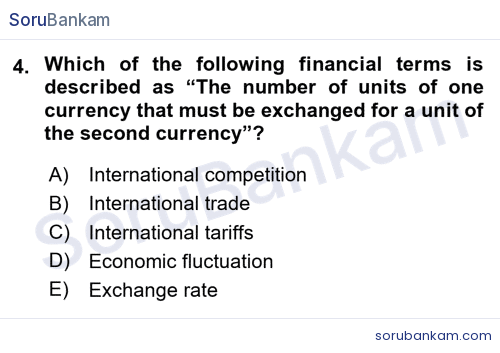
Which of the following financial terms is described as "The number of units of one currency that must be exchanged for a unit of the second currency"? A) International competition B) International trade C) International tariffs D) Economic fluctuation E) Exchange rate
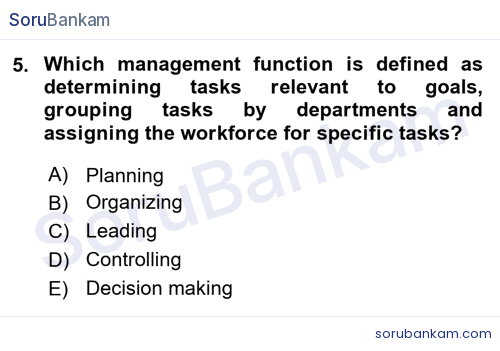
Which management function is defined as determining tasks relevant to goals, grouping tasks by departments and assigning the workforce for specific tasks? A) Planning B) Organizing C) Leading D) Controlling E) Decision making
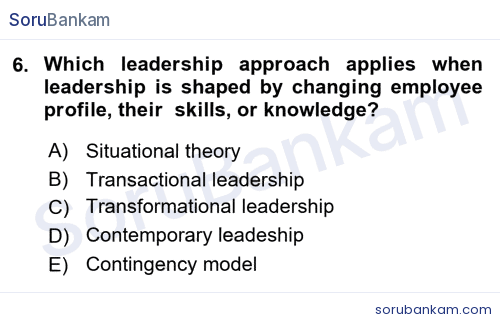
Which leadership approach applies when leadership is shaped by changing employee profile, their skills, or knowledge? A) Situational theory B) Transactional leadership C) Transformational leadership D) Contemporafy leadeship E) Contingency model
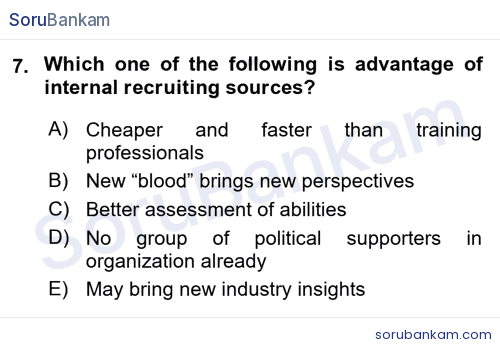
Which one of the following is advantage of internal recruiting sources? A) Cheaper and faster than training professionals B) New "blood" brings new perspectives C) Better assessment of abilities D) No group • of political supporters in organization already E) May bring new industry insights
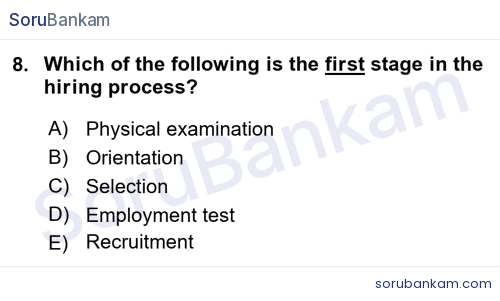
Which of the following is the first stage in the hiring process? A) Physical examination B) Orlentation C) Selection D) Employment test E) Recruitment
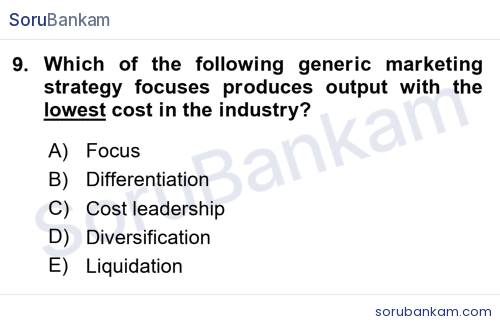
Which of the following generic marketing strategy focuses produces output with the lowest cost in the industry? A) Focus B) Differentiation C) Cost leadership D) Diversification E) Liquidation
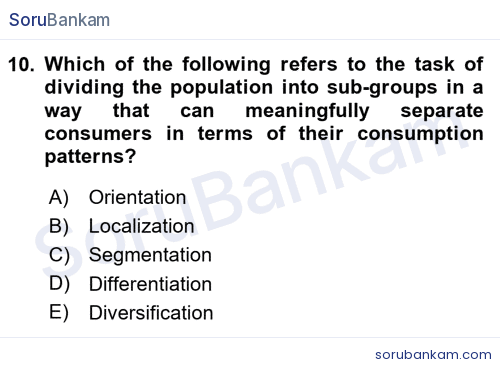
Which of the following refers to the task of dividing the population into sub-groups in a way that can meaningfully separate consumers in terms of their consumption patterns? A) Orientation B) Localization C) Segmentation D) Differentiation E) Diversification
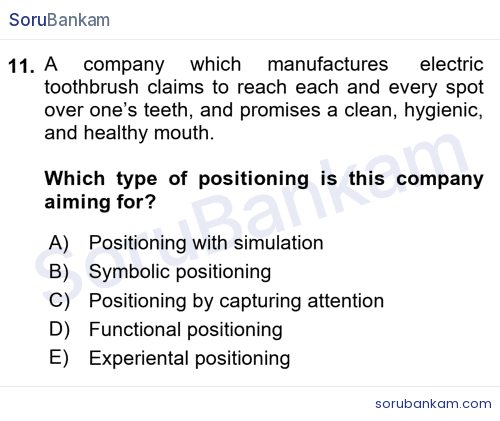
A company which manufactures electric toothbrush claims to reach each and every spot over one's teeth, and promises a clean, hygienic, and healthy mouth. Which type of positioning is this company aiming for? A) Positioning with simulation B) Symbolic positioning C) Positioning by capturing attention D) Functional positioning E) Experiental positioning
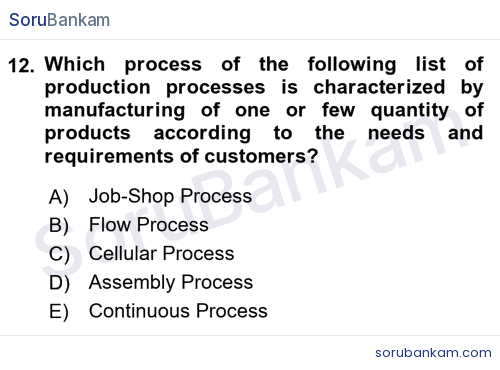
Which process of the following list of production processes is characterized by manufacturing OD one or few *quantity of products according to, the needs and requirements of customers? A) Job-Shop Process B) Flow Process C) Cellular Process D) Assembly Process E) › "E) Continuous Process
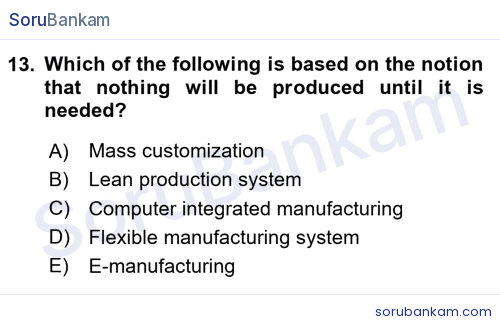
Which of the following is based on the notion that nothing will be produced until it is needed? A) Mass customization B) Lean production system C) Computer integrated manufacturing D) Flexible manufacturing system E) E-manufacturing
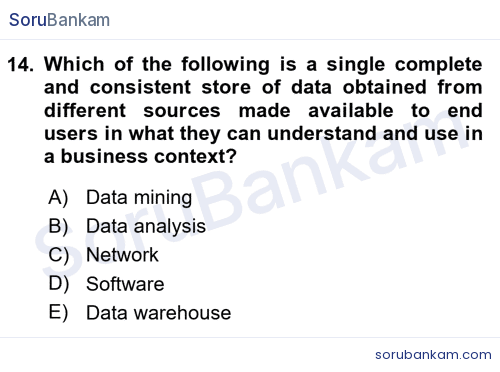
Which of the following is a single complete and consistent store of data obtained from different sources made available to end users in what they can understand and use in a business context? A) Data mining B) Data analysis C) Network D) Software E) Data warehouse
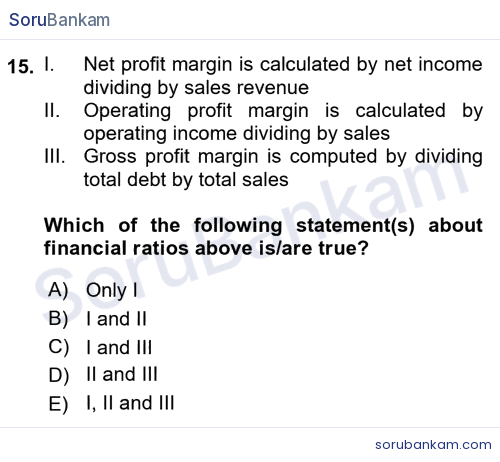
15. 1. Net profit margin is calculated by net income dividing by sales revenue II. Operating profit margin is calculated by operating income dividing by sales lIl. foss profit margin is computed by dividing 1* total debt by total sales Which of the following statements) about financial ratios above is/are true? B) I and I C) I and ill D) Il and !!!' Ex t, ll and Ill
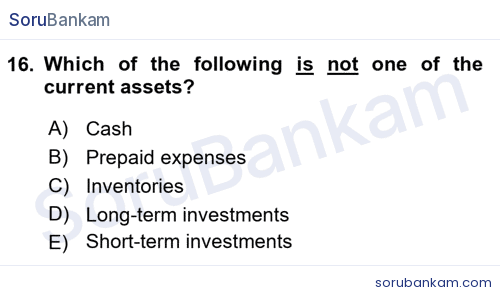
Which of the following is not one of the current assets? A) Cash B) Prepaid expenses C) Inventories D) Long-term investments E) Short-term investments
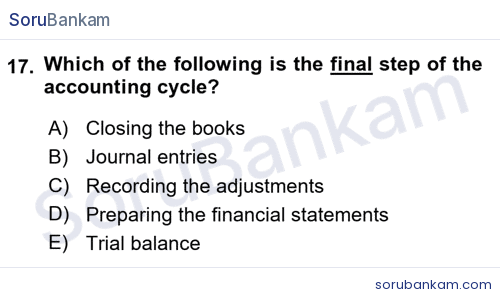
Which of the following is the final step of the accounting cycle? A) Closing the books B) Journal entries C) Recording the adjustments D) Preparing the financial statements E) Trial balance
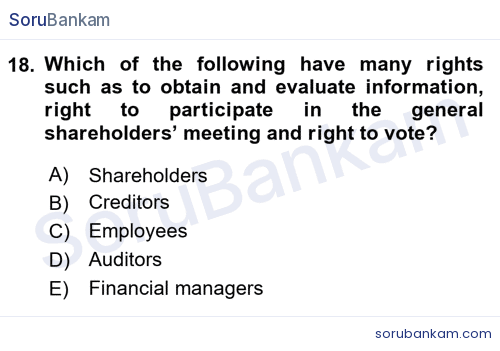
Which of the following have many rights such as to obtain and evaluate information, right to participate the general shareholders' meeting and right to vote? A) Shareholders B) Creditors C) Employees D) Auditors E) Financial managers
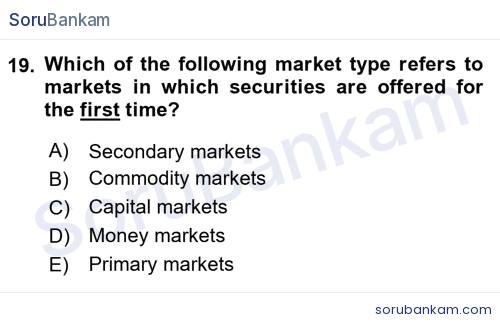
Which of the following market type refers to markets in which securities are offered for the first time? A) Secondary markets B) Commodity markets C) Capital markets D) Money markets E) Primary markets
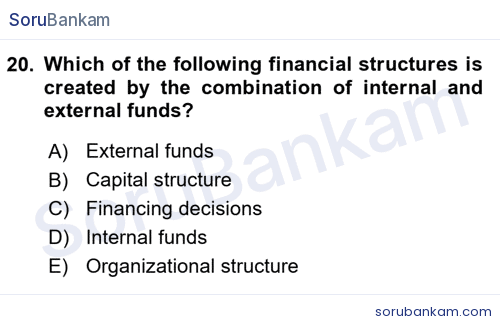
Which of the following financial structures iş created by the combinaton of internal and external funds? A) External funds B) Capital structure C) Financing decisions D) Internal funds E) Organizational structure