IKT207U History Of Economic Thought 2024-2025 Final Soruları
20 soru · Final · 2024-2025
IKT207U History Of Economic Thought dersinin 2024-2025 final sınavı 20 sorudan oluşur; ders AÖF İktisat (İngilizce) bölümünde okutulur. Sorular aşağıda sırasıyla yer alır. Doğru cevaplar ve sonucun, testi çözdüğünde görünür.
Önizleme · 20 soru. Cevaplamak ve sonucunu görmek için sınavı başlat.
Sorular
20 soru
Soru 1
Soru 2
Soru 3
Soru 4
Soru 5
Soru 6
Soru 7
Soru 8
Soru 9
Soru 10
Soru 11
Soru 12
Soru 13
Soru 14
Soru 15
Soru 16
Soru 17
Soru 18
Soru 19
Soru 20
Sınav modunda süre tutulur, doğru cevaplar ve sonucun sınav bitince görünür.
Dersin üniteleri
IKT207U History Of Economic Thought ders sayfası: bütün sınavlar ve üniteler
Soruların metni (otomatik okuma)
Görsellerden otomatik okunmuştur; hata içerebilir. Sorular, görsellerdeki hâliyle geçerlidir.
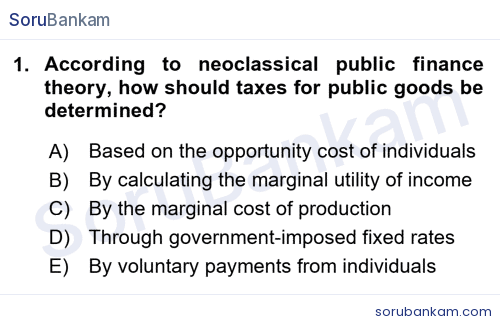
According to neoclassical public finance theory, how should taxes for public goods be determined? A) Based on the opportunity cost of individuals B) By calculating the marginal utility of income C) By the marginal cost of production D) Through government-imposed fixed rates E) By voluntary payments from individuals
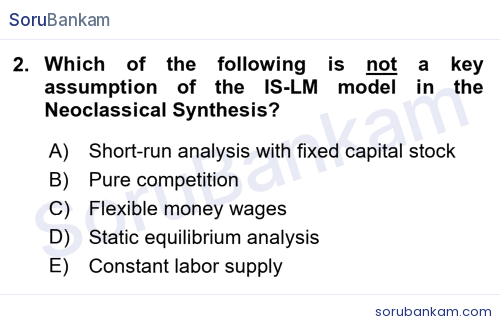
Which of the following is not key assumption of the IS-LM model the Neoclassical Synthesis? A) Short-run analysis with fixed capital stock B) Pure competition C) Flexible money wages D) Static equilibrium analysis E) Constant labor supply
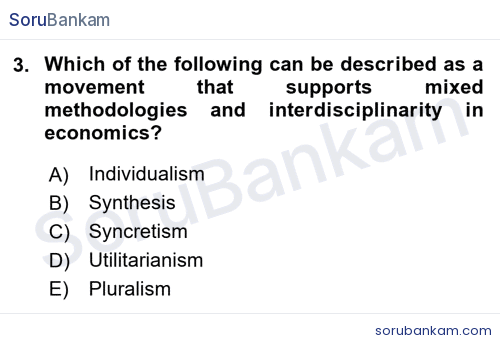
Which of the following can be described as a movement that supports mixed methodologies and interdisciplinarity in economics? A) Individualism B) Synthesis C) Syncretism D) Utilitarianism E) Pluralism
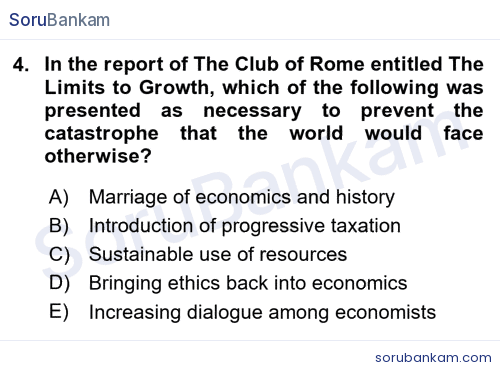
4. In the report of The Club of Rome entitled, The Limits to Growth, woich of the following was presented as necessary to prévent the catastrophe that the world would face otherwise? A) Marriage of economics and history B) Introduction ofprogressive taxation C) Sustainable use of resourcés Dy Bringing ethics back into economics ~ "E) Increasing dialogue among economists
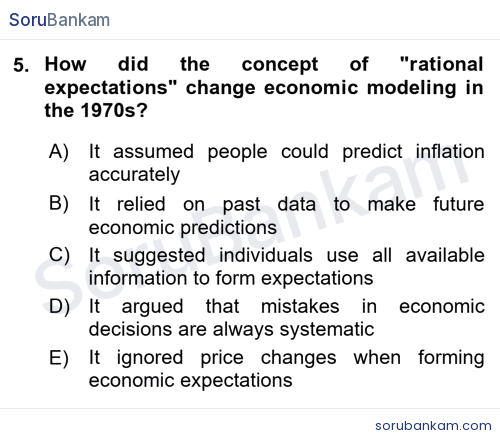
How did the concept of "rational expectations" change economic modeling in the 1970s? A) It assumed people could predict inflation accurately B) It relied on past data to make future economic predictions C) It suggested individuals use all available information to form expectations D) It argued that mistakes in economic decisions are always systematic E) It ignored price changes when forming economic expectations
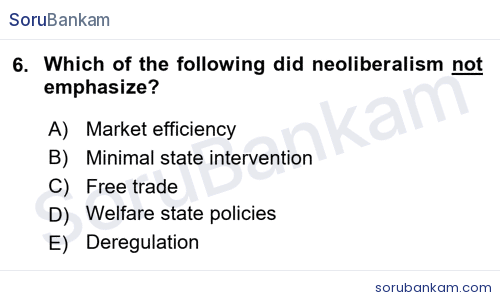
Which of the following did neoliberalism not emphasize? A) Market efficiency B) Minimal state intervention C) Free trade D) Welfare state policies E) Deregulation
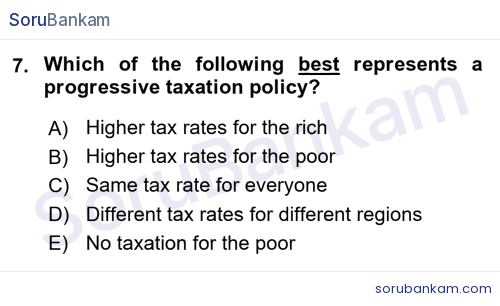
Which of the foliowing best represents a progressive taxation policy? A) Higher tax rates for the righ B) Higher tax rates forthe poor C) Same tax rate for everyone D) Different tax rates for different regions E) No taxatioh for the poor. 1.
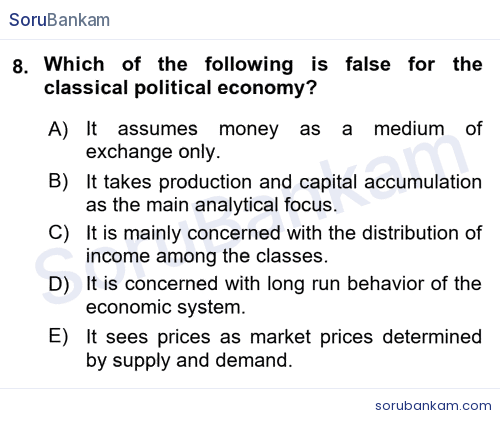
8. Which of the following is false for the classical political economy? A) It assumes'" money as, a medium of exchange only. " B) It takes production and capital accumulation as the main analytical focus. It is mainly concerned with the distribution of income among the classes. D). It is concerned with long run behavior of the economic system. It sees prices as market prices determined by supply and demand.
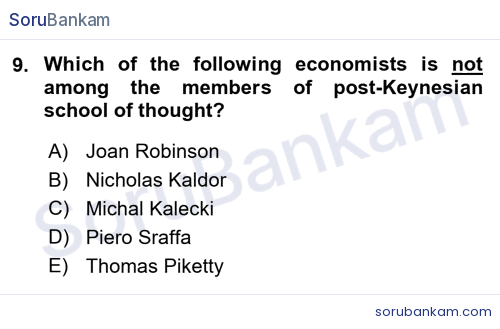
Which of the following economists is not among the members of post-Keynesian school of thought? A) Joan Robinson B) Nicholas Kaldor C) Michal Kalecki D) Piero Sraffa E) Thomas Piketty
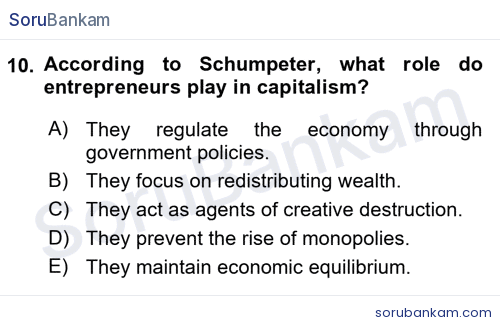
According to Schumpeter, what role do entrepreneurs play in capitalism? A) They regulate the economy through government policies. B) They focus on redistributing wealth. C) They act as agents of creative destruction. D) They prevent the rise of monopolies. E) They maintain economic equilibrium.
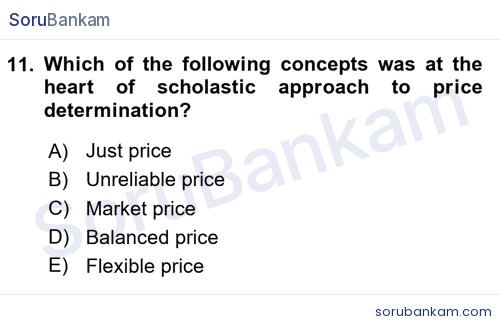
Which of the following concepts was at the heart of scholastic approach to price determination? A) Just price B) Unreliable price C) Market price D) Balanced price E) Flexible price
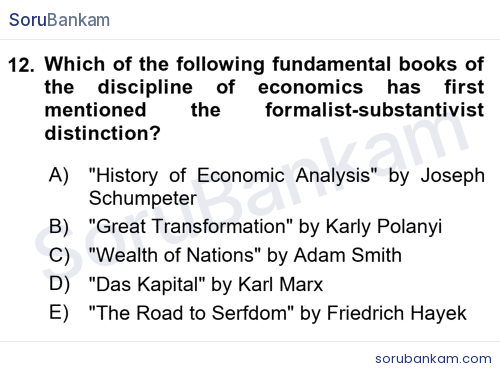
Which of the following fundamental books of the discipline of economics has first mentioned the formalist-substantivist distinction? A) Ai) "History of Economic Analysis" by Joseph Schumpeter B) "Great Transformation" by Karly Polanyi C) "Wealth of Nations" by Adam Smith D) "Das Kapital" by Karl Marx E) "The Road to Serfdom" by Friedrich Hayek
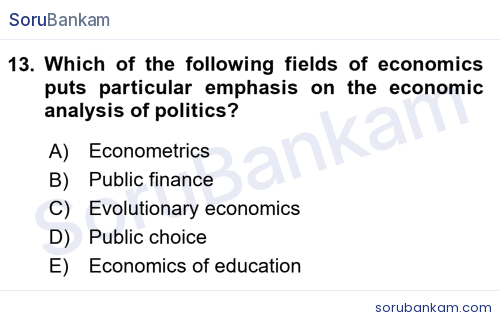
Which of the following fields of economics puts particular emphasis on the economic analysis of politics? A) Econometrics B) Public finance C) Evolutionary economics D) Public choice E) Economics of education
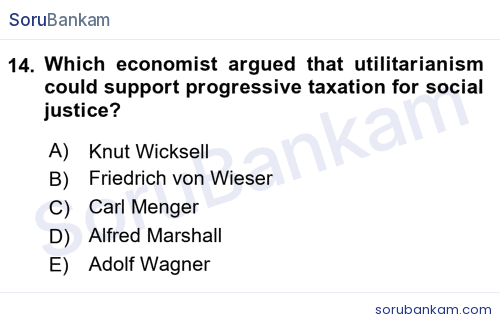
Which economist argued that utilitarianism could support progressive taxation for social justice? A) Knut Wicksell B) Friedrich von Wieser C) Carl Menger D) Alfred Marshall E) Adolf Wagner 1 V*
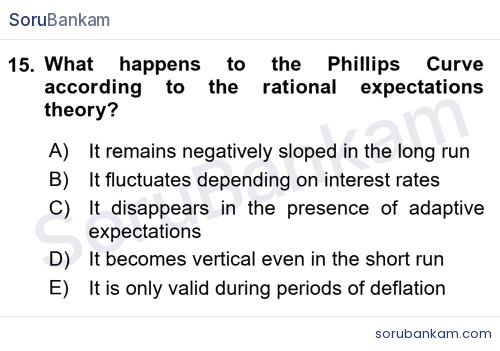
What happens to the Phillips Curye according to the rational expectations theory? A) Itremains negatively stoped in the long run B) "B) It fluctuates depending on interest rates. C) It disappears in the presence of adaptive expectations D) It becomes vertical even in the short run E) It is only valid during periods of deflation
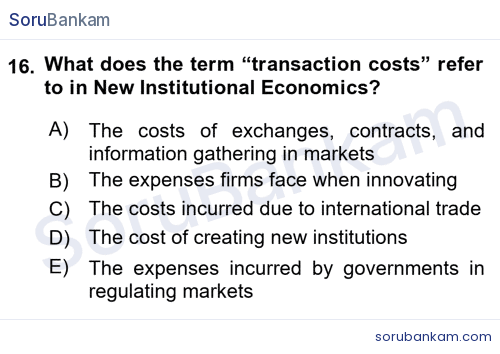
What does the term "transaction costs" refer to in New Institutlonal Economics? A) The costs of exchanges, contracts, and information gathering in markets B) The expenses firms face when innovating C) The costs incurred due to international trade D) The cost of creating new institutions E) The expenses incurred by governments in regulating markets
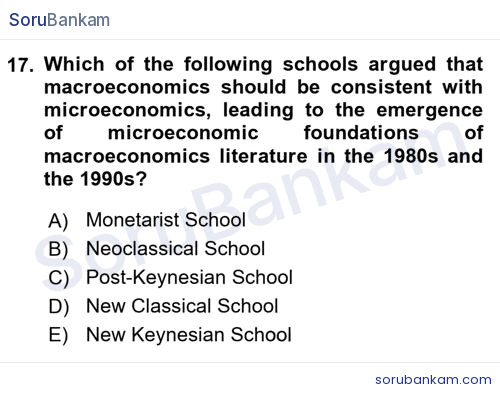
Which of the following schools argued that macroeconomics should be consistent with microeconomics, leading to the emergence microeconomic foundations macroeconomics literature in the 1980s and the 1990s? A) Monetarist School B) Neoclassical School C) Post-Keynesian School D) New Classical School E) New Keynesian School
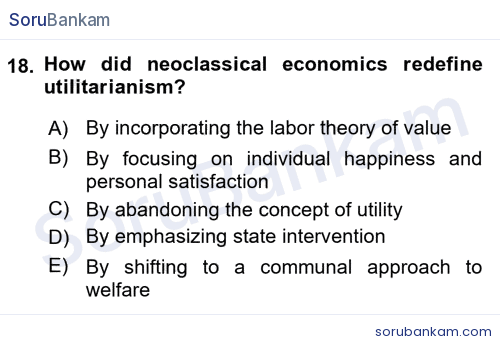
How did neoclassical economics redefine utilitarianism? A) By incorporating the labog theory of value B) By focusing on individual happiness and personal satisfaction C) By abandoning the concept of utility D) By emphasizirtg state intervention E) By shifting to a communal approach to welfare
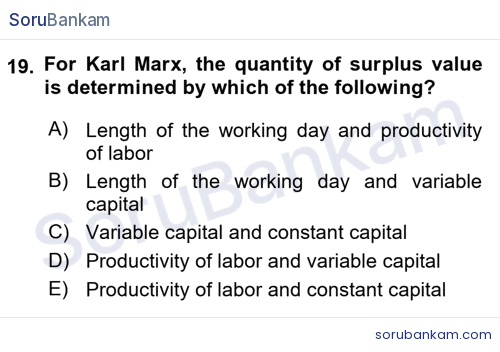
For Karl Marx, the quantity of surplus value is determined by which of the following? A) Length of the working day and productivity of labor B) Length of the working day and variable capital C) Variable capital and constant capital D) Productivity of labor and variable capital E) Productivity of labor and constant capital.
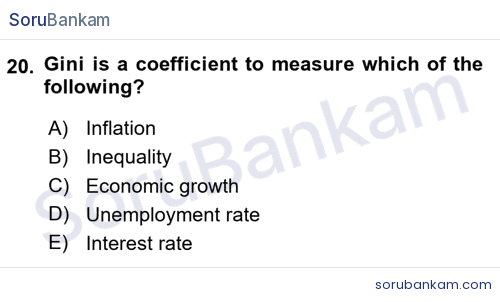
Gini is a coefficient to measure which of the following? A) Inflation B) Inequality C) Economic growth D) Unemployment rate E) Interest rate